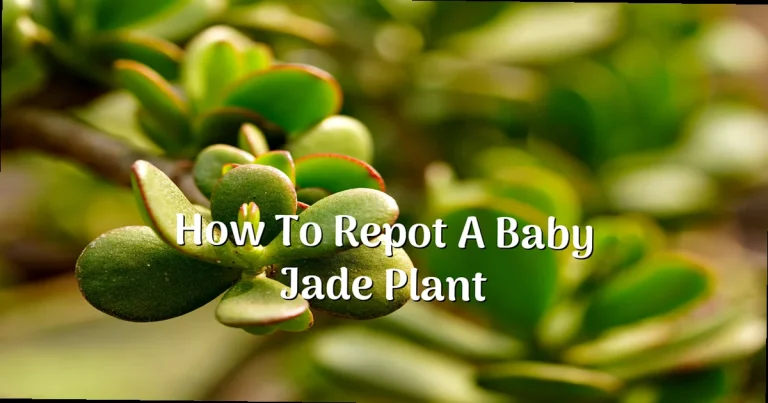
A fellow collector slid two pots across the table and asked, “Which one is the real ‘Gollum’?” One plant had long, tubular leaves that curled inward like green straws. The other looked almost identical at first glance, yet its tips formed perfect little red-rimmed suction cups.
That moment taught me that the names “Gollum Jade” and “Hobbit Jade” get tossed around interchangeably far too often, and the confusion costs people money, space, and sometimes the plants themselves.
In this guide, I’ll give you the definitive differences, side-by-side comparisons, and exactly how to tell them apart forever.
Quick Visual Identification Cheat Sheet
| Feature | Gollum Jade (Crassula ovata ‘Gollum’) | Hobbit Jade (Crassula ovata ‘Hobbit’) |
|---|---|---|
| Leaf shape | Long, tubular, slightly tapered | Tubular with flared, trumpet-like tips |
| Leaf tip appearance | Pointed or slightly spooned, rarely red edges | Distinct “suction cup” or bowl-shaped tips, often red margins |
| Leaf length (mature) | 2–4 inches (5–10 cm) | 1.5–3 inches (4–8 cm) |
| Growth habit | More upright, slightly slower | Bushier, more compact |
| Monstrose tendencies | Moderate variegation possible | Higher chance of fully monstrose stems |
| Year officially named | 1970s by Abbey Garden Cactus | 1990s–early 2000s |
The Origin Story Behind the Names
Both cultivars trace their lineage back to the standard Crassula ovata (classic Jade Plant), but they emerged from different breeding programs inspired by J.R.R. Tolkien characters.
‘Gollum’ appeared first in the 1970s at Abbey Garden in California. The breeder noticed a single branch on a jade plant where the leaves had fused into tubes with odd, pinched tips. They propagated it and named it after Gollum’s long, bony fingers.
‘Hobbit’ came later, most likely from an independent mutation in the 1990s. The leaves are also tubular, but the tips flare outward like tiny trumpets or hobbit pipe bowls, hence the name. Some speculate it’s actually a sport of ‘Gollum’ itself, but tissue culture labs treat them as separate patented cultivars today.
Side-by-Side Growth Comparison
| Growth Aspect | Gollum Jade | Hobbit Jade |
|---|---|---|
| Mature height | 2–3 ft indoors (60–90 cm) | 18–30 inches indoors (45–75 cm) |
| Branching style | More vertical, fewer side shoots | Dense, bushy, excellent for bonsai |
| Leaf drop under stress | Drops older leaves faster | Holds leaves longer |
| Flowering tendency | Rarely flowers indoors | Slightly more willing to flower |
| Cold tolerance | Down to 30 °F (-1 °C) briefly | Slightly less hardy, protect at 35 °F |
Care Requirements: Are They Really Different?
In my fifteen years of growing both side-by-side, the care is 98 % identical. Both are classic “tough-love” succulents.
Light
Both thrive in bright indirect light to full sun. Four to six hours of direct morning sun brings out the best red tipping on Hobbit and subtle pink edges on Gollum.
Watering
Water thoroughly only when the top 2 inches of soil are completely dry. In winter, stretch to every 4–6 weeks. Overwatering remains the number one killer of both cultivars.
Soil & Pots
Use a gritty cactus/succulent mix with at least 50 % perlite or pumice. Terracotta pots with drainage holes are non-negotiable.
Temperature & Humidity
Ideal range: 65–80 °F (18–27 °C) day, never below 50 °F (10 °C) at night. Average household humidity is perfect; no misting needed.
Fertilizer
Half-strength balanced fertilizer once in spring and once in midsummer. Skip fertilizer entirely if you want slower, tighter growth.
Propagation Showdown
| Method | Gollum Jade Success Rate | Hobbit Jade Success Rate | Notes |
|---|---|---|---|
| Leaf cuttings | 70–80 % | 85–95 % | Hobbit leaves root faster and more reliably |
| Stem cuttings | 90 %+ | 90 %+ | Both callus in 3–5 days |
| Beheading & replant | Excellent | Excellent | Best way to fix leggy specimens |
Common Problems and How Each Cultivar Reacts
- Etiolation (stretching): Both stretch, but Gollum shows it faster because of its naturally upright habit.
- Mealy bugs: They love hiding inside Gollum’s tighter tubes more than Hobbit’s open trumpets.
- Leaf wrinkling: Hobbit wrinkles sooner when underwatered, giving you an earlier warning signal.
- Root rot: Identical risk; both forgive one accidental overwatering but rarely two.
Which One Should You Buy?
Choose Gollum Jade if you want:
- Taller, more architectural structure
- Slightly alien, finger-like aesthetic
- A conversation piece that looks like coral
Choose Hobbit Jade if you want:
- Compact, bonsai-friendly growth
- Faster propagation material
- More pronounced red tips in strong light
- Bushier look for arrangements
I keep both in my collection because they complement each other perfectly in mixed succulent bowls.
Pricing Reality Check (Current Retail Averages)
| Size | Gollum Jade Price | Hobbit Jade Price | Notes |
|---|---|---|---|
| 2–3 inch pot | $6–10 | $8–14 | Hobbit usually costs 20–40 % more |
| 6 inch pot | $25–40 | $35–60 | Mature Hobbit specimens are rarer |
| Variegated versions | $50–150 | $80–300 | ‘Gollum Variegata’ vs ‘Hobbit Variegata’ |
Frequently Asked Questions
Are Gollum Jade and Hobbit Jade the same plant?
No. They are distinct cultivars of Crassula ovata with different leaf morphology, growth habits, and origins, despite both having tubular leaves.
Why is Hobbit Jade usually more expensive?
Hobbit grows slower and produces fewer offsets, making mature specimens scarcer in the trade. Its flared tips also make it more prone to cosmetic damage during shipping.
Can Gollum Jade turn into Hobbit Jade or vice versa?
Never. The traits are genetically fixed. A Gollum will never develop Hobbit’s trumpet tips, even under different conditions.
Which one is better for beginners?
Both are equally forgiving, but Hobbit’s compact size and earlier wrinkling (a clear thirst signal) make it marginally more beginner-friendly.
Do they stay small forever?
No. Given perfect conditions and a large enough pot, both can eventually reach 3–4 feet tall indoors, though Hobbit stays shorter longer.
Final Thoughts
After growing hundreds of Gollum and Hobbit Jades over the years, I can tell you the differences are subtle yet unmistakable once you know what to look for. Hold a leaf up to the light: if the tip flares like a tiny megaphone with red edges, you have a Hobbit. If it tapers to a point or slight spoon, it’s a Gollum.
Pick the one that speaks to your aesthetic, because care-wise they’re practically twins. Or do what I did: get one of each and watch them become the stars of your succulent shelf.
Ready to add the perfect tubular jade to your collection? Start with a healthy 4-inch specimen from a reputable grower, and you’ll be propagating your own forest of little Tolkien characters in no time.