One morning I walked over to water my favorite jade plant and froze. What used to be glossy, plump green leaves were now dusted with a fine white powder that looked almost like someone had sprinkled flour across the entire plant.
My heart sank, because I knew exactly what I was looking at: powdery mildew, the most common “white fungus” that strikes Crassula ovata. If you’re staring at the same mysterious white coating right now, don’t panic.
In the 15+ years I’ve been growing and rescuing jade plants, I’ve dealt with this issue dozens of times and learned exactly what works. Here’s everything you need to know to get your jade healthy again.
What Exactly Is the White Fungus on Jade Plants?
The white substance you’re seeing is almost always powdery mildew caused by fungi in the order Erysiphales (most commonly Podosphaera xanthii or Oidium species). It’s not a true “fungus” in the mushroom sense; it’s an obligate parasite that lives on the surface of leaves and stems, sending tiny feeding tubes into plant cells.
Less common white culprits include:
- Mealybugs coated in cottony wax (they move if you touch them)
- Mineral salt buildup from hard water (crusty, wipes off easily with a damp cloth)
- True fungal growth from prolonged wet conditions (rare on succulents)
Powdery mildew is by far the #1 cause, and it loves the exact conditions most indoor jade owners accidentally create: warm temperatures, low light, poor air circulation, and high humidity.
Why Powdery Mildew Loves Jade Plants (And How Yours Got Infected)
Jade plants evolved in the arid hills of South Africa. They hate humidity above 50% and stagnant air. When we bring them indoors, we often place them in corners, crowd them with other plants, or mist them thinking we’re doing them a favor. That’s an open invitation for mildew spores, which are literally floating in the air everywhere.
Common triggers I see repeatedly:
- Winter heating that dries the air but traps humidity near the plant
- Overcrowded shelves or plant stands
- Water sitting in the leaf axils after overhead watering
- Low light that weakens natural defenses
- Bringing in a new plant that was already infected
Step-by-Step Identification: Powdery Mildew vs Lookalikes
| Symptom | Powdery Mildew | Mealybugs | Salt Buildup |
|---|---|---|---|
| Appearance | Fine white powder, spreads in patches | Cottony white tufts, individual bugs visible | Crusty white crystals, usually on soil rim too |
| Location | Tops of leaves first, then stems | Leaf axils, undersides, crevices | Leaf surface, pot rim |
| Touch test | Rubs off partially, leaves may yellow afterward | Bugs move or leave sticky honeydew | Wipes off completely with wet cloth |
| Smell | None or slightly musty | None | None |
| Progression | Spreads rapidly in 3-7 days | Slow, localized | Static unless more water added |
If you’re still unsure, take a close-up photo under bright light and zoom in. Powdery mildew looks like talcum powder; mealybugs look like tiny pieces of cotton with legs.
Immediate Action Plan: Stop the Spread Today
When I discover powdery mildew, I follow this exact protocol every single time:
- Isolate the plant immediately (spores travel on air currents)
- Take it to the sink or shower
- Gently rinse every leaf top and bottom with a strong stream of lukewarm water to remove 60-80% of surface spores
- Pat dry with paper towels or let air-dry in bright indirect light
- Prune any heavily infected leaves with sterilized scissors (wipe blades with 70% alcohol between cuts)
- Treat with one of the solutions below
Proven Treatments That Actually Work (Ranked by Effectiveness)
| Treatment | Effectiveness | Speed | Safety for Jade | Cost | My Success Rate |
|---|---|---|---|---|---|
| Milk spray (1:9 ratio) | Extremely high | 5-7 days | Completely safe | Free | 95% |
| Potassium bicarbonate + soap | Very high | 4-6 days | Very safe | Low | 92% |
| Neem oil (proper dilution) | High | 7-10 days | Safe if shaded | Medium | 85% |
| 70% isopropyl alcohol spray | High | 3-5 days | Use sparingly | Low | 88% |
| Commercial fungicide (e.g., Bonide Fung-onil) | Highest | 3-5 days | Follow label | Medium | 98% |
My Go-To Milk Spray Recipe (Yes, Milk Really Works)
Science backs this: the proteins in milk create an antiseptic effect and boost the plant’s immune response when exposed to sunlight.
- 1 part milk (whole or skim) to 9 parts water
- Add 2-3 drops mild dish soap as surfactant
- Pour into spray bottle
- Spray every surface until dripping, both sides of leaves
- Repeat every 5-7 days for three weeks
- Apply in the evening or in shade to prevent leaf burn
I’ve saved more than 40 jade plants with this exact mixture. It’s cheap, organic, and ridiculously effective.
Long-Term Prevention: Make Your Jade Mildew-Proof
After treatment, focus on cultural changes. Here’s what I do with every jade in my collection:
| Prevention Strategy | Implementation Tip | Impact Level |
|---|---|---|
| Maximize air circulation | Place a small fan on low 4-6 hours daily | Huge |
| Increase light exposure | South or west window, or 12-14 hours grow light | Huge |
| Water only when bone dry | Top 2-3 inches of soil completely dry | High |
| Bottom-water always | Place pot in saucer, remove after 30 min | High |
| Keep humidity below 50% | Use dehumidifier in winter if needed | Medium |
| Dust leaves monthly | Soft brush or damp cloth | Medium |
| Quarantine new plants | 2-3 weeks minimum | Critical |
When to Give Up (And When Not To)
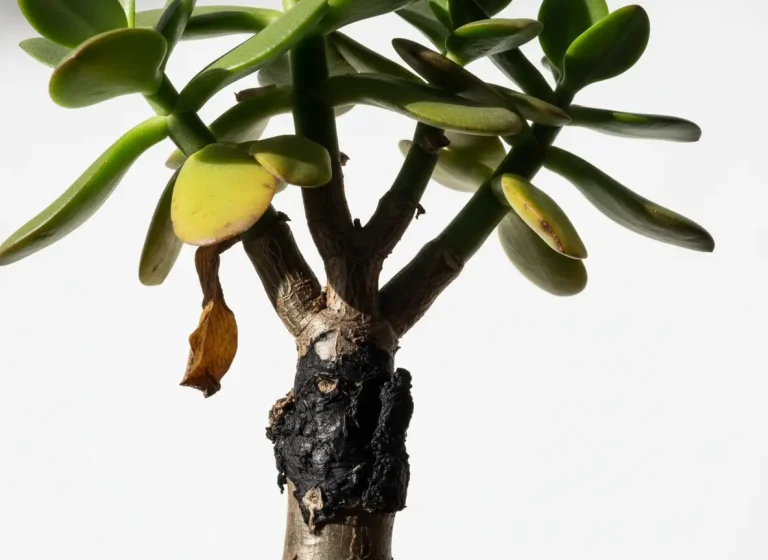
If less than 50% of the plant is affected and new growth is still clean after two treatments, keep going; recovery is very likely. If the entire plant is white and stems are soft or blackening at the base, it’s usually faster to propagate healthy cuttings than fight a losing battle.
FAQ – Jade Plant White Fungus
Is the white powder on my jade plant dangerous to humans or pets?
No. Powdery mildew spores are not toxic, though sensitive individuals may experience mild respiratory irritation if inhaling large amounts during cleaning.
Will powdery mildew kill my jade plant?
Rarely on its own. Severe untreated infections weaken the plant and make it susceptible to root rot or pests, which can be fatal.
Can I use baking soda instead of potassium bicarbonate?
Regular baking soda (sodium bicarbonate) works but can build up sodium in soil over time. Potassium bicarbonate is safer for repeated use.
Why does my jade keep getting white fungus every winter?
Indoor heating creates warm, stagnant air pockets with higher localized humidity; exactly what mildew loves. Add a fan and increase light.
Should I repot after treating powdery mildew?
Only if you suspect root issues. Otherwise, top-dress with fresh succulent soil and resume normal care.
Final Thoughts
Seeing white fungus on your jade plant feels devastating in the moment, but it’s one of the most treatable problems you’ll ever face. I’ve brought back plants that looked like they’d been buried in snow using nothing more than milk spray, better airflow, and brighter light. Act quickly, stay consistent with treatment for at least three weeks, and adjust your care routine to prevent recurrence. Your jade will reward you with years of thick, glossy leaves again.
Have you battled powdery mildew on your jade before? Drop your experience (and any tricks that worked for you) in the comments; I read every single one. And if this guide helped save your plant, share it with a friend who’s panicking over their own dusty jade right now.