You stare at wrinkled leaves and crispy tips and think “definitely thirsty.” So you water; and two days later half the plant turns black because it was already drowning.
I’ve destroyed jades exactly that way. Overwatering makes leaves soft and translucent first, then they yellow and drop; underwatering makes them thin, puckered, and reddish.
One pot stays heavy for weeks, the other lifts like a feather. Master those two checks and you’ll never confuse the two again; because both look sad, but only one forgives a drink.
Why Jade Plants Confuse Even Experienced Growers
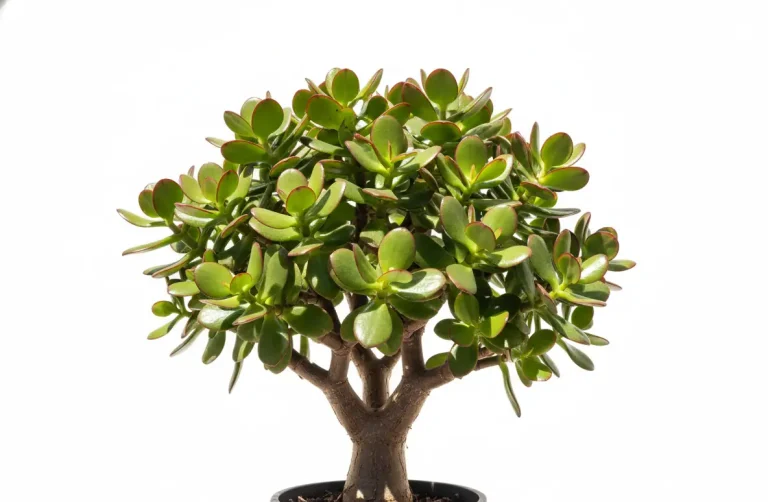
Jade plants (Crassula ovata) are succulents native to arid South African hillsides. Their thick leaves store water for months, which makes them incredibly forgiving… until they’re not. The paradox is that both too much water and too little water trigger similar defensive responses: leaf drop, wrinkling, and color changes. The difference lies in the details most people miss.
Overwatered vs Underwatered Jade Plant: Side-by-Side Symptom Comparison
| Symptom | Overwatered Jade Plant | Underwatered Jade Plant |
|---|---|---|
| Leaf texture | Soft, mushy, sometimes translucent or jelly-like | Thin, papery, deeply wrinkled or shriveled |
| Leaf color | Yellowing from the base up, dark spots, blackening | Reddish or purplish tint, especially on edges |
| Leaf drop | Leaves fall off easily when touched, often still green | Leaves dry and drop, usually brown or crispy |
| Stem condition | Stem feels soft or squishy near soil line | Stem remains firm, woody |
| Soil moisture | Still wet days after watering | Bone-dry even deep in the pot |
| Root health | Brown, black, mushy, foul smell | White and firm (if you check) |
| Growth pattern | Sudden leaf swell then burst, possible edema | Slow growth, tiny new leaves, branch dieback |
Clear Visual Signs of Overwatering
1. Leaves Turning Yellow and Translucent
Excess water fills the leaf cells until they literally burst. You’ll notice leaves looking watery or glassy, especially lower ones. Press gently – if your fingernail leaves a dent that stays, it’s overwatered.
2. Black or Brown Mushy Spots
Fungal and bacterial infections love wet soil. Dark lesions that spread quickly are classic root rot symptoms traveling upward.
3. Easy Leaf Drop
Touch a leaf and the whole thing falls off with almost no resistance. Healthy jade leaves need a deliberate tug.
4. Soil That Never Dries
If the top two inches are still damp a week after watering, your pot or soil is holding too much moisture.
Clear Visual Signs of Underwatering
1. Deep Wrinkles and Shrivel
Underwatered leaves look deflated, like tiny raisins trying to stay attached. The wrinkles run lengthwise and feel papery.
2. Red or Purple Stress Coloring
Jades produce anthocyanin pigments when stressed for water – the same compound that turns leaves red in autumn.
3. Crispy Brown Leaf Tips and Edges
The plant sacrifices its oldest leaves first. You’ll see dry, brown margins that crumble when touched.
4. Soil Pulling Away From Pot Edges
Extreme dryness causes soil to shrink and form a gap around the inside of the pot.
How to Confirm Your Diagnosis in 60 Seconds
- Pick one suspicious leaf and gently squeeze between thumb and finger. Feels squishy or leaves an indent → overwatered Feels thin and crackly → underwatered
- Stick your finger two inches into the soil. Wet or cool → overwatered Powder-dry → underwatered
- Check the pot weight. Surprisingly heavy → overwatered Shockingly light → underwatered
Do all three tests. They rarely lie.
How to Fix an Overwatered Jade Plant (Step-by-Step Rescue)
I’ve brought back jades that were 90% mush using this exact protocol.
- Stop watering immediately.
- Remove the plant from its pot and gently wash soil from roots under lukewarm water.
- Cut away any black, brown, or slimy roots with sterilized scissors – healthy roots are firm and white.
- Let the plant air-dry on newspaper for 24-48 hours so wounds callus.
- Repot in fresh, fast-draining succulent soil (I use 60% pumice/perlite, 40% potting mix).
- Wait at least 10-14 days before watering again – and then water sparingly.
Pro tip: Add a 1-inch layer of pebbles on top of the soil to remind yourself “this one almost died from kindness.”
How to Fix an Underwatered Jade Plant (The Soak-and-Dry Method)
Underwatering is actually easier to reverse.
- Take the entire pot and submerge it in a bucket of room-temperature water for 10-15 minutes until bubbles stop rising.
- Let it drain completely in the sink – no saucer underneath.
- Place in bright indirect light and watch new growth appear within 7-10 days.
- Resume normal watering rhythm: water thoroughly only when the top 2-3 inches of soil are completely dry.
The Perfect Watering Schedule That Prevents Both Problems
| Season | Frequency | Amount |
|---|---|---|
| Spring/Summer | Every 10-14 days | Water until it runs out drainage holes |
| Fall/Winter | Every 3-5 weeks | Same thorough watering, less frequent |
Always err on the side of underwatering – jades survive drought far better than drowning.
Best Soil and Pot Choices to Avoid Future Confusion
| Feature | Best Choice | Why It Matters |
|---|---|---|
| Soil mix | 50-70% inorganic (pumice, perlite, gravel) | Drains instantly, prevents root rot |
| Pot material | Terracotta or unglazed ceramic | Wicks excess moisture from soil |
| Drainage holes | Multiple + saucer removed after 30 min | No sitting water ever |
| Pot size | Only 1-2 inches wider than root ball | Less soil = faster drying |
Long-Term Prevention Checklist I Give Every Client
- Use the “lift test” – pick up the pot before and after watering to learn its weight
- Install a cheap moisture meter (they’re $8 and eliminate 90% of guesswork)
- Water in the morning so excess evaporates during the day
- Reduce watering 50% from October to March
- Repot every 2-3 years to refresh soil drainage
Frequently Asked Questions
Can a jade plant recover from overwatering?
Yes, absolutely – if you catch it before stem rot reaches the main trunk. I’ve revived plants that lost 80% of their roots.
How long does it take an underwatered jade to bounce back?
You’ll see perky new growth in 1-3 weeks once proper watering resumes.
Should I mist my jade plant?
No. Jades hate high humidity and misting invites fungal issues.
Why does my jade drop leaves after repotting?
It’s usually transplant shock combined with overwatering during recovery. Keep soil barely moist for the first month.
Can overwatered leaves turn back to normal?
Unfortunately no – damaged leaves stay damaged. Remove them to redirect energy to new growth.
Final Thoughts
Whether your jade is suffering from too much love or too little attention, you now have every tool to diagnose and fix it correctly. Take a deep breath, do the 60-second test, and follow the rescue steps that match your situation. In a few weeks, you’ll watch those gorgeous paddle-shaped leaves plump up again – and you’ll never second-guess your watering can again.
Your jade has survived deserts for millions of years. With the right care, it will easily survive you.