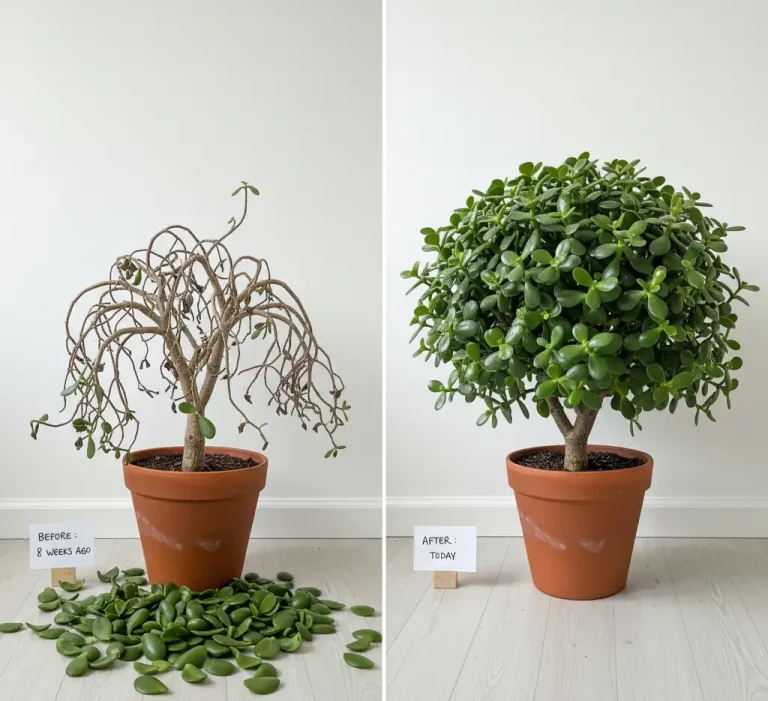
You proudly brought home a stunning variegated jade plant with its creamy-white and pink edges glowing against deep green leaves. Fast forward a few months, and those gorgeous variegated sections have faded to plain green while the plant looks stretched and unhappy.
I’ve been there more times than I care to admit when I first started growing Crassula ovata ‘Variegata’ (also sold as ‘Rainbow Jade’ or ‘Lemon & Lime’).
The good news?
With the right care routine, your variegated jade can stay compact, colorful, and absolutely jaw-dropping year after year.
In this complete guide, I’ll walk you through every proven technique I use to maintain vibrant variegation, strong growth, and perfect health.
What Makes Variegated Jade Plants Different from Regular Jade?
Variegated jade plants are natural mutations of the classic Crassula ovata that lack chlorophyll in portions of their leaves. The white, cream, yellow, or pink sections cannot photosynthesize, so the green parts work overtime to keep the plant alive. This makes them slightly more demanding than their all-green cousins, but the trade-off is spectacular color that no regular jade can match.
Key biological differences:
- Slower overall growth rate (about 60-70% of regular jade)
- Higher light requirements to maintain variegation
- Greater sensitivity to overwatering
- More prone to reversion (turning completely green)
Optimal Light: The #1 Factor for Keeping Variegation Vibrant
Light is non-negotiable. Without intense, bright light, variegated sections fade and eventually disappear as the plant reverts to solid green for survival.
Daily Light Requirements Table
| Light Condition | Hours Needed | Variegation Result | Growth Speed |
|---|---|---|---|
| Bright indirect (east window) | 6-8 hours | Fades over time | Very slow |
| South/west window (no direct) | 8-10 hours | Maintains but dulls | Slow |
| 4-6 hours direct morning sun | 10+ total | Good color retention | Moderate |
| 6+ hours direct sun + grow light supplement | 12-14 total | Maximum pink/cream intensity | Fastest possible for variegated |
I keep my prized specimens 6-12 inches from an unshaded south-facing window and supplement with a 6500K full-spectrum grow light during winter. The difference in color intensity is dramatic.
Perfect Watering Routine for Variegated Jade
Because they grow slower and have less chlorophyll, variegated jades are extremely susceptible to root rot.
My foolproof watering schedule:
- Spring/Summer: Water thoroughly only when the top 2-3 inches of soil are completely dry (usually every 10-14 days)
- Fall/Winter: Every 3-5 weeks maximum
- Always use the “soak and dry” method: water until it runs out drainage holes, then don’t water again until bone dry
Watering Frequency Comparison Table
| Season | Regular Jade Plants | Variegated Jade Plants | Risk if Overwatered |
|---|---|---|---|
| Spring | Every 7-10 days | Every 10-18 days | High |
| Summer | Every 7-12 days | Every 12-21 days | Very High |
| Fall | Every 14-21 days | Every 21-35 days | Moderate |
| Winter | Every 21-45 days | Every 28-60 days | Low but still possible |
Best Soil and Potting Mix Recipe I Swear By
Never use regular potting soil. Here’s my exact recipe that’s kept dozens of variegated jades perfect for years:
- 50% high-quality cactus & succulent mix
- 30% perlite or pumice
- 15% coarse sand
- 5% worm castings (for gentle nutrients)
This mix drains in seconds while still holding just enough moisture. Repot every 2-3 years in spring, only going up one pot size (these plants love being slightly root-bound).
Temperature and Humidity Requirements
- Ideal temperature: 65-80°F (18-27°C) daytime
- Can tolerate down to 50°F (10°C) at night
- Protect from frost (below 40°F damages leaves)
- Average household humidity (30-50%) is perfect; no misting needed
Fertilizing Schedule That Won’t Burn Variegated Leaves
Because they grow slower, variegated jades need far less fertilizer than regular ones.
My exact routine:
- March through September only
- Use balanced succulent fertilizer diluted to ¼ strength
- Apply once every 6-8 weeks
- Never fertilize during dormancy (October-February)
Over-fertilizing causes weak, stretched growth and can actually reduce variegation.
Pruning and Shaping for Maximum Beauty
Regular pruning keeps your plant compact and encourages more variegated growth.
How I do it:
- Use clean, sharp scissors or pruning shears
- Cut just above a leaf node at 45° angle
- Remove any completely green branches immediately (they dominate and reduce variegation)
- Prune in spring or early summer for best recovery
Propagation Techniques Specific to Variegated Jade
Success rates vary dramatically depending on cutting type.
Propagation Success Rate Table
| Method | Success Rate | Time to Roots | Keeps Variegation? |
|---|---|---|---|
| Leaf propagation | 40-60% | 4-8 weeks | Often reverts |
| Stem cuttings | 90-95% | 2-4 weeks | Almost always |
| Offsets (pups) | 98% | Already rooted | 100% |
I only propagate from stem cuttings or offsets to guarantee variegation stays true.
Common Problems and Solutions
Reverting to All-Green
Cause: Insufficient light
Fix: Immediately move to brightest location possible and prune green sections
Pale, Washed-Out Variegation
Cause: Too much direct afternoon sun scorching leaves
Fix: Provide bright light but filter harsh afternoon rays
Leggy, Stretched Growth
Cause: Low light reaching for source
Fix: Increase light exposure dramatically
Wrinkled Leaves
Cause: Chronic underwatering
Fix: Water thoroughly and establish proper schedule
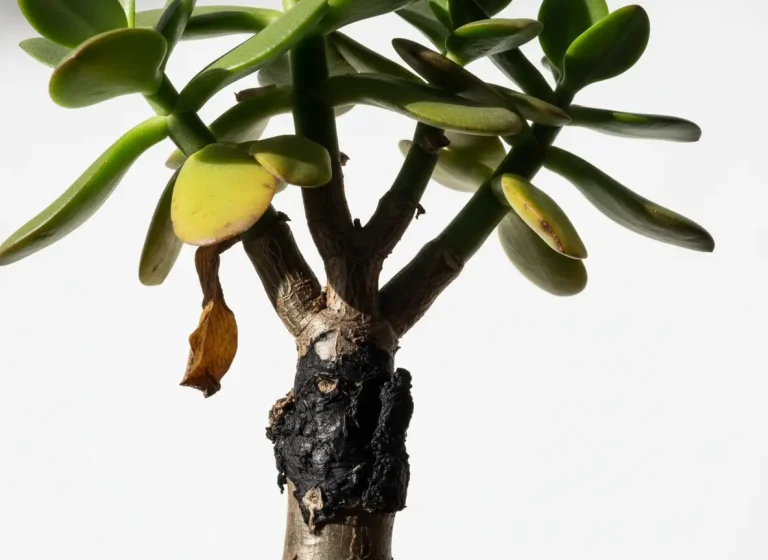
Mushy Stems or Black Spots
Cause: Root rot from overwatering
Fix: Remove affected parts, repot in fresh dry soil, withhold water 2-3 weeks
Winter Care Specifics
During winter dormancy:
- Reduce watering to absolute minimum
- Stop fertilizing completely
- Keep above 50°F
- Supplement with grow lights if natural light drops below 8 hours
My Top 5 Favorite Variegated Jade Cultivars
- Crassula ovata ‘Hummel’s Sunset’ – golden-yellow and pink edges
- Crassula ovata ‘Lemon & Lime’ – creamy white striping
- Crassula ovata ‘Rainbow’ – intense pink margins
- Crassula ovata ‘Variegata’ – classic cream and green
- Crassula ovata ‘Pink Beauty’ – deep pink variegation in bright light
With proper care, your variegated jade plant will reward you with stunning colors and that signature thick, sculptural growth that makes Crassula ovata one of the most beloved succulents worldwide. The key difference from regular jade care comes down to giving them significantly more light while being even more disciplined about watering. Follow these exact techniques I’ve refined over years of growing dozens of specimens, and your variegated jade will become the crown jewel of your collection. Ready to transform your plant from surviving to absolutely thriving? Start by assessing its current light situation today – that single change often creates the most dramatic improvement in variegation intensity.
Frequently Asked Questions
How much light does a variegated jade plant need daily?
Variegated jade plants require 10-14 hours of bright light daily, including 4-6 hours of direct morning sun, to maintain strong variegation. Less light causes reversion to green.
Why is my variegated jade plant turning green?
Insufficient light is almost always the cause. The plant reverts to all-green leaves to produce more chlorophyll and survive. Increase light immediately and prune green sections.
Can variegated jade plants survive indoors?
Yes, they thrive indoors when placed in the brightest window (south or west-facing) and supplemented with grow lights during darker months.
How often should I water my variegated jade plant?
Water only when the top 2-3 inches of soil are completely dry – typically every 10-21 days in growing season and every 4-8 weeks in winter.
Do variegated jade plants grow slower than regular ones?
Yes, they grow approximately 60-70% slower due to reduced chlorophyll in variegated sections.
Will leaf propagation keep the variegation?
Leaf propagation has only 40-60% success rate and often produces all-green plants. Use stem cuttings or offsets for reliable variegation retention.