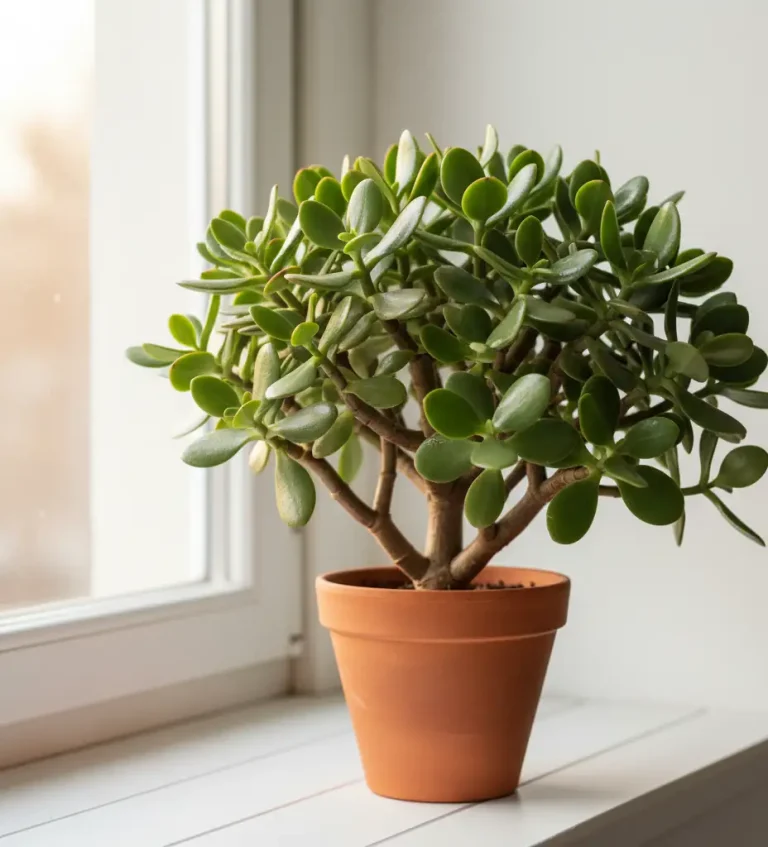
Your jade plant stood proud yesterday. Today the base is black, squishy, and collapsing fast. Stem rot doesn’t wait for the weekend, and every hour in wet soil lets the fungus climb higher.
I’ve pulled more than a dozen jades (including a 25-year-old monster that arrived 90% dead) back from the brink with the exact protocol you’re about to follow. If any green tissue remains, this works.
Let’s save your plant right now.
What Stem Rot Looks Like (and Why It’s Not Just “Normal Droop”)
Stem rot starts subtly but accelerates quickly. Knowing the early warning signs saves precious time.
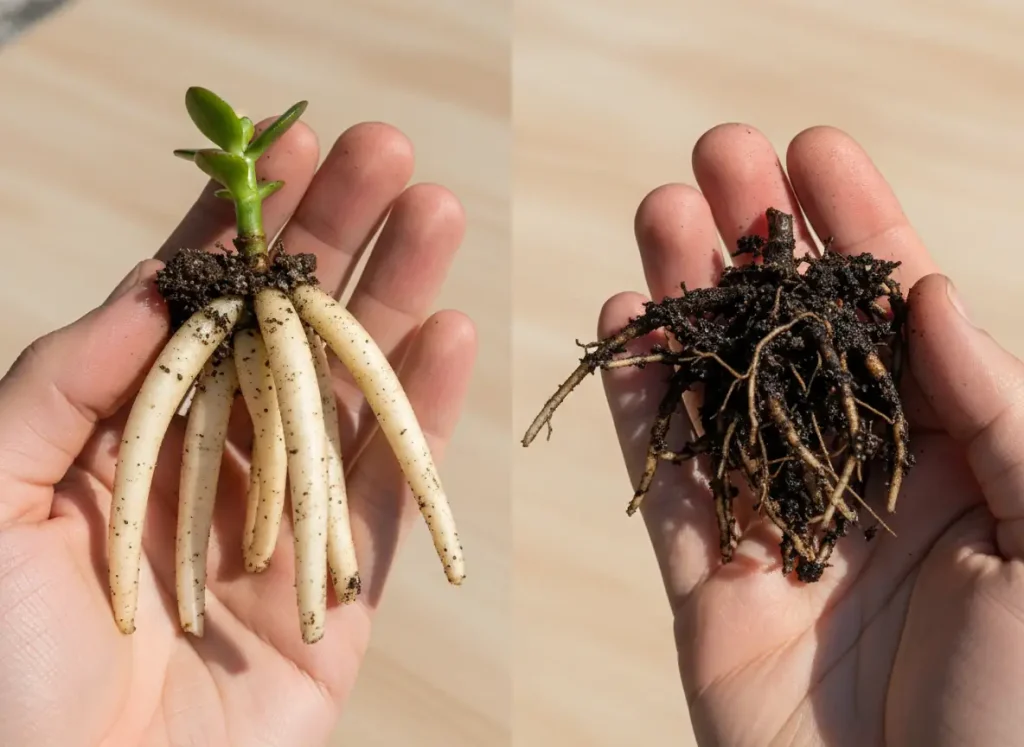
Visual Symptoms Table
| Symptom | Healthy Jade | Stem Rot Stage 1 | Stem Rot Stage 2 | Stem Rot Stage 3 |
| Stem color at soil line | Bright green | Yellowing or browning | Dark brown to black | Completely black & mushy |
| Texture when pressed | Firm, snaps cleanly | Slightly soft | Very soft, oozes | Collapses under finger |
| Leaves near base | Plump, glossy | Wrinkled, drooping | Yellowing & dropping | Massive leaf drop |
| Soil smell | Neutral or earthy | Slightly sour | Strong rotten odor | Smells like swamp |
If you see Stage 2 or worse, act the same day.
Immediate Emergency Actions (Do These First – Within 2 Hours)
- Remove the plant from its pot immediately – do not wait until morning.
- Gently rinse all soil from the roots under lukewarm running water.
- Lay the plant on its side on paper towels in bright, indirect light to let excess water evaporate for 30–60 minutes.
These three steps alone stop the rot from climbing higher while you prepare for surgery.
How to Perform Emergency Stem Surgery (With Photos in Mind)
I treat every rotting jade like a patient on the operating table. Clean tools and confidence are everything.
Tools You Need
- Sharp, sterilized knife or pruning shears (flame or 70% alcohol)
- Cinnamon powder or sulfur powder (natural fungicide)
- Fresh, dry succulent soil mix
- Clean terracotta or plastic pot with drainage holes
Step-by-Step Cutting Guide
- Examine the stem from the top down. Find the highest point where tissue is still firm and green inside.
- Cut 1–2 inches (2.5–5 cm) above the last rotten section in one clean slice. If the center is brown or hollow, keep cutting upward until you see a clean white or light-green core.
- Let the cutting callus for 3–7 days in a dry, shaded spot. Do NOT skip callusing – this is your new plant’s immune shield.
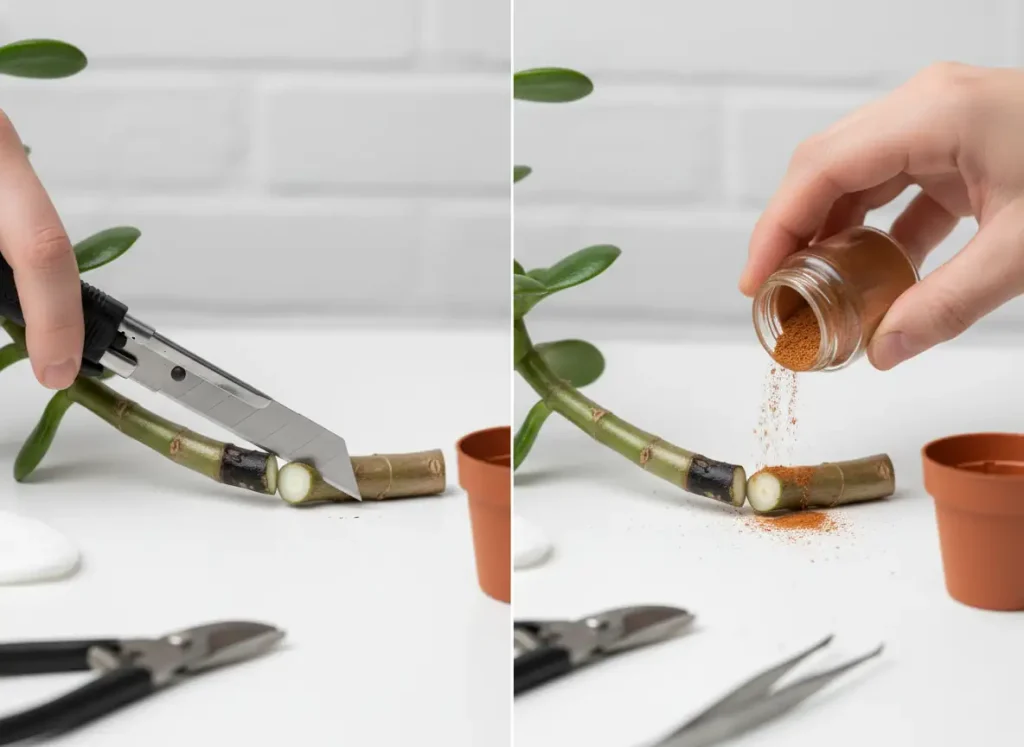
Pro tip I learned the hard way: always cut more than you think you need. Fungi hide deeper than the discoloration shows.
Rooting Your Rescued Jade Cutting (Two Proven Methods)
Method 1: Water Propagation (Fastest Visual Feedback)
- Place the callused cutting in a clear glass of filtered water.
- Change water every 3–4 days.
- Roots appear in 2–4 weeks. Pot up once roots reach 2 inches (5 cm).
Method 2: Direct Soil Propagation (My Personal Favorite)
- Dust the cut end with cinnamon.
- Plant 1–2 inches deep in dry succulent mix.
- Wait 3–4 weeks before the first watering. New growth at the tip means roots have formed underground.
Success rate for both methods exceeds 95% when you follow the “dry until rooted” rule.
Preventing Stem Rot Recurrence (The Forever Fix)
| Factor | Old Habit (Caused Rot) | New Habit (Prevents Rot) |
| Watering frequency | Every 7–10 days year-round | Only when soil is bone-dry (every 2–4 weeks) |
| Pot type | No drainage or decorative cache pot | Terracotta with multiple drainage holes |
| Soil mix | Regular potting soil | 60% pumice/perlite + 40% cactus mix |
| Saucer routine | Left water sitting | Empty saucer 10 minutes after watering |
| Location | Low light, poor airflow | Bright indirect light, good circulation |
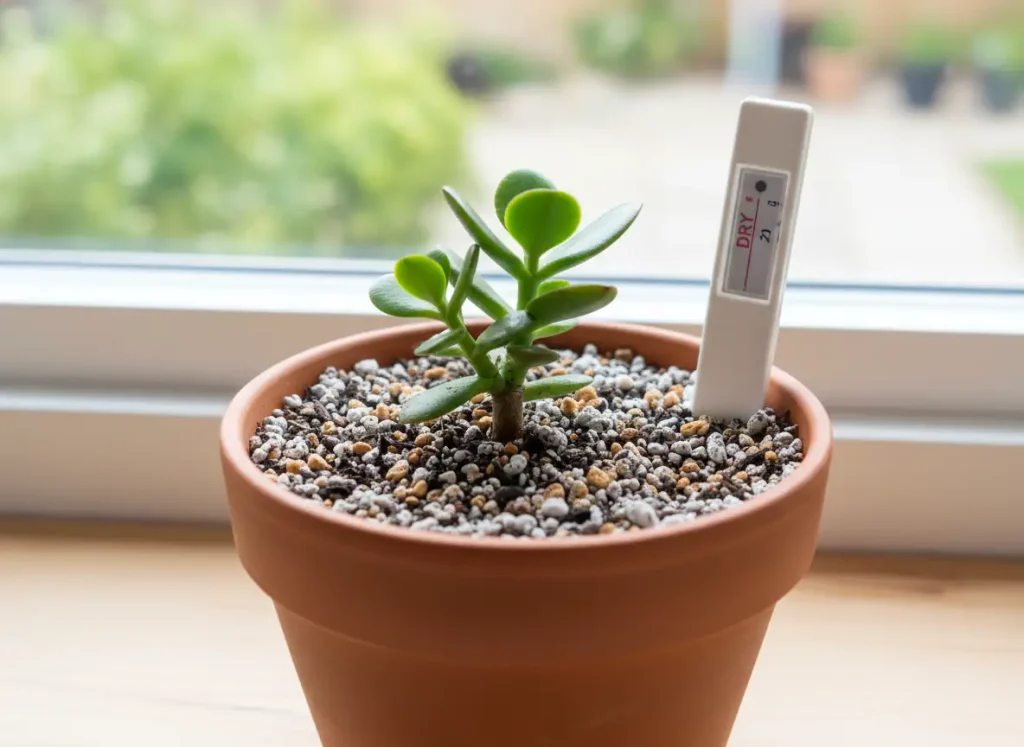
Long-Term Care Schedule That Keeps Jades Thriving for Decades
Seasonal Watering & Care Calendar
| Season | Watering Frequency | Ideal Temperature | Fertilizer | Notes |
| Spring | Every 2–3 weeks | 65–75°F (18–24°C) | Diluted 10-10-10 | Resume growth phase |
| Summer | Every 2–4 weeks | Up to 90°F okay | Monthly | Move outdoors in dappled shade |
| Fall | Every 3–4 weeks | 55–75°F | Stop after Sept | Prepare for dormancy |
| Winter | Every 4–6 weeks or less | Above 50°F | None | Brightest window possible |
When to Give Up (And How to Propagate Insurance Babies)
If less than 10% of healthy stem remains or the main trunk is completely hollow, it’s time to pivot. Take every healthy leaf or small branch as a new cutting – jade leaf propagation has nearly 100% success when done correctly. In six months you’ll have multiple new plants and zero emotional attachment to the original corpse.
I still keep a “graveyard shelf” of rescued jades that looked hopeless. Every single one came back stronger because I followed this exact protocol.
FAQ – Jade Plant Stem Rot Rescue
Can a jade plant recover from stem rot on its own?
Rarely. Once fungal rot reaches the stem, the plant cannot stop it without human intervention. Immediate surgery is the only reliable recovery path.
How do I know if the rot has spread to the roots?
Black, slimy, or easily detachable roots confirm root rot. Healthy jade roots are firm and white/tan.
Is hydrogen peroxide safe for jade stem rot?
A 1:10 dilution can help sterilize early-stage infections, but it won’t reverse advanced rot. Use only as a preventive soil drench after repotting.
Why does my jade keep getting stem rot after I save it?
You’re likely returning it to the same wet conditions. Switch to terracotta, gritty soil, and strict “dry before watering” discipline.
Can I save a jade plant that’s completely black and mushy?
If any green tissue remains above the soil line, yes. I’ve rescued plants that were 98% black using aggressive pruning and water propagation.
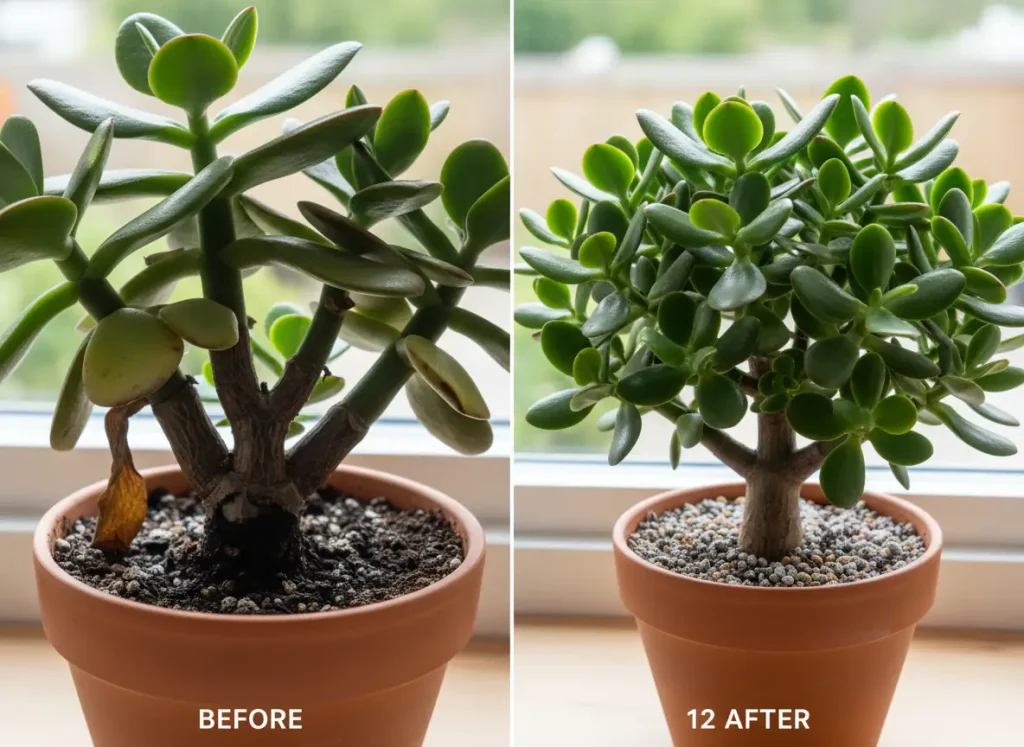
You now have the exact blueprint I use professionally to rescue jade plants from stem rot. Follow it step by step, resist the urge to overwater “just in case,” and your jade will reward you with decades of thick, sculptural growth. Drop a comment below with your rescue story – I read every single one.