Spring hits, your jade wakes up hungry, and suddenly water shoots straight through the pot or roots poke out the bottom like white spaghetti.
That’s nature telling you it’s time.
Wait too long and growth stalls; rush it in winter and you’ll watch leaves yellow for months. I only repot when the plant is primed to recover fast. Do it at the wrong time or with the wrong pot and soil, and you’re gambling with a plant that could live a century.
Do it my way and it barely notices; just thicker, faster, happier.
Why Most Jade Plant Repotting Fails Before It Starts
Jade plants are forgiving, but they hate three things above all else:
- Wet feet (soggy soil)
- Being buried too deep
- Disturbance during their active growing season if unnecessary
Get any of these wrong and you’ll see yellowing, shriveled, or dropping leaves within weeks. The good news? Every mistake has a simple, science-backed fix.
When Is the Best Time to Pot or Repot a Jade Plant?
I only repot jade plants during their active growing season — early spring through mid-summer. This is when they have maximum energy reserves to recover from root disturbance and push new growth.
Signs your jade absolutely needs repotting now (regardless of season):
| Symptom | What It Means | Urgency Level |
| Roots growing out drainage hole | Severely root-bound | High |
| Water runs straight through pot | No soil left, only roots | High |
| Soil dries in <2 days (midsummer) | Pot too small for current size | Medium |
| Plant top-heavy and tipping over | Poor root-to-top ratio | Medium |
| Last repotted >3–4 years ago | Nutrient depletion + salt buildup | Low-Medium |
Choosing the Perfect Pot: Size, Material, and Drainage Rules I Never Break
Pot Size — The “One Size Up” Rule I Swear By
I move jade plants up only 1–2 inches (2.5–5 cm) in diameter at a time. Jumping into a dramatically oversized pot is the #1 cause of fatal overwatering issues.
| Current Pot Diameter | New Pot Diameter (Recommended) |
| 4 inches | 5–6 inches |
| 6 inches | 8 inches |
| 8 inches | 10–12 inches |
| 10+ inches | 12–14 inches (or bonsai-style wide & shallow) |
Terracotta vs. Ceramic vs. Plastic — My Personal Ranking
- Unglazed terracotta (my default) — wicks excess moisture, prevents rot
- Glazed ceramic with drainage hole — beautiful but slower drying
- Plastic/nursery pot — only for temporary use or very dry climates
Always verify at least one large drainage hole. No hole = death sentence.
The Perfect Jade Plant Soil Mix (My Exact Recipe)
After testing dozens of blends over 15 years, this is the mix I use for 100% of my mature jade plants:
- 50% high-quality cactus/succulent potting mix
- 30% perlite or pumice
- 15% coarse sand (builder’s sand, not play sand)
- 5% worm castings or slow-release succulent fertilizer
This combination drains in seconds yet retains just enough moisture and nutrients.
Pre-made alternatives I trust when I’m short on time:
- Bonsai Jack Succulent & Cactus Soil Gritty Mix
- Superfly Bonsai Succulent Gritty Mix
- Miracle-Gro Cactus, Palm & Citrus Mix (amended with extra perlite 1:1)
Step-by-Step: How I Pot a Jade Plant From Start to Finish
Step 1: Prep Your Workspace (5 minutes)
Lay down newspaper, gather tools: new pot, soil mix, mesh tape or coffee filter, chopstick or skewer, sharp scissors/pruners sterilized with alcohol.
Step 2: Water Lightly 1–2 Days Before (Critical!)
A slightly moist root ball removes far easier than bone-dry or soaking wet soil.
Step 3: Remove the Plant
Turn the pot sideways, gently squeeze plastic pots or tap terracotta rims. Support the base of the stem — never pull by the trunk.
Step 4: Inspect and Prune Roots
- Tease apart circling roots
- Trim any black, mushy, or dead roots with sterilized scissors
- On severely root-bound plants, I score the outer root mass vertically in 4 places (½ inch deep) to encourage new outward growth
Step 5: Cover Drainage Hole
Place mesh tape or a coffee filter over the hole to keep soil in but let water out.
Step 6: Add Base Layer of Soil
Add enough fresh mix so the plant sits ½–1 inch below the rim (room for watering).
Step 7: Position the Plant
Center the jade exactly where it grew before — never bury the stem deeper than it was originally. Deeper planting = stem rot.
Step 8: Backfill and Firm (But Don’t Pack)
Add soil around the roots, gently tapping the pot to settle. I use a chopstick to eliminate air pockets around thicker roots. Leave ½–1 inch of space below the rim.
Step 9: Water Thoroughly — Then Stop
Water until it runs out the bottom, wait 10 minutes, water again. Then do not water again for 10–14 days while new roots establish.
Aftercare Schedule That Prevents 99% of Post-Repotting Problems
| Day(s) After Repotting | Light | Watering Rule | Temperature |
| 0–3 | Bright shade or indirect light | None | 65–80°F |
| 4–10 | Gradually increase to normal | None (unless extremely hot/dry) | 65–80°F |
| 11–14 | Full normal jade light | First thorough watering | 65–80°F |
| Week 3 onward | Normal care | Water only when top 2–3″ dry | 60–85°F |
Fertilizing After Repotting — When and What I Use
I wait a full 6–8 weeks before feeding. Then I use a balanced, diluted fertilizer (e.g., 10-10-10 or specific succulent formula) at ¼ strength once per month during spring and summer only.
Common Repotting Mistakes I Still See (And How to Avoid Them)
| Mistake | Consequence | Fix |
| Repotting in winter | Slow recovery, rot risk | Wait for spring unless emergency |
| Using regular potting soil | Chronic overwatering | Always use fast-draining succulent mix |
| Burying stem deeper than before | Stem rot, collapse | Match original soil line exactly |
| Watering immediately heavily | Root shock, fungal issues | Light watering only after 10–14 days |
| Choosing a pot without drainage | Death in weeks | Never compromise on drainage |
Advanced Tip: Creating a Stunning Jade Bonsai-Style Planting
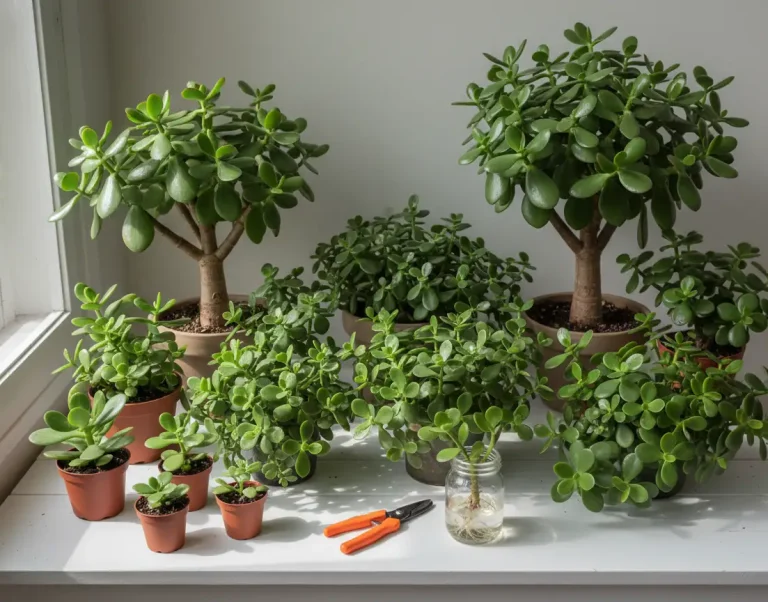
For older specimens, I often switch to wide, shallow bonsai pots. The restricted root space naturally encourages thicker trunks and that coveted tree-like form. Same soil rules apply — just even more critical drainage.
Frequently Asked Questions
How often should you repot a jade plant?
Healthy jade plants need repotting every 2–4 years. Fast-growing younger plants may need it annually; mature specimens can go 4–5 years if given fresh soil top-dressings.
Can I use regular potting soil for jade plants?
Never. Regular potting soil holds far too much moisture and almost guarantees root rot within months.
Should I water a jade plant after repotting?
Only a light watering to settle the soil on day one, then withhold water for 10–14 days while new roots form.
Do jade plants like big pots?
No. They prefer slightly snug pots. Oversized pots lead to prolonged wet soil and root rot.
Can I repot a jade plant in winter?
Only if it’s an emergency (roots out the bottom, plant collapsing). Otherwise, wait for spring.
Final Thoughts
Repotting a jade plant isn’t complicated once you understand its three core needs: fast drainage, shallow planting depth, and minimal root disturbance. Follow the steps I’ve shared from my own collection, and you’ll see thicker stems, glossier leaves, and vigorous new growth within weeks.
Ready to give your jade the perfect home it deserves? Grab your terracotta pot, mix up that gritty soil, and let’s get repotting — your future tree-sized jade is waiting.