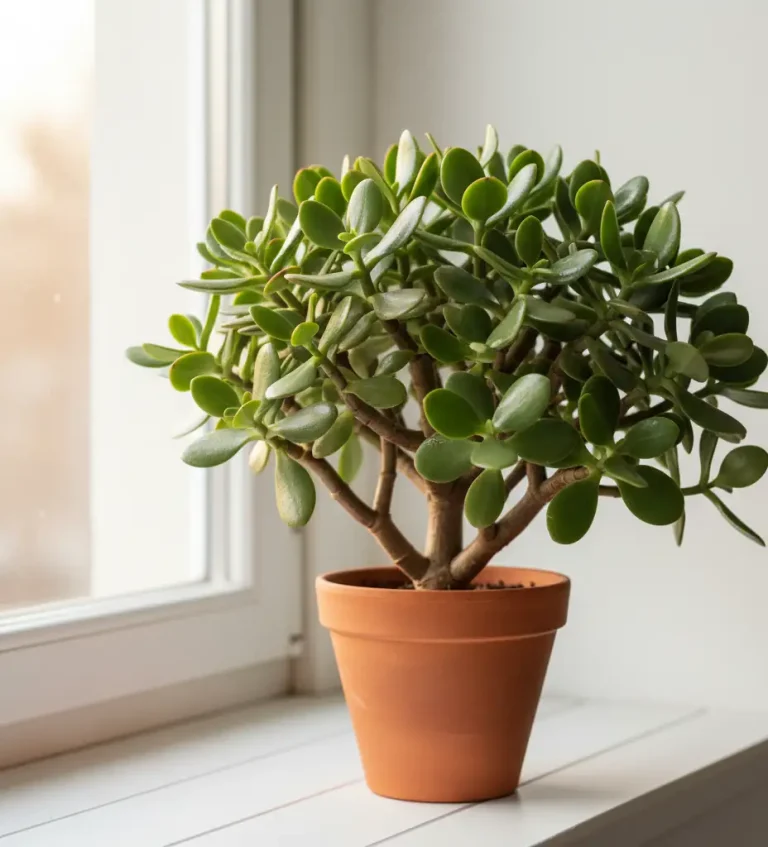
It had been in the same 6-inch terra-cotta pot for seven years, and the leaves were dropping like autumn maple. Everyone online swore jades “love being root bound,” so I left it alone.
Turns out that popular advice is only half the story. After repotting into a container just one size larger, that same plant exploded with new growth and hasn’t dropped a leaf in eight years.
The real answer to whether jade plants like to be root bound is nuanced: they tolerate it better than most houseplants, but they don’t truly prefer it long-term. In this guide, I’ll share exactly how tight is “too tight,” the visible signs your jade is suffering in silence, and my proven repotting schedule that keeps them plump, glossy, and blooming.
What “Root Bound” Actually Means for Jade Plants
A plant becomes root bound (or pot bound) when its roots have completely filled the container and begin circling or matting together. For Crassula ovata, this happens slowly because of their naturally modest growth rate, but it still happens.
| Root-Bound Stage | Visual Root Signs | Plant Behavior Above Soil | Time in Same Pot (Typical) |
|---|---|---|---|
| Lightly bound | Roots visible at drainage holes | Normal growth, slightly slower | 2–3 years |
| Moderately bound | Roots circling the entire root ball | Reduced new growth, smaller leaves | 4–6 years |
| Severely bound | Solid mass of roots, no soil left | Leaf drop, wrinkled leaves, stunted or leggy | 7+ years |
In my experience, jade plants stay happy through the “lightly bound” and early “moderately bound” stages. Problems usually start only when you hit the severe category.
Why the Myth That “Jade Plants Love Being Root Bound” Persists
The myth isn’t completely wrong; it’s just oversimplified. Jades evolved in the rocky, arid soils of South Africa where nutrients and water are scarce. In habitat, their roots are naturally constrained by rock crevices. A slightly snug pot mimics those conditions and can:
- Encourage blooming (mild stress triggers flower production in mature plants)
- Prevent overwatering accidents (less soil = faster drying)
- Keep the plant compact and tree-like instead of leggy
I’ve had mature jades throw out clusters of pink-white flowers only after two or three years without repotting. That’s the origin of the “they love it” advice. But there’s a big difference between mild root constriction that triggers flowering and severe root binding that starves the plant.
Clear Signs Your Jade Plant Has Crossed the Line From “Snug” to “Suffocating”
Watch for these red flags I’ve learned the hard way:
- Water runs straight through the pot without absorbing (roots have displaced all soil)
- The plant feels oddly light when you lift it (again, no soil left)
- Leaves shrivel even when soil feels moist at the surface
- New growth is tiny or the stems stretch toward light abnormally
- White crust of salts builds heavily on the pot rim (roots can’t use nutrients properly)
If you see two or more of these, your jade is begging for a new home, no matter what the internet forums say.
The Ideal Repotting Schedule I Follow With All My Jades
| Plant Age/Size | Repot Frequency | Pot Size Increase | Best Season |
|---|---|---|---|
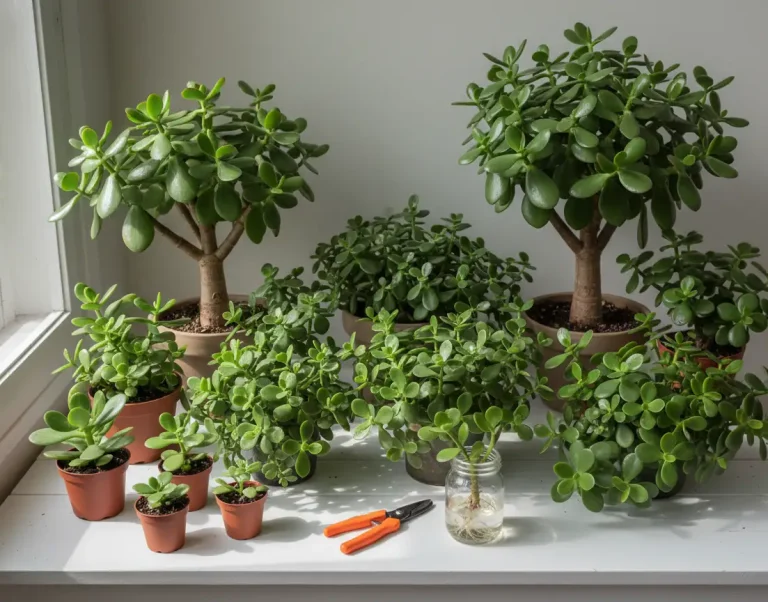
| Young (under 12″ tall) | Every 2–3 years | 1–2 inches wider | Early spring |
| Mature (12–36″ tall) | Every 4–5 years | 1 inch wider only | Spring or summer |
| Old specimen (over 3 ft) | Every 6–8 years or never (top-dress instead) | Same pot or self-watering | Early spring |
I never jump more than one pot size at a time. Going too big invites root rot, the number-one jade killer.
How to Repot a Root-Bound Jade Without Stressing It
- Water lightly two days before repotting so roots are hydrated but soil isn’t soggy.
- Gently tip the plant sideways and tap the pot rim; most root-bound jades slide out easily.
- Tease apart the outer circling roots with your fingers or a chopstick. Do NOT wash the roots unless they’re rotting.
- Trim only dead or black roots. Healthy jade roots are firm and white/tan.
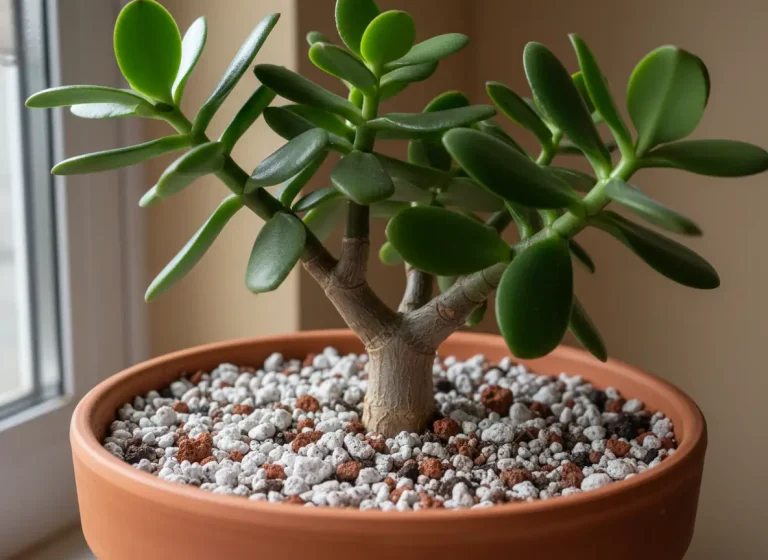
- Place in fresh cactus/succulent mix with plenty of perlite or pumice.
- Wait 5–7 days before watering to let any damaged roots callus.
I’ve repotted hundreds this way with zero losses.
Pot Material and Shape Choices That Make a Difference
| Material | Drainage Speed | Weight/Stability for Top-Heavy Jades | My Recommendation |
|---|---|---|---|
| Terra-cotta | Fastest | Excellent | Best for most homes |
| Ceramic | Moderate | Good | Fine if it has drainage hole |
| Plastic | Slowest | Light (tip risk) | Only for very small plants |
| Self-watering | Variable | Great stability | Brilliant for large floor specimens |
Heavy terra-cotta remains my gold standard because it wicks excess moisture and counters the top-heavy nature of older jades.
Can You Keep a Jade Permanently Root Bound on Purpose?
Yes, but with caveats. Bonsai enthusiasts do it successfully by:
- Using very shallow training pots
- Root-pruning aggressively every 1–2 years
- Feeding heavily during growing season
- Accepting slower growth and smaller leaves
For regular houseplant owners, I don’t recommend it unless you’re prepared to treat the plant like a true bonsai.
Frequently Asked Questions
Do jade plants bloom more when root bound?
Mild root constriction often triggers flowering in mature plants (8+ years old), but severe binding reduces overall health and can prevent blooms entirely.
Is it safe to leave my jade plant root bound forever?
Only if you accept stunted growth and higher risk of sudden decline. Most healthy, long-lived specimens get repotted every 4–7 years.
How can I tell if my jade is root bound without removing it from the pot?
Lift the plant gently. If it lifts the entire pot with no wiggle and you see roots poking out drainage holes, it’s root bound.
Will repotting a root-bound jade make it grow faster?
Usually yes. Within 4–8 weeks you’ll see larger new leaves and faster stem extension after proper repotting.
What’s the biggest pot a jade plant needs?
Rarely larger than 16–18 inches in diameter, even for 4-foot specimens. Wider is better than deeper.
Treat Root Binding as a Tool, Not a Rule
After fifteen years and more than eighty jade plants (from cuttings to 40-year-old monsters), I treat root binding the same way I treat mild drought stress: a useful tool in moderation, never an absolute. Let your jade get snug enough to stay compact and possibly flower, but intervene the moment you spot distress signals.
Give it fresh soil and just a little more root room every four to six years, and you’ll be rewarded with those thick, shiny, jewel-tone leaves that made you fall in love with Crassula ovata in the first place.