I’ve kept both money plants and jade plants side by side for over a decade, and I still get asked this question almost weekly: “Which one should I actually buy?”
The short answer is neither is universally “better”; they excel in completely different ways. Yet after watching hundreds of beginners succeed (or struggle) with each, I’ve learned that choosing the wrong one for your lifestyle is the fastest way to end up with a sad, drooping plant.
In this detailed comparison, I’ll walk you through every real-world factor, from growth speed and care difficulty to air-purifying ability and even feng shui symbolism, so you can pick the perfect one for you the first time.
What We’re Actually Comparing: The Two Plants Behind the Names
Before we dive in, let’s clear up the confusion that trips most people.
The “Money Plant” most people mean today is Epipremnum aureum (commonly called Devil’s Ivy, Pothos, or Golden Pothos). It’s the vining plant with heart-shaped leaves you see cascading from shelves everywhere.
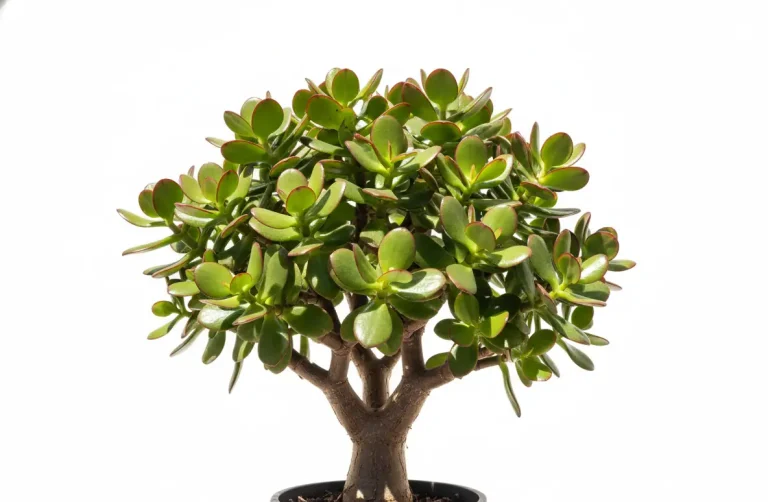
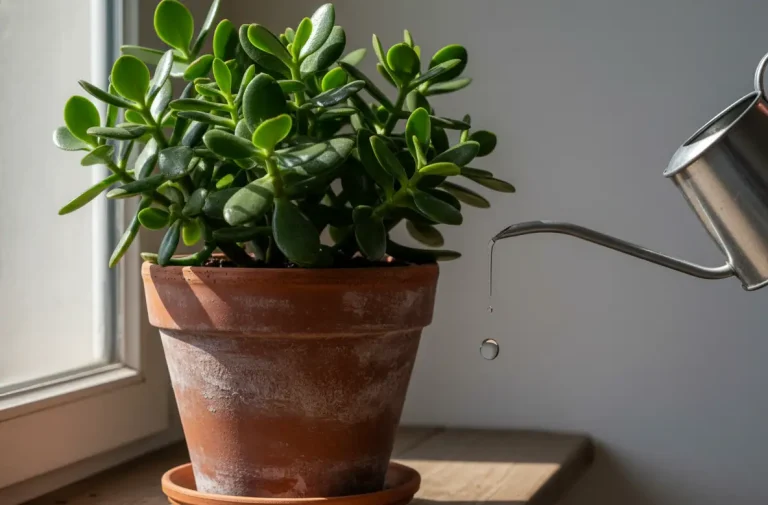
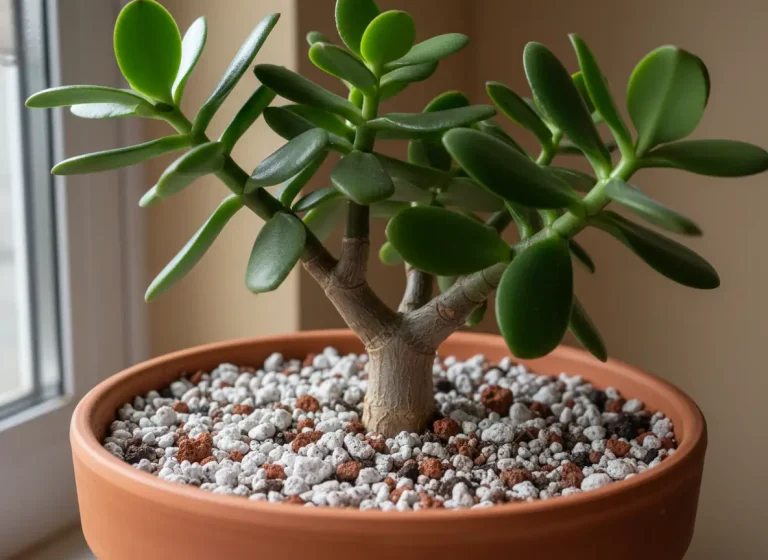
The “Jade Plant” is Crassula ovata (sometimes called Money Tree in certain regions, which adds to the mix-up). It’s the thick-stemmed succulent with coin-shaped leaves that looks like a miniature tree.
They’re completely different species from different families. One is a tropical vine, the other a desert succulent. That’s why they behave so differently in our homes.
Care Difficulty Head-to-Head (The Reality After 10+ Years)
I’ve killed both as a beginner, and I’ve also kept specimens alive for 15 years. Here’s the honest difficulty breakdown:
| Factor | Money Plant (Epipremnum aureum) | Jade Plant (Crassula ovata) | Winner for Beginners |
|---|---|---|---|
| Watering forgiveness | Extremely forgiving; survives weeks of neglect | Very easy to overwater and rot | Money Plant |
| Light requirements | Thrives in low to bright indirect light | Needs direct sun for best shape and color | Money Plant |
| Humidity tolerance | Loves average to high humidity | Prefers dry air; hates misting | Tie |
| Temperature range | 15-32°C (59-90°F) | 10-29°C (50-85°F); tolerates colder winters | Jade (slightly) |
| Pruning needed | Rarely; just trim leggy vines | Frequent to maintain tree shape | Money Plant |
| Pest resistance | Occasional mealybugs/spider mites | Very resistant; rarely bothered | Jade Plant |
| Overall “set and forget” score | 9.5/10 | 7/10 | Money Plant |
Real talk: if you’re the type who forgets plants exist for three weeks, get the money plant. I’ve left mine for a month while traveling and it still looked perfect when I returned.
Growth Rate and Maximum Size (What Actually Happens Indoors)
People love showing dramatic “before and after” photos, but here’s what really happens in average homes:
| Aspect | Money Plant | Jade Plant | Winner Depends On Goal |
|---|---|---|---|
| Growth speed | Extremely fast; 30-60 cm per year easily | Slow to moderate; 5-15 cm per year | Money Plant |
| Mature indoor height | Unlimited; vines can reach 6+ meters if allowed | Usually 60-120 cm as bonsai-style tree | Depends |
| Time to “wow” factor | 6-12 months | 5-10 years for thick trunk and tree look | Money Plant |
| Propagation ease | Stupidly easy; stem cutting in water = 100% success | Easy leaf or stem cuttings, slower rooting | Money Plant |
If you want fast gratification and lush coverage, money plant wins. If you’re playing the long game and want something that slowly becomes a family heirloom, jade is magical.
Air Purification and NASA Study Reality Check
Both plants appear on NASA’s famous Clean Air Study list, but the differences matter:
- Money Plant (Pothos): Top 10 for removing formaldehyde, benzene, xylene, and toluene. Exceptional at cleaning air in low-light conditions.
- Jade Plant: Removes toluene and some VOCs, but significantly less efficient overall because of slower metabolism and smaller leaf surface area.
Multiple follow-up studies (including University of Georgia research) confirm pothos removes 70-80% more pollutants per square foot of leaf area than most succulents.
Winner for actual air purification: Money Plant, hands down.
Feng Shui and “Money Attracting” Beliefs
This is where things get culturally fascinating.
In traditional Chinese feng shui:
- Jade Plant: Classic “money tree” because round leaves resemble coins and thick trunk symbolizes stability. Placed in southeast “wealth corner.”
- Money Plant: Considered powerful for wealth attraction in India and parts of Southeast Asia. Round leaves again symbolize coins, and the way it grows upward represents upward financial mobility.
Verdict? Both are used for exactly the same purpose in different cultures. Neither has stronger “energy”; it’s regional preference.
Aesthetic and Decor Style Fit
| Style | Money Plant Works Best | Jade Plant Works Best |
|---|---|---|
| Modern minimalist | Trailing from high shelves | As sculptural bonsai specimen |
| Bohemian/jungle vibe | Perfect; creates lush cascades | Looks out of place |
| Zen/Japanese inspired | Can work trained on hoops | Ideal; natural bonsai look |
| Office desk | Great in hanging planters | Perfect as small “tree” |
| Floor statement plant | Only if supported on moss pole | Naturally grows into impressive tree form |
Toxicity and Safety (Especially With Pets or Kids)
- Money Plant: Mildly toxic; causes mouth irritation if chewed (calcium oxalate crystals)
- Jade Plant: Also mildly toxic; same compounds
Both are ASPCA-listed as toxic to cats and dogs, though jade seems to cause more severe symptoms in rare cases.
If you have curious pets, neither is truly safe, but many cat owners successfully keep money plants high out of reach.
Cost and Availability Reality Check
| Factor | Money Plant | Jade Plant |
|---|---|---|
| Starter plant price | $5-15 | $10-30 |
| Mature specimen price | $50-150 (large hanging baskets) | $100-1000+ (old thick-trunk specimens) |
| Availability | Literally everywhere | Common, but impressive specimens harder to find |
My Personal Recommendation After Growing Both for 15 Years
Here’s my honest breakdown based on lifestyle:
Choose Money Plant if you:
- Are a beginner or have low/medium light
- Want fast growth and lush coverage
- Travel frequently or forget to water sometimes
- Live in an apartment with limited direct sun
- Want maximum air purification
Choose Jade Plant if you:
- Have bright direct light (south or west window)
- Love the bonsai/mini-tree aesthetic
- Enjoy pruning and shaping plants
- Want a plant that can become a family heirloom
- Prefer slow-growing, architectural specimens
I keep both because they serve completely different purposes. My money plants fill dark corners and clean the air like champions. My 12-year-old jade sits on my wealth altar and makes me smile every time I see its thick trunk.
Frequently Asked Questions
Is money plant and jade plant the same thing?
No. Money plant usually refers to Epipremnum aureum (pothos/devil’s ivy), while jade plant is Crassula ovata. They’re completely different species despite both having rounded leaves.
Which plant is luckier for money?
Both are considered lucky in different cultures. Jade plant is the traditional Chinese money tree, while money plant (pothos) is hugely popular for wealth attraction in Indian Vastu and many Southeast Asian traditions.
Can money plant and jade plant be kept together?
Absolutely! They have different care needs (money plant likes more water, jade likes dry conditions), but many people successfully grow them in the same room as long as they’re potted separately.
Which grows faster, money plant or jade plant?
Money plant grows dramatically faster. A money plant can add meters of growth in a single season, while jade plants typically grow just a few centimeters per year indoors.
Which is better for beginners?
Money plant (pothos) is significantly more forgiving of neglect, overwatering, underwatering, and low light. It’s my top recommendation for absolute beginners.
The truth is there’s no single “better” plant; only the better plant for your specific home, lifestyle, and aesthetic preferences. Both have brought me immense joy in completely different ways. Pick the one that matches your reality, not someone else’s Instagram aesthetic, and you’ll have a thriving green companion for years.
Ready to choose your perfect plant? Start with honest assessment of your light conditions and how often you actually remember to water. Your future plant (and your future self) will thank you.the same thing?”,