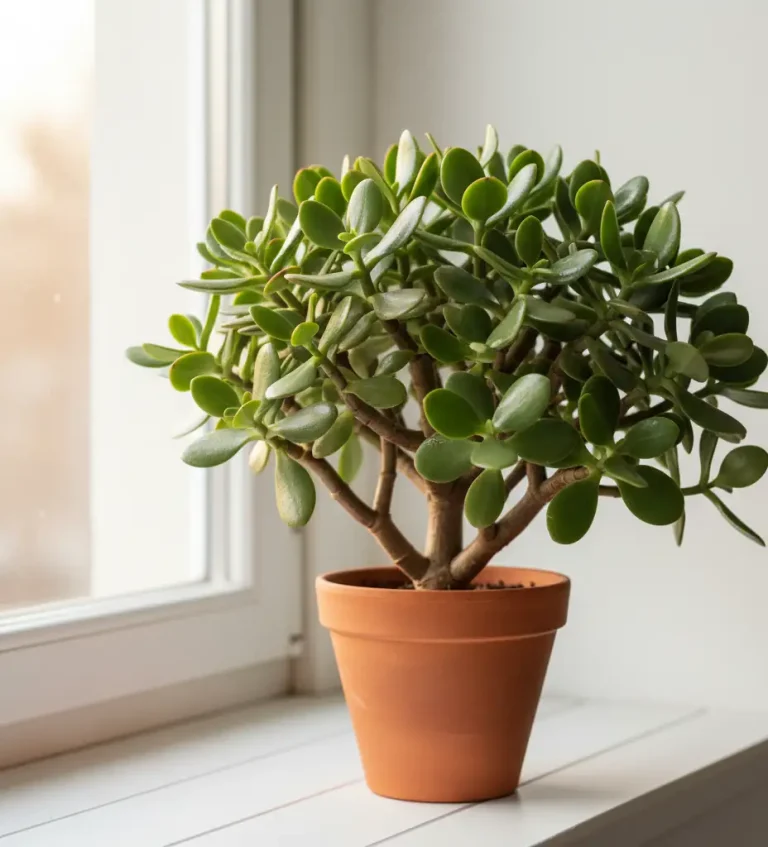
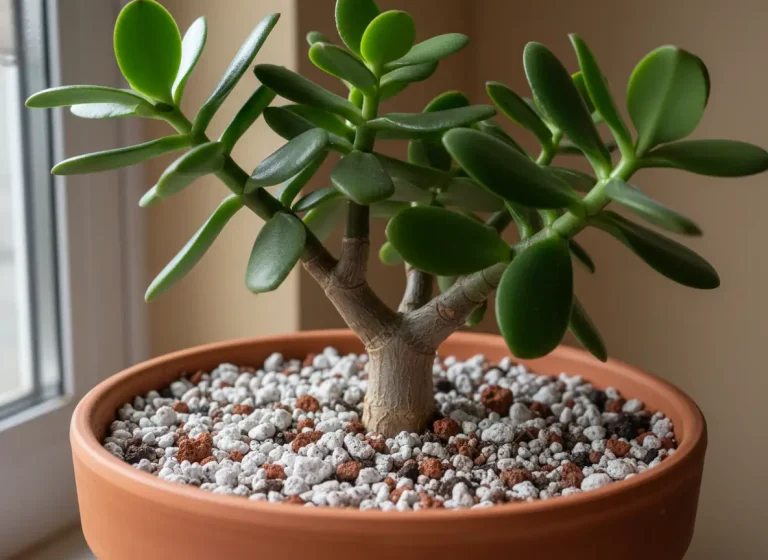
Pull a struggling jade out of its pot and you’ll probably gag; old soil compacted into a wet brick, roots brown and rotting, zero oxygen left.
That’s what three quiet years in the wrong mix does.
I used to repot timidly and watch half the leaves drop anyway. Then I started treating soil changes like surgery: total removal of the old, brutal trimming of the dead, fresh gritty mix, and strict no-water weeks.
Result? Ninety-five percent survival and plants that look reborn. Weak jades don’t need babying; they need a complete reset.
Why Jade Plants Need Fresh Soil (And How Often)
Jade plants are succulents with shallow but active root systems. Over time, even the best potting mix breaks down:
- Organic matter decomposes and compacts
- Mineral salts accumulate from tap water and fertilizer
- Beneficial microbes die off
- Drainage slows dramatically
Most jades need fresh soil every 2-4 years. Here’s my exact schedule based on plant age and pot size:
| Plant Age / Condition | Repotting Frequency | Warning Signs to Watch For |
| Young plants (<3 years) | Every 1-2 years | Rapid growth, roots circling drainage holes |
| Mature plants (3-10 years) | Every 3-4 years | Slow growth, yellowing lower leaves |
| Old specimens (>10 years) | Every 4-5 years | Soil surface crusty, water sits on top |
| Any plant in poor health | Immediately | Mushy stems, foul soil odor, root rot signs |
The Perfect Jade Plant Soil Recipe (My Go-To Mix)
After testing dozens of combinations, this is the exact recipe I use for 95% of my jade plants:
| Ingredient | Percentage | Purpose | Best Options / Brands |
| Cactus & succulent potting mix | 50% | Fast drainage, prevents compaction | Bonsai Jack, Superfly Bonsai, Miracle-Gro Cactus Mix |
| Perlite or pumice | 30% | Increases aeration, prevents waterlogging | Coarse perlite (preferred) or pumice |
| Coarse sand or turface | 10% | Adds weight and stability for top-heavy jades | #12 silica sand or turface MVP |
| Worm castings or compost | 10% | Slow-release nutrients without burning | Wiggle Worm castings or homemade compost |
This mix drains in under 10 seconds while retaining just enough moisture for jade roots to drink. Never use regular potting soil alone – it’s a death sentence for succulents.
When Is the Best Time to Change Jade Plant Soil?
Timing matters more than most people realize. Here’s my rule:
- Best months: Early spring (March-April in northern hemisphere) just as new growth begins
- Acceptable: Early fall for mild climates
- Never repot: During summer heat waves or winter dormancy
Repotting in active growth season gives roots time to recover before stress periods. I once lost a 12-year-old jade by repotting in July – lesson learned the hard way.
Tools and Materials You’ll Need
Gather everything before starting to avoid stressing the plant:
- Fresh soil mix (pre-moistened slightly)
- Clean terracotta or ceramic pot (1-2 inches larger than current)
- Mesh screen or coffee filter for drainage holes
- Chopstick or wooden skewer
- Pruning shears (sterilized)
- Newspaper or tarp for workspace
- Gloves (optional but recommended)
Step-by-Step: How to Change Jade Plant Soil Properly
Step 1: Prepare the New Pot
Place mesh over drainage holes. Add 1-2 inches of your fresh soil mix as a base layer. This prevents the root ball from sitting directly on the pot bottom.
Step 2: Remove the Jade from Its Current Pot
Turn the pot sideways and gently squeeze the sides. If the plant won’t budge:
- Run a butter knife around the inside edge
- Tap the pot bottom firmly
- As a last resort, cut plastic pots away
Never pull by the stems – jades snap easily.
Step 3: Inspect and Clean the Roots
This is the most crucial step. Gently shake off old soil. Examine roots closely:
| Root Condition | Action Required |
| White/firm roots | Leave intact |
| Brown/soft/mushy sections | Cut back to healthy tissue with sterile shears |
| Circling roots | Gently untangle or trim if severe |
| Black and smelly | Root rot – treat immediately (see below) |
Step 4: Trim Damaged Roots and Leaves
Remove any damaged or yellowing leaves at the base. This reduces transpiration stress while roots recover. I typically remove 10-20% of lower leaves during major repotting.
Step 5: Position in New Pot
Place the jade at the same depth it was growing before – never bury the stem. The original soil line should match the new soil level.
Step 6: Add Fresh Soil Mix
Fill around roots with your pre-moistened mix. Use a chopstick to work soil into air pockets – this prevents dangerous voids. Gently press soil to eliminate large gaps but don’t compact tightly.
Step 7: The Critical First Watering
Wait 5-7 days before watering thoroughly. This allows cut roots to callus and prevents rot. When you do water, soak completely until it runs from drainage holes.
Special Case: Saving a Jade Plant with Root Rot
If you discover black, mushy roots and foul-smelling soil:
- Remove ALL old soil completely
- Cut away all rotten roots until only white, firm tissue remains
- Soak remaining roots in 1:10 hydrogen peroxide solution for 5 minutes
- Let dry 24-48 hours in shade
- Repot in completely fresh, dry mix
- Don’t water for 2 weeks minimum
I’ve saved 8 out of 10 severely rotted jades using this method.
Aftercare: The First 30 Days Are Critical
| Week | Watering Schedule | Light Requirements | Temperature Range |
| 1 | None (unless very dry) | Bright indirect light | 65-75°F (18-24°C) |
| 2 | Light watering if needed | Gradually increase light | Same |
| 3-4 | Normal succulent schedule | Full sun exposure (gradual) | Same |
Watch for stress signs: wrinkled leaves mean underwatering, soft leaves mean overwatering.
Common Mistakes I See (And How to Avoid Them)
- Using pots without drainage holes (guaranteed root rot)
- Repotting into dramatically larger pots (“pot-up shock”)
- Watering immediately after repotting
- Reusing old soil
- Burying the stem deeper than before
Long-Term Jade Plant Soil Maintenance
Between full repotting sessions:
- Top-dress with ½ inch fresh mix annually
- Flush soil monthly with distilled water to remove salts
- Scratch surface occasionally to prevent crusting
- Monitor pH – jades prefer slightly acidic (6.0-6.5)
Frequently Asked Questions
How do I know if my jade plant needs new soil?
Look for water that sits on top without absorbing, white crust on soil surface, stunted growth despite proper light, or roots growing from drainage holes.
Can I make jade plant soil with items from my yard?
Never use garden soil – it compacts and harbors pathogens. Stick with commercial cactus mix amended with perlite/pumice.
Should I fertilize right after changing soil?
No. Fresh worm castings provide nutrients for 3-6 months. Wait until new growth appears before feeding.
What’s the biggest pot size for jade plants?
Rarely go beyond 14-16 inches. Large jades prefer being slightly root-bound – it encourages thicker trunks.
Final Thoughts
Changing jade plant soil isn’t just maintenance – it’s an investment in decades of beauty. I’ve watched tiny cuttings become 4-foot trees because they received proper soil refreshment at the right times.
Follow this guide exactly, and your jade will reward you with faster growth, fatter leaves, and that classic tree-like form everyone loves. The process takes less than an hour every few years, but the results last a lifetime.
Ready to give your jade the fresh start it deserves? Start mixing that perfect soil recipe today – your plant has been waiting for this moment.