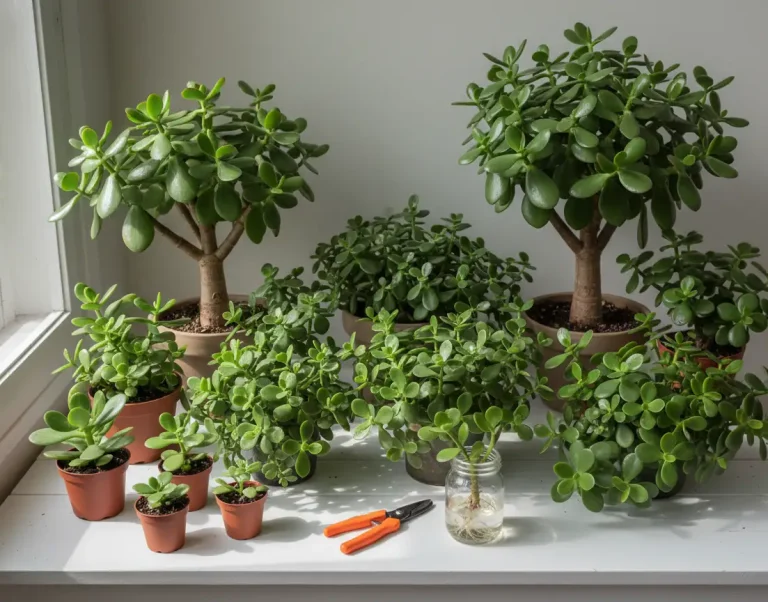
I’ve lost count of how many Elephant Bush plants I’ve rescued from the brink of death, but every single one bounced back once I understood their true needs. This chunky-leaved South African native, Portulacaria afra, gets mistaken for a jade plant constantly, yet it forgives neglect far better and grows significantly faster.
If yours has suddenly dropped leaves or refuses to put on new growth, the fix almost always comes down to replicating its native karoo environment.
I’ll walk you through everything I’ve learned over years of growing these beauties successfully in pots, bonsai form, and even as landscape shrubs.
What Exactly Is Elephant Bush (Portulacaria afra)?
Portulacaria afra goes by many names: elephant bush, dwarf jade, spekboom, or porkbush. Native to South Africa’s Eastern Cape, it forms dense thickets that elephants and other animals love to eat (hence the name). Unlike true jade plants (Crassula ovata), elephant bush has smaller, rounder leaves and reddish-brown stems that stay softer and more flexible. The variegated version, ‘Rainbow Bush’ or ‘Variegata’, has creamy-pink edges that make it especially stunning.
What makes this species special is its incredible drought tolerance combined with rapid growth. In ideal conditions, it can grow 12-20 inches per year and eventually reach 8-12 feet outdoors. Indoors, we typically keep them smaller through pruning.
Light Requirements: The Make-or-Break Factor
Light is the single biggest reason elephant bush plants struggle indoors. These plants evolved under intense African sun and need the brightest light you can possibly give them.
Indoors, place your elephant bush directly in a south-facing window with zero obstruction. East or west windows work only if they’re unobstructed and receive at least 6 hours of direct sun. I’ve grown specimens that thrived under grow lights running 12-14 hours daily at 600-1000 PPFD.
Signs of insufficient light include:
- Stretched, leggy growth with long spaces between leaves
- Pale green or yellowish leaves
- Tiny new leaves that drop quickly
- Slow or completely stalled growth
| Light Condition | Growth Rate Expected | Leaf Size | Stem Color |
|---|---|---|---|
| Direct outdoor sun | Very fast (12-20″/yr) | Large | Reddish-brown |
| South-facing window | Fast | Medium-large | Reddish |
| Bright indirect light | Moderate | Medium | Green |
| Low light (<2000 lux) | Very slow/stretched | Small | Pale green |
Watering Elephant Bush: Less Is Almost Always More
The most common way people kill elephant bush is through overwatering. This plant has evolved to survive months with zero rain, storing water in both leaves and stems.
My rule of thumb: water only when the soil is completely dry down to 3-4 inches. In winter, this might mean watering once every 4-6 weeks. During active summer growth, perhaps every 10-14 days.
Proper watering technique:
- Water thoroughly until it runs out drainage holes
- Empty saucer after 30 minutes (never let it sit in water)
- Wait until soil is bone dry before watering again
- Reduce watering dramatically in winter
| Season | Watering Frequency (Typical) | Soil Dryness Before Watering |
|---|---|---|
| Spring | Every 10-14 days | Completely dry top 3-4″ |
| Summer | Every 7-14 days | Completely dry top 3-4″ |
| Fall | Every 2-3 weeks | Completely dry |
| Winter | Every 4-6 weeks | Completely dry |
Soil and Potting Requirements
Elephant bush demands extremely well-draining soil. Regular potting mix holds way too much moisture and leads to root rot.
My perfect mix recipe:
- 50% cactus/succulent soil
- 30% perlite or pumice
- 20% coarse sand or turface
Terracotta pots work best because they breathe and help prevent overwatering. Always choose pots with drainage holes. I repot mine every 2-3 years in spring, going up only one pot size each time.
Temperature and Humidity Preferences
These plants handle temperature extremes better than most succulents. They grow happily between 55-85°F (13-29°C). They can tolerate brief drops to 35°F (2°C) but prefer to stay above 50°F.
Unlike many houseplants, elephant bush doesn’t need high humidity. Average household humidity (30-50%) works perfectly. In fact, high humidity combined with poor airflow invites fungal problems.
Fertilizing: When and How Much
During the growing season (spring through early fall), I feed mine monthly with a balanced fertilizer diluted to half strength. My favorite is a 10-10-10 or specifically formulated cactus fertilizer.
Stop fertilizing completely from October through February. The plant goes semi-dormant and doesn’t need extra nutrients.
Pruning and Shaping Elephant Bush
One of the best features of Portulacaria afra is how willingly it accepts pruning. You can cut it back by up to 70% and it will bounce back stronger.
Pruning tips I’ve learned:
- Always cut just above a leaf node
- Remove any thin, weak growth
- Prune in spring for best recovery
- Use sharp, clean tools to prevent disease
- Save cuttings for propagation (they root incredibly easily)
Many people grow elephant bush as bonsai because it develops woody trunks quickly and responds beautifully to pruning.
Propagation Methods That Actually Work
I’ve propagated hundreds of these plants using three foolproof methods:
- Stem cuttings (easiest): Cut 4-6 inch pieces, let callous 2-3 days, plant in dry soil, wait 3-4 weeks for roots
- Leaf propagation: Twist leaves cleanly from stem, lay on dry soil, mist occasionally
- Water propagation: Works surprisingly well with elephant bush cuttings
Success rates in my experience:
- Stem cuttings in soil: 95%
- Leaf propagation: 70%
- Water propagation: 85%
Common Problems and Solutions
Dropping Leaves
Usually caused by sudden environmental changes. Common triggers include moving the plant, temperature swings, or overwatering. The plant drops older leaves to conserve resources. Give it stable conditions and it will recover.
Wrinkled or Shriveled Leaves
Underwatering or root damage. Check soil moisture first. If soil is dry, water thoroughly. If soil is wet but leaves are shriveled, root rot has likely occurred.
Yellow Leaves
Almost always overwatering. Let soil dry completely and improve drainage.
Black Spots or Stem Rot
Fungal infection from too much moisture. Cut away affected areas with sterilized tools and improve airflow.
| Symptom | Most Likely Cause | Immediate Action |
|---|---|---|
| Sudden leaf drop | Environmental shock | Stabilize conditions, reduce handling |
| Wrinkled leaves | Underwatering | Water thoroughly once soil is dry |
| Yellow soft leaves | Overwatering | Let dry completely, improve drainage |
| Leggy stretched growth | Insufficient light | Move to brightest possible location |
| Black stems | Root/stem rot | Remove affected parts, repot |
Growing Elephant Bush Outdoors
In USDA zones 9-11, elephant bush makes an outstanding landscape plant. In South Africa, spekboom thickets play a major role in carbon sequestration (one hectare can sequester 4-10 tons of CO2 per year).
Outdoor plants grow much faster and develop thicker trunks. They handle full sun, drought, poor soil, and even salt spray near coasts.
Variegated Elephant Bush Care Differences
The variegated forms need slightly different care:
- Require brighter light to maintain coloration
- Grow slower than green forms
- More sensitive to overwatering
- Benefit from slightly more frequent feeding
Winter Care Indoors
When daylight drops below 10 hours, elephant bush slows dramatically. Reduce watering to minimum, stop fertilizing, and accept slower growth. Some leaf drop is normal during winter.
Final Thoughts on Elephant Bush Success
After growing Portulacaria afra for years in every condition imaginable, I’ve learned that success comes down to three things: bright light, proper watering, and not fussing too much. This is one of the most forgiving plants available. Give it sun, let it dry between waterings, and prune when needed. That’s really all there is to it.
Start with the healthiest specimen you can find, put it in the brightest window you have, and resist the urge to water “just because.” Within months, you’ll have a lush, thriving plant that makes everyone who sees it jealous.
Ready to transform your elephant bush from surviving to thriving? The difference between a mediocre specimen and a showpiece comes down to understanding its African roots and giving it conditions that match. You’ve got this.
FAQ About Elephant Bush Jade Plant Care
Is elephant bush the same as jade plant?
No, though they’re often confused. Elephant bush (Portulacaria afra) and jade plant (Crassula ovata) are different species from different genera, though both are succulents with similar appearance.
How often should I water my elephant bush?
Water thoroughly only when soil is completely dry, typically every 10-21 days depending on season and conditions. Always err on the side of underwatering.
Why is my elephant bush dropping leaves?
Sudden leaf drop usually indicates environmental stress: moving the plant, temperature changes, overwatering, or underwatering. Stabilize conditions and it will recover.
Can elephant bush grow indoors?
Yes, very successfully with bright light. South-facing windows or grow lights are essential for good growth indoors.
How fast does elephant bush grow?
In optimal conditions, 12-20 inches per year outdoors. Indoors with excellent light, expect 6-12 inches annually.
Is elephant bush toxic to pets?
No, Portulacaria afra is non-toxic to cats and dogs, making it safer than true jade plants (which are mildly toxic).