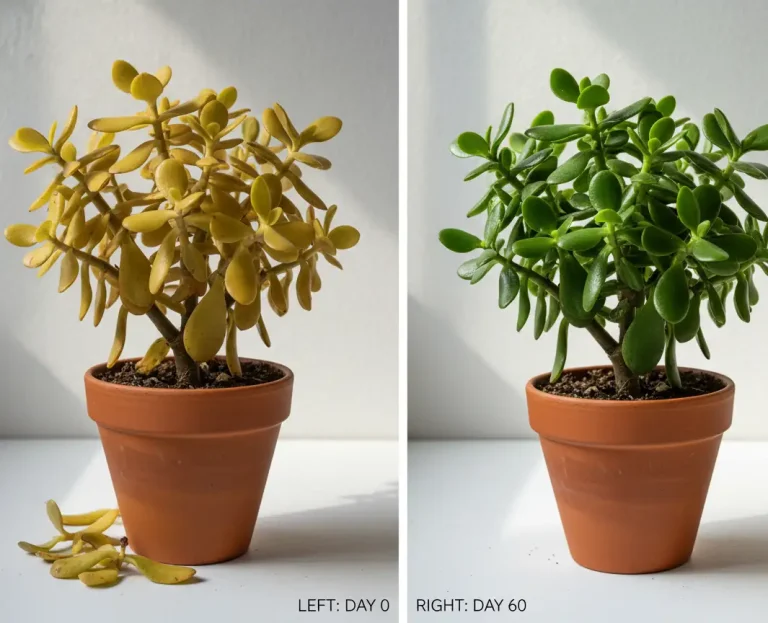
One extra watering and suddenly every leaf on your jade looks waterlogged and translucent, ready to burst.
The stem base turned black while you were still telling yourself “it’ll dry out.” I’ve made that mistake on plants worth hundreds of dollars.
The rescue is brutal but simple: get it out of that wet grave, amputate everything soft, let the survivor callus, and repot into soil that drains like sand. I’ve saved jades that had literally two inches of healthy stem left.
Rot doesn’t get the final word if you move faster than it does.
Why Overwatering Kills Jade Plants So Fast
Jade plants evolved in the arid regions of South Africa and Mozambique, where they survive on infrequent rainfall and excellent drainage. Their thick leaves and stems store water like tiny reservoirs, making them classic drought-tolerant succulents.
When we overwater, we drown the roots in oxygen-starved conditions. Root rot sets in within days as fungal pathogens like Pythium and Phytophthora attack weakened roots. Once the roots die, they can no longer absorb water or nutrients, even if the soil feels wet. The plant literally starves while sitting in water – a cruel paradox that confuses many new owners.
| Symptom | What It Actually Means | Urgency Level |
| Soft, mushy leaves | Water pressure has burst cell walls | High |
| Translucent leaves | Leaves filled with excess water | Very High |
| Yellowing older leaves | Root function compromised | High |
| Black/brown stem base | Advanced stem rot | Critical |
| Soil smells sour | Anaerobic bacteria active | Critical |
| Leaves falling easily | Plant sacrificing leaves to survive | Medium-High |
Immediate Emergency Action: The First 24 Hours
Stop watering immediately – this is non-negotiable. Every additional drop accelerates the damage.
Step 1: Remove from Pot and Assess Damage
Gently tip the plant out of its pot. If the soil is soggy and smells like a swamp, you’ve confirmed overwatering. Healthy jade roots are firm and white. Overwatered roots turn brown, black, or transparent and slimy.
Step 2: Prune Dead Roots Ruthlessly
Using sterilized scissors or pruning shears, cut away all dark, mushy, or smelly roots. Don’t hesitate – leaving infected roots guarantees failure. Healthy roots will regrow, but dead ones spread rot upward into the stem.
I’ve saved plants that had only 10% of their root system remaining. The key is removing every trace of rot.
Step 3: Treat Remaining Roots
Soak healthy remaining roots in a 1:10 hydrogen peroxide solution (1 part 3% hydrogen peroxide to 10 parts water) for 3-5 minutes. This kills surface fungi and oxygenates the roots.
Stem Rot: When the Damage Has Climbed Higher
If the stem base has turned black or brown, you must act aggressively.
Emergency Beheading Technique
Cut the plant 1-2 inches above the highest point of rot, ensuring your cutting includes only healthy green tissue. A single black streak means the rot is still spreading – keep cutting higher until you see clean white or light green tissue throughout.
Let the cutting callus for 3-7 days in bright indirect light. This hardens the cut surface and prevents new rot.
| Rot Location | Success Rate of Rescue | Recommended Action |
| Only lower roots | 95%+ | Root pruning + repotting |
| Lower stem (under 30%) | 85-90% | Beheading above rot |
| Mid-stem rot | 70-80% | Multiple cuttings from healthy parts |
| Top growth only healthy | 90%+ | Propagate healthy stems |
| Entire plant mush | <20% | Take leaf cuttings as last resort |
The Perfect Soil Mix for Recovery
Never return your jade to the same soil. Standard potting soil holds far too much water for succulents.
My proven recovery mix:
- 50% cactus/succulent soil
- 30% perlite or pumice
- 20% coarse sand or turface
This creates the fast-draining, airy environment jade plants require. The mixture should feel gritty and fall apart easily when squeezed – never pack tightly.
Repotting Your Rescued Jade Plant
Choose a pot only 1-2 inches wider than the remaining root system or cutting. Terracotta breathes better than plastic and helps prevent future overwatering.
Proper Repotting Technique:
- Cover drainage holes with mesh or coffee filter
- Add 1-inch layer of drainage material (gravel or hydroton)
- Position plant so stem base sits just above soil line
- Fill with recovery mix, tapping gently to settle
- Wait 7-14 days before first watering
Water sparingly – when you do water, drench thoroughly then let dry completely. The “soak and dry” method is sacred for jade plants.
Light and Temperature During Recovery
Place in bright indirect light, not direct sun which can stress weakened plants. East or west-facing windows are ideal.
Maintain temperatures between 65-75°F (18-24°C). Avoid cold drafts or heating vents that cause temperature swings.
How Often to Water During Recovery Phase
For the first 2-3 months after rescue:
- Water only when the soil is completely bone dry
- Use the wooden stick test – if it comes out clean and dry 3 inches down, water
- Reduce watering frequency by 50-70% compared to healthy plants
- Always empty saucers – sitting water is death
| Season | Watering Frequency (Recovery Phase) | Notes |
| Spring/Summer | Every 14-21 days | Active growth period |
| Fall | Every 21-28 days | Transition to dormancy |
| Winter | Every 30-45 days | Minimal watering during dormancy |
Propagation: Insurance Policy for Severe Cases
When stem rot is extensive, take multiple cuttings from healthy growth:
- Leaf propagation – gently twist healthy leaves and lay on dry soil
- Stem cuttings – 3-6 inch sections with multiple leaf pairs
- Let callus 3-7 days before planting
Leaf propagation success rate is lower (30-50%) but provides dozens of potential new plants.
Long-Term Prevention Strategies
After rescue, implement these practices:
- Use pots with drainage holes (always)
- Add a 1-inch gravel layer at pot bottom
- Water only when top 3-4 inches of soil are completely dry
- Reduce watering in winter by 70%
- Check soil moisture before every watering
- Repot every 2-3 years to refresh soil
Signs Your Rescue Is Working
- Week 1-2: No new mushy leaves, existing damage stops spreading
- Week 3-4: Cut surfaces fully callused, no foul odors
- Month 2-3: New growth appears at stem tips
- Month 4-6: Roots filling pot, thick healthy leaves developing
I’ve seen plants that looked completely dead sprout new growth after 8 months of patient care. Never give up too soon.
Frequently Asked Questions About Saving Overwatered Jade Plants
How do I know if my jade plant can still be saved?
If any part of the stem is still firm and green, your chances are excellent. Even completely rootless stems can be propagated successfully.
Can I save a jade plant with no roots?
Absolutely. Healthy stem cuttings root readily in proper conditions. The beheading technique saves thousands of jade plants yearly.
Should I use root rot treatment products?
Hydrogen peroxide is safer and more effective than most commercial products. Avoid fungicides unless you’re experienced – they can harm beneficial soil biology.
How long does full recovery take?
Minor cases recover in 3-6 months. Severe root/stem rot cases may need 12-18 months to reach pre-trauma size, but they’ll be stronger and more resilient.
Is bottom watering better for jade plants?
No. Bottom watering encourages roots to grow downward but doesn’t solve overwatering if drainage is poor. Top watering with complete drainage is superior.
Final Thoughts
Your jade plant forgives easily when you correct the core issue. With proper intervention, even severely overwatered specimens return stronger than before, developing the thick trunks and glossy leaves that make them such prized houseplants. The rescue process teaches better care habits that prevent future problems – consider it tough love that creates a healthier, longer-lived plant.
Ready to save your jade? Start with that emergency assessment today – every hour counts when rot is active. Your plant is tougher than it looks, and with these proven techniques, you’ll both come through this stronger.