I remember the day a reader sent me a panicked message with photos of two very different-looking plants, both labeled “jade plant” at the nursery.
One had thick, glossy, coin-shaped leaves; the other had sleek, dark-green, feather-like stems. She was convinced she’d been sold the wrong plant. That single email taught me just how widespread the jade plant vs ZZ plant mix-up really is.
In this guide, I’ll settle the debate with side-by-side evidence, explain why the confusion keeps happening, and help you confidently tell them apart forever. Let’s put the rumors to rest.
Botanical Truth: They Are Completely Different Species
No, a jade plant (Crassula ovata) and a ZZ plant (Zamioculcas zamiifolia) are not the same, related, or even in the same plant family. They belong to entirely separate genera and families, native to opposite sides of the African continent.
| Characteristic | Jade Plant | ZZ Plant |
|---|---|---|
| Scientific name | Crassula ovata | Zamioculcas zamiifolia |
| Family | Crassulaceae (succulent family) | Araceae (aroid family) |
| Native region | South Africa (Eastern Cape) | Eastern Africa (Kenya, Tanzania) |
| Growth habit | Woody succulent shrub | Rhizomatous herbaceous perennial |
| Leaf attachment | Directly on woody stems | On pinnate compound leaf stalks |
| Natural lifespan | Decades (can become tree-like) | Many years, but remains compact |
The only thing they truly share is popularity as nearly indestructible houseplants. Everything else, from DNA to care requirements, is different.
Why People Keep Mixing Them Up
I’ve seen the confusion play out in garden centers, Facebook groups, and even big-box store labels. Here are the top culprits:
- Similar common nicknamesBoth get called “money plant,” “money tree,” or “lucky plant” in various cultures. Jade is tied to feng shui wealth corners; ZZ picked up the same reputation later.
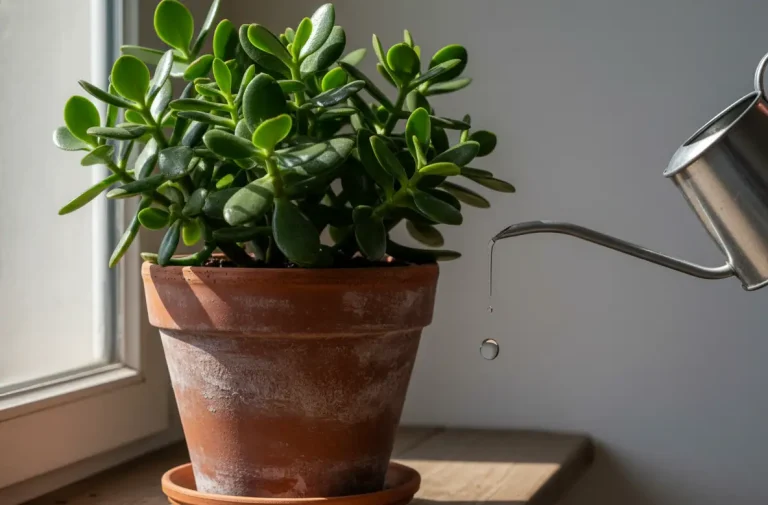
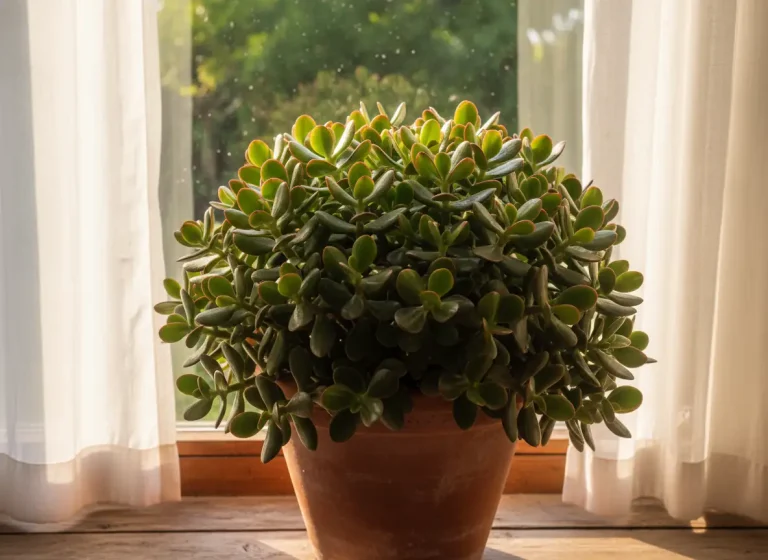
- Shiny, dark-green foliageFrom ten feet away, a healthy jade and a healthy ZZ can both look like they have waxy, emerald leaves. Only up close do you see jade’s oval pads versus ZZ’s pointed leaflets on stalks.
- Low-maintenance reputationBoth tolerate neglect, low light, and infrequent watering. Retailers love slapping “easy care” tags on anything forgiving, which blurs the lines further.
- Mislabeling at retailI’ve personally purchased a ZZ plant labeled “jade plant” at a major chain. Employees often don’t know the difference, and the mistake spreads.
Visual Identification: How to Tell Them Apart in 5 Seconds
Stand in front of the plant and ask yourself these three questions:
- Are the leaves thick, flat, coin-shaped pads growing directly off a woody stem? → Jade plant
- Are the leaves glossy, pointed leaflets arranged along a central stalk like a feather? → ZZ plant
- Does the plant have visible rhizomes or tubers at the soil line? → ZZ plant (jade grows from woody branches)
Here’s a quick reference table I use when clients send me mystery-plant photos:
| Feature | Jade Plant Clue | ZZ Plant Clue |
|---|---|---|
| Leaf shape | Oval, coin-like, fleshy | Oval-pointed leaflets in pairs |
| Leaf arrangement | Alternate directly on stem | Compound, pinnate on petioles |
| Stem texture | Woody, brown/gray with age | Smooth, green, fleshy |
| New growth | Tiny red-edged leaves at tips | Shiny new shoots from soil |
| Underground parts | Thin roots | Potato-like rhizomes |
Care Requirements Side-by-Side (Because They’re NOT the Same)
Even though both are marketed as “impossible to kill,” treating them identically will eventually cause problems.
| Care Factor | Jade Plant Needs | ZZ Plant Needs |
|---|---|---|
| Light | Bright direct or strong indirect | Low to bright indirect (very tolerant) |
| Watering frequency | Every 2-3 weeks, fully dry between | Every 3-6 weeks, extremely drought-tolerant |
| Soil | Fast-draining cactus/succulent mix | Well-draining houseplant mix (holds slightly more moisture) |
| Ideal temperature | 65-80 °F (18-27 °C), hates cold | 60-85 °F (15-29 °C), more cold-tolerant |
| Toxicity | Mildly toxic to pets | Highly toxic (calcium oxalate crystals) |
| Propagation | Leaf or stem cuttings | Division or leaf cuttings (very slow) |
| Common pest | Mealybugs | Virtually pest-free |
I learned the hard way: I once moved a jade into the same low-light corner as my ZZ and watched it stretch and drop leaves within weeks.
Propagation Differences That Prove They’re Unrelated
Want final proof they’re different species? Try propagating both.
- Jade: Snap off a single leaf, let it callus two days, lay it on soil. Babies appear in 3-6 weeks.
- ZZ: Cut a leaflet, stick it in soil, and wait… six months to a year for a tiny rhizome to form (if you’re lucky).
No shared propagation tricks. No hybrid possibilities. They’re botanical strangers.
Frequently Asked Questions
Is a ZZ plant a type of jade plant?
No. They are entirely different species from different plant families with no relation.
Why do some stores label ZZ plants as jade plants?
Misidentification by staff, similar low-maintenance marketing, and shared “money plant” nicknames cause labeling errors.
Can I care for jade and ZZ plants the same way?
Not recommended long-term. Both tolerate neglect, but jade needs significantly more light and hates wet feet.
Which is more toxic to cats and dogs?
ZZ plant is more dangerous because of calcium oxalate crystals that cause intense oral irritation. Jade is mildly toxic but rarely causes severe symptoms.
Which one is better for beginners?
ZZ plant wins for true low-light, forget-to-water lifestyles. Jade requires bright light to stay compact and healthy.
Can jade and ZZ plants be planted together?
Technically yes, but not ideal. Their watering and light needs diverge enough that one will eventually suffer.
Final Verdict
After growing both side-by-side for years, I can say with absolute confidence: jade plant and ZZ plant are not the same, not cousins, not even distant relatives. They simply occupy the same “tough houseplant” niche that makes people lump them together.
Next time someone insists your ZZ is a jade (or vice versa), send them this guide. Better yet, show them the leaves up close. The difference becomes undeniable in seconds.
Got a mystery plant you’re still unsure about? Drop a photo in the comments or send it my way. I’m always happy to play plant detective.