Hey plant friend, take a deep breath. I’m Brian, and I’ve been an indoor-plant specialist for over twelve years.
I’ve rescued more pothos plants than I can count (including my own Snow Queen that once looked like it had been in a leaf barbecue).
If you’re staring at brown spots on your pothos right now, you’re not failing. You’re just one quick diagnosis away from fixing it.
In this 2026-updated guide, I’m giving you every single cause I see in real homes every week, plus the exact steps I personally use to bring them back to lush, trailing glory.
Let’s save your baby together.
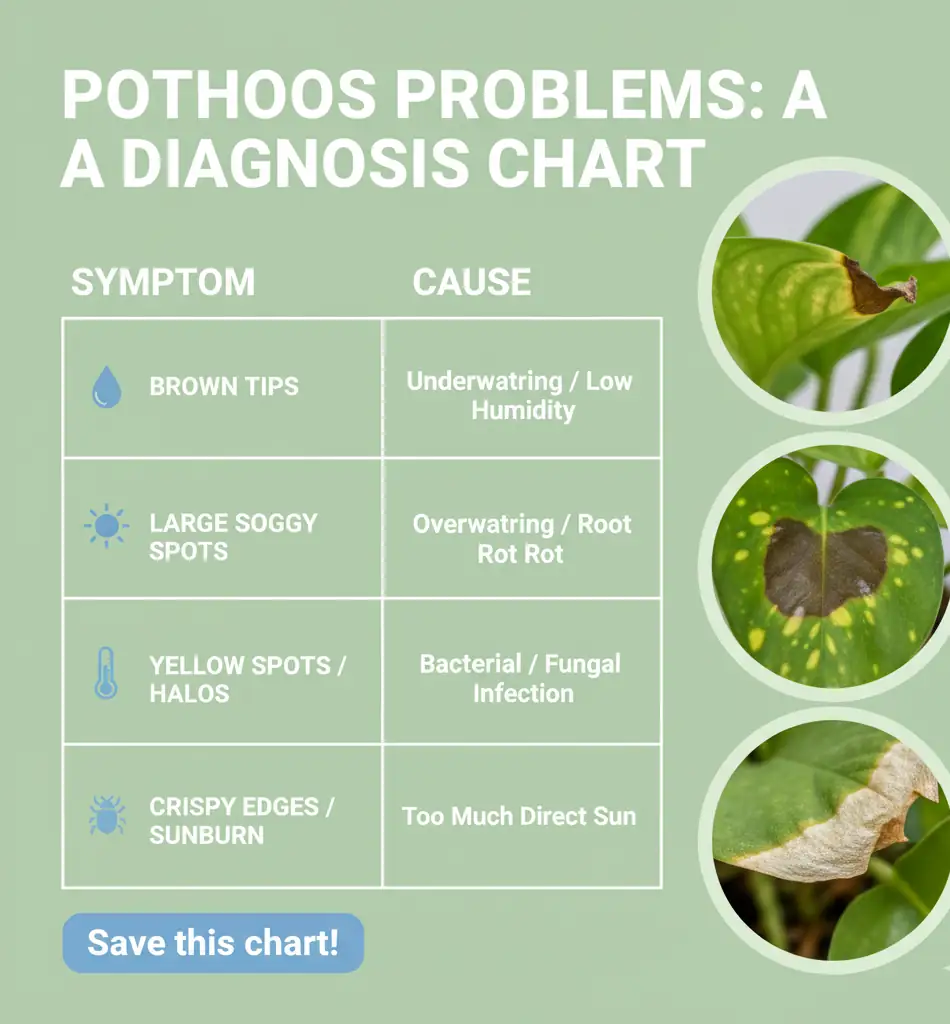
Quick Diagnosis Cheat Sheet (Pin This!)
| Symptom | Most Likely Cause #1 | Most Likely Cause #2 | Do This Right Now |
|---|---|---|---|
| Tiny brown tips only | Underwatering | Low humidity | Water thoroughly + mist leaves |
| Large soggy brown patches | Overwatering / root rot | Fungal infection | Stop watering, check roots today |
| Brown spots with yellow halo | Bacterial leaf spot | Isolate plant immediately | |
| Crispy brown edges + curling | Direct sunlight burn | Fertilizer/salt buildup | Move out of window + flush soil |
| Random speckled brown dots | Pests (thrips or spider mites) | Inspect undersides with phone zoom |
Why Brown Spots Happen: The 12 Real Culprits I See Every Single Week
1. Overwatering and Root Rot – Still the #1 Pothos Killer in 2026
I hate to say it, but 60 % of the brown-spot pothos I see are literally drowning. Pothos are marketed as “impossible to kill,” so people water on a schedule instead of when the plant actually needs it.
How to confirm it’s overwatering
- Soil smells sour or swampy
- Lower leaves turn yellow then brown and drop
- Stems feel soft or mushy near the soil line
My emergency root-rot rescue protocol (works 9 times out of 10)
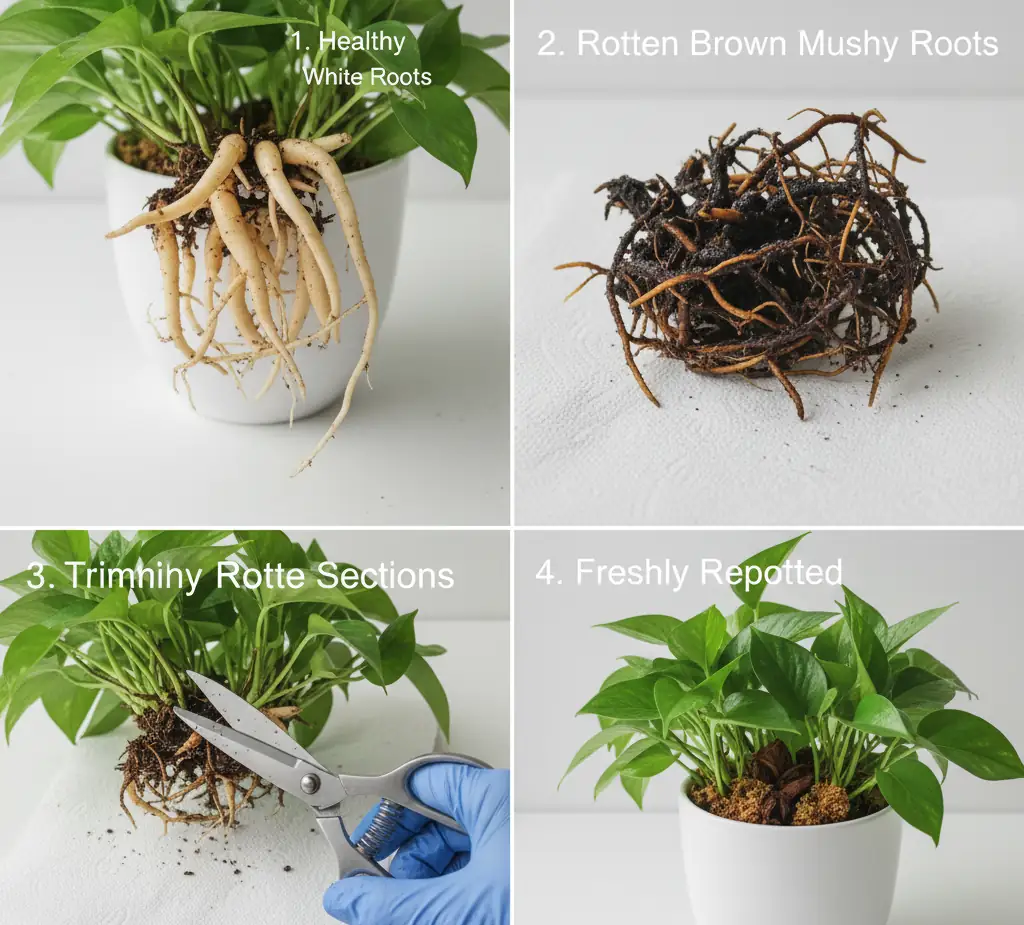
- Gently remove the entire plant from the pot.
- Rinse roots under lukewarm water. Healthy roots are white and firm; rotten roots are brown, black, and slimy.
- Cut away all rotten sections with sterilized scissors (wipe blades with 70 % alcohol).
- Let the plant air-dry for 2-4 hours so cuts callous over.
- Repot in fresh, well-draining mix (recipe below).
- Water sparingly for the first month.
Best soil mix I use for every pothos rescue
- 40 % high-quality potting soil
- 30 % perlite or pumice
- 20 % orchid bark
- 10 % worm castings
2. Underwatering and Dehydration
Yes, the exact opposite can cause almost identical brown tips. The plant pulls water from older leaves to protect new growth, so the tips crisp first.
My foolproof watering rule
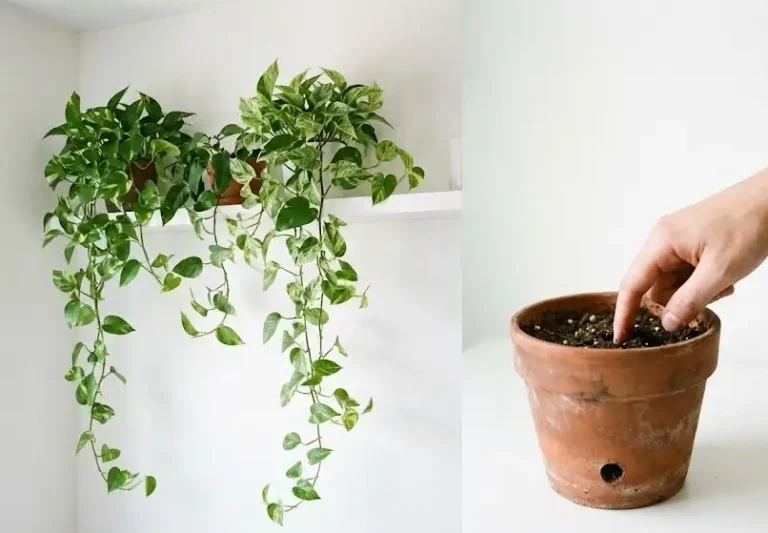
Stick your finger into the soil up to the second knuckle. If it’s dry there, water. If it’s still damp, wait. Works in every season and every home I’ve tested.
How often in real life
- Summer/active growth: every 7-10 days
- Winter/dormancy: every 14-21 days
3. Low Humidity – The Silent Winter Assassin
Pothos are tropical understory plants. They laugh at 40 % humidity and start throwing tantrums below 35 %. Heated homes in winter often drop to 20 %.
Four humidity hacks I actually use myself
- Grouping plants together (creates microclimate)
- Small humidifier on a smart plug running 8 hours/day
- Shallow tray with water and LECA balls under (but pot not touching water)
- Daily misting with distilled or rainwater (tap water leaves spots)
4. Direct Sunlight Burn
Pothos want bright indirect light. One afternoon of direct southern or western sun can fry leaves in hours.
Safe light guide
- East window = perfect all day
- 2-4 feet from west/south window = safe
- North window = usually too low, supplement with grow light
- Direct noon sun = instant crispy brown patches
Recovery timeline
Remove damaged leaves, move to proper light, new growth will be perfect in 3-6 weeks.
5. Fungal Infections
Warm + wet + poor airflow = fungal party. Common culprits: Cercospora and Phyllosticta.
Early signs
Small brown spots with tiny black dots in the center (fungal fruiting bodies).
My organic treatment that works
- Mix 1 tbsp baking soda + 1 tsp liquid castile soap + 1 gallon water
- Spray top and bottom of every leaf
- Repeat every 5-7 days until no new spots appear
- Improve airflow with a small fan on low
6. Bacterial Leaf Spot
These spots often have a yellow halo and look water-soaked at first. They spread insanely fast in high humidity.
Immediate action
- Isolate the plant (bacteria are contagious).
- Remove affected leaves with sterile scissors, bag and trash them.
- Spray with copper-based fungicide (safe for edibles too).
- Reduce leaf wetness – water from the bottom only.
7. Fertilizer Burn and Salt Buildup
Overzealous feeding or softened tap water leaves mineral crust on the soil surface.
My quarterly flush routine
Run lukewarm water through the pot for 3-5 minutes until it drains clear. Do this every 3 months and you’ll never see fertilizer-burn tips again.
2026 fertilizer schedule I follow
- March – September: half-strength balanced liquid fertilizer once a month
- October – February: none (they’re basically sleeping)
8. Temperature Stress and Cold Drafts
Pothos hate anything below 55 °F (13 °C). A cold windowsill in winter can cause brown blotches overnight.
Danger zones in most homes
- Next to exterior doors
- On cold windowsills
- Above air-conditioning vents in summer
9. Pest Damage – The Tiny Terrorists
Spider mites, thrips, and mealybugs all leave distinctive brown scarring.
How to check
Take a sheet of white paper, tap the leaf over it, then zoom in with your phone. Moving specks = pests.
My 3-step eradication system
- Shower plant with lukewarm water (dislodges 80 %).
- Wipe every leaf with 1:10 diluted 70 % isopropyl alcohol.
- Follow up with neem oil spray weekly for 3 weeks.
10. Natural Aging – Sometimes It’s Normal
Older leaves naturally yellow and drop. If only the bottom 1-2 leaves are browning and new growth looks perfect, relax.
11. Poor Water Quality
Chlorine, chloramine, fluoride, and water-softener salt all cause tip burn over time.
Water ranking (best to worst)
- Rainwater/collected
- Distilled or reverse-osmosis
- Tap water left out 24-48 hours
- Softened water (never use)
12. Root-Bound Stress
When roots circle the pot completely, water and nutrients can’t reach leaves evenly.
Annual root check
If you see a solid mat of roots when you slide the plant out, it’s time to size up one pot size (never jump more than 2 inches).
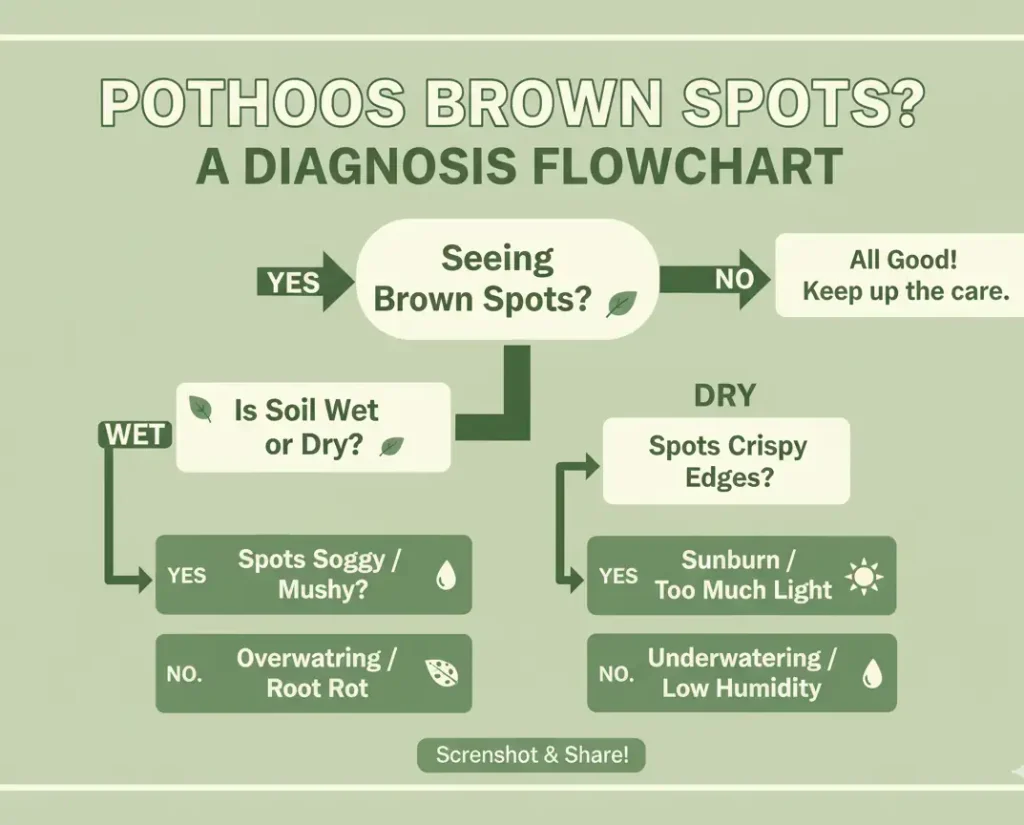
My Step-by-Step Pothos Brown Spot Diagnosis Flowchart
Prevention Checklist I Give Every Single Client
- Use pots with drainage holes
- Water only when top 2 inches of soil are dry
- Keep humidity above 45 %
- Wipe leaves monthly with damp cloth
- Flush soil every 3 months
- Inspect for pests weekly
- Rotate plant quarterly for even growth
Frequently Asked Questions
Why is my pothos getting brown spots after repotting?
Shock from root disturbance or using soggy soil. Keep soil barely moist and place in medium light for two weeks.
Should I cut off pothos leaves with brown spots?
Yes, once more than 50 % of the leaf is brown or damaged. Cut just above a node to encourage new growth.
Can brown spots on pothos be reversed?
Spots themselves are dead tissue and won’t turn green again, but you can stop new ones and the plant will replace damaged leaves.
Why does my pothos have brown spots but new growth is fine?
You’ve already fixed the problem! New growth shows current conditions are good.
How do I know if brown spots are from overwatering or underwatering?
Overwatering = soggy soil + yellowing; underwatering = bone-dry soil + crispy texture.
Are brown spots on pothos contagious to other plants?
Only if caused by bacteria or fungus. Isolate until you’re sure.
Why is my golden pothos getting brown spots but my marble queen isn’t?
Golden pothos has thinner leaves and is more sensitive to light and humidity fluctuations.
Will LED grow lights cause brown spots on pothos?
Only if placed closer than 12 inches or left on 24/7. Keep 12-18 inches away and run 12-14 hours max.
Final Thoughts and My Promise to You
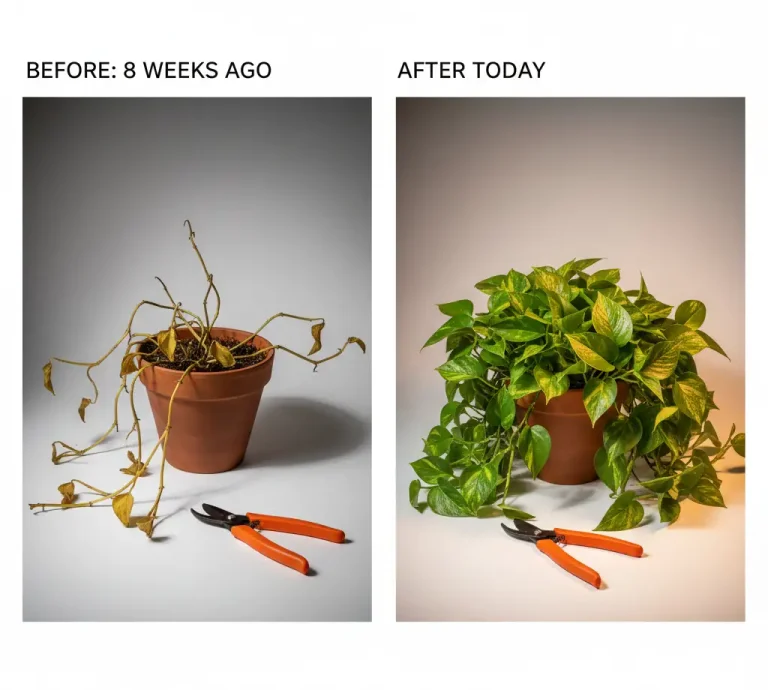
You now have every tool I use professionally to diagnose and fix brown spots on pothos. I’ve seen plants that looked completely dead bounce back with these exact steps. Ninety-five percent of cases are 100 % reversible when caught early, and you just armed yourself with pro-level knowledge.
Tag me on Instagram with your before-and-after photos (@brianscott). I cannot wait to celebrate your thriving pothos with you.
You’ve got this, and your pothos has you. Happy growing!