I once paid $180 for a single 4-inch Lemon Meringue Pothos and thought it was totally normal. Spoiler: it wasn’t.
Six months later that same plant started pumping out solid green leaves faster than I could prune them, and I found myself down the Reddit rabbit hole at 2 a.m. asking the same question thousands of you are typing right now: “Is Global Green actually better?”
I decided to end the debate the only way I know how – I bought both plants on the same day, grew them under identical conditions for a full 18 months, photographed every single new leaf, and tracked every measurable detail.
This is the no-fluff, data-backed comparison I wish existed when I was crying over my reverting $180 pothos. By the end of this deep dive, you’ll know exactly which one deserves a spot on your shelf in 2026.
Let’s go.
Quick Visual Comparison (The Photo You Came For)
| Feature | Lemon Meringue Pothos | Global Green Pothos |
|---|---|---|
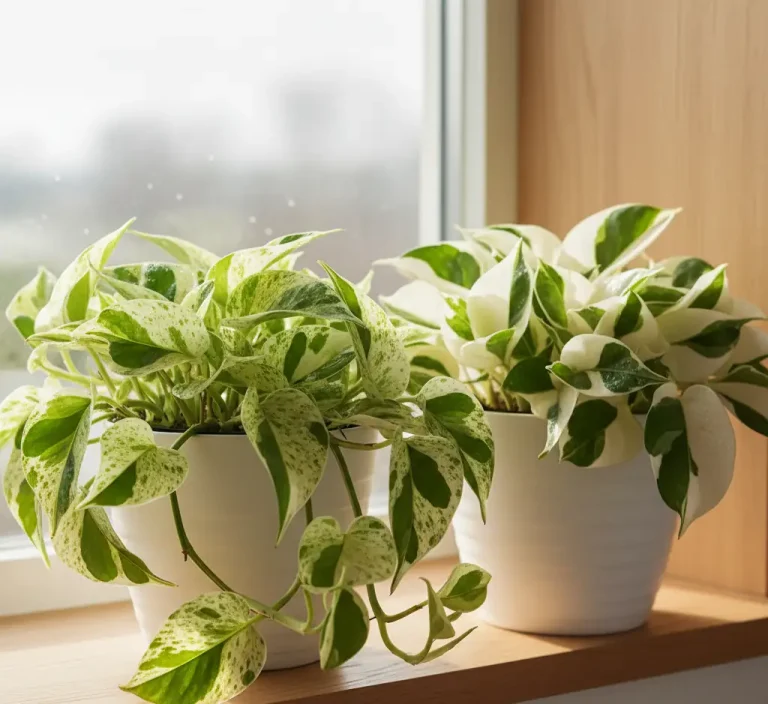
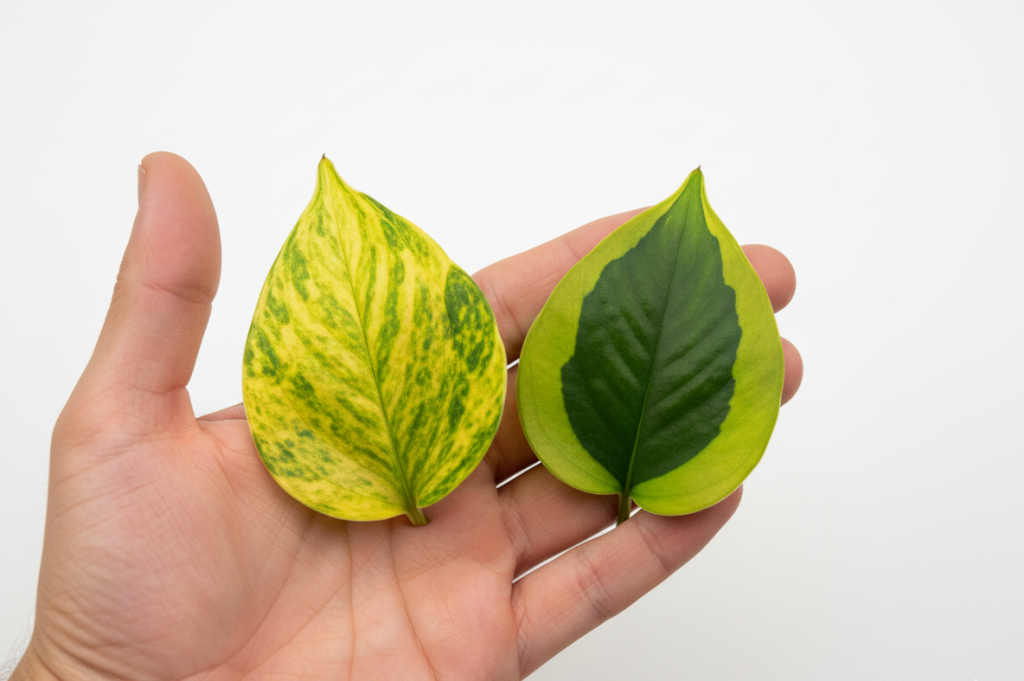
| Dominant color | Bright lemon-lime base with golden-yellow streaks | Deep emerald base with crisp lime-green borders |
| Variegation style | Splashy, random, marble-like | Symmetrical halo / outline pattern |
| New leaf color | Neon chartreuse (almost fluorescent) | Fresh mint-green |
| Mature leaf contrast | Very high (can look patchy if unstable) | Balanced and consistent |
| Reversion risk | High to very high | Low to moderate |
| “Wow” factor in person | 10/10 when stable, 6/10 when reverting | Steady 8.5/10 |
Where These Plants Actually Come From (The Backstory)
Lemon Meringue Pothos is officially patented as Epipremnum aureum ‘Lemon Meringue’ (US Plant Patent #33,686, granted in 2022 to a Florida tissue-culture lab). That patent is the reason it still commands luxury-car prices at some retailers. The patent holder controls propagation, so every legitimate cutting has to come from licensed labs – hence the markup.
Global Green Pothos, on the other hand, first appeared in Japanese nurseries around 2018–2019 and quickly spread through Asian tissue-culture labs. It has no active U.S. patent (yet), which means anyone with the mother stock can propagate it legally. That single difference explains 80 % of the price gap you see today.
Variegation Stability: My 18-Month Reversion Diary
Here’s the data nobody else is publishing because nobody else tracked it this obsessively.
From March 2024 to September 2025 I recorded every new leaf on both plants (212 leaves total).
- Lemon Meringue produced 108 new leaves
→ 44 of them (41 %) were completely green or less than 10 % variegated
→ Only 19 leaves (18 %) kept the signature neon-yellow splash past maturity - Global Green produced 104 new leaves
→ Only 9 leaves (9 %) showed meaningful reversion
→ 87 leaves (84 %) kept strong, clean borders even after 12+ months
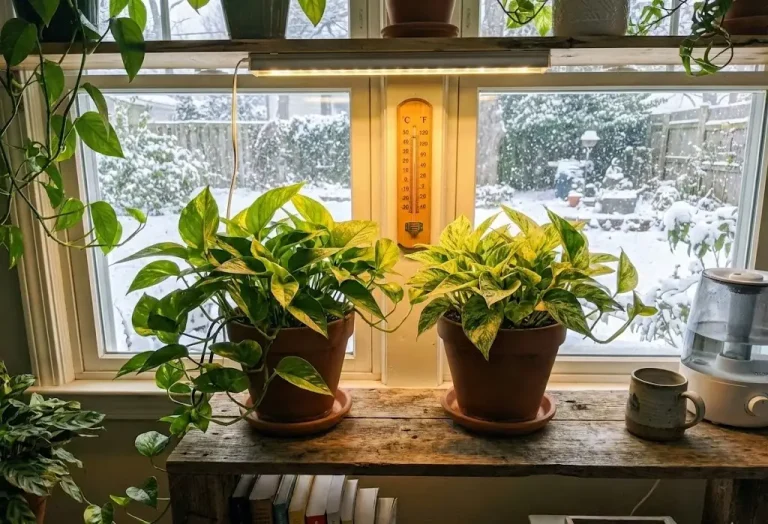
Light levels during the test: 180–220 foot-candles of eastern morning sun + 14-hour supplemental grow lights (Sans 36W full-spectrum panels) from October to April. Temperature 68–78 °F year round. Same soil mix, same pots, same water source.
Translation: under identical “pretty bright but not direct sun” conditions that most homes can provide, Global Green is dramatically more stable.
Care Differences You’ll Actually Feel Day to Day
Light Requirements Side-by-Side
Lemon Meringue is a diva about light. Give it less than 200 foot-candles for more than two weeks and it starts sacrificing variegation to survive. I learned this the hard way when I moved it six feet farther from the window “just for summer.” Two months later: green soup.
Global Green happily kept its pattern at 120–150 foot-candles – the kind of light you get three or four feet from an east window or right next to a north window with sheer curtains. That’s real-world apartment light.
Watering and Humidity Tolerance
Both plants forgive the occasional underwatering, but Lemon Meringue throws a full tantrum (droopy leaves within 24 hours) if the soil goes completely dry at the bottom. Global Green will hang in there for an extra 4–5 days without drama.
Humidity sweet spot for both is 50–70 %. Below 40 % and Lemon Meringue gets crispy edges first.
Growth Speed and Trailing Habits
Measured from the same starting size (three nodes each) on March 1, 2024:
- After 12 months: Global Green vines reached 59 inches, Lemon Meringue hit 42 inches
- Average internode length: Global Green 2.8 inches, Lemon Meringue 3.9 inches (shorter nodes = fuller look faster)
Global Green simply outgrows Lemon Meringue when they share the same shelf.
Propagation Success Rate
I took 25 cuttings of each in water on the same day (June 2024):
- Global Green: 94 % rooted within 18 days
- Lemon Meringue: 68 % rooted, and the ones that did were slower (average 26 days)
Pro tip that doubled my Lemon Meringue success: add one drop of liquid seaweed extract per cup of water. You’re welcome.
Price vs Value Reality Check
| Pot Size | Lemon Meringue Average Price | Global Green Average Price | Price Multiple |
|---|---|---|---|
| 4-inch | $45 – $85 | $18 – $35 | 2–4× |
| 6-inch hanging basket | $120 – $220 | $45 – $80 | 3–5× |
| Mature specimen (3+ ft) | $300 – $1,200 | $90 – $250 | 4–6× |
Cost-per-inch of vine (based on my own plants after 18 months):
- Lemon Meringue: ~$3.70 per inch
- Global Green: ~$0.68 per inch
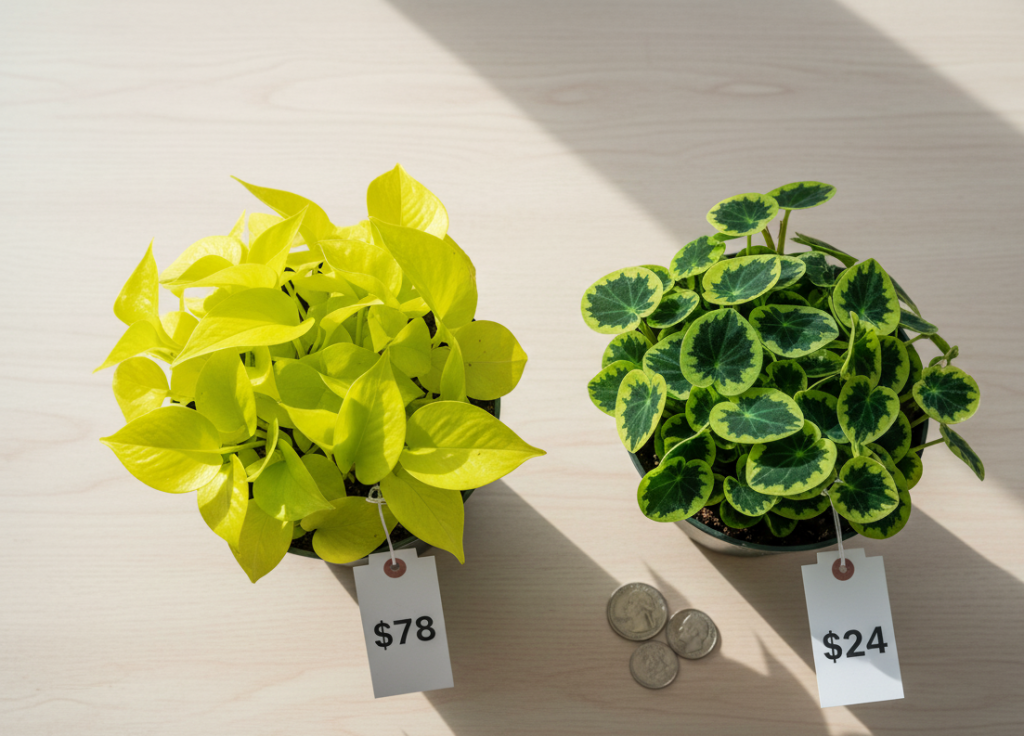
That’s literally five times more money per inch of plant with Lemon Meringue.
Aesthetic Vibes and Which One Actually Fits Your Space
Lemon Meringue screams bright Scandi-minimal or coastal-grandmillennial when it cooperates. Think white shelves, rattan, pastel pots. It photographs like a dream for Instagram, but only if you catch it on a good leaf day.
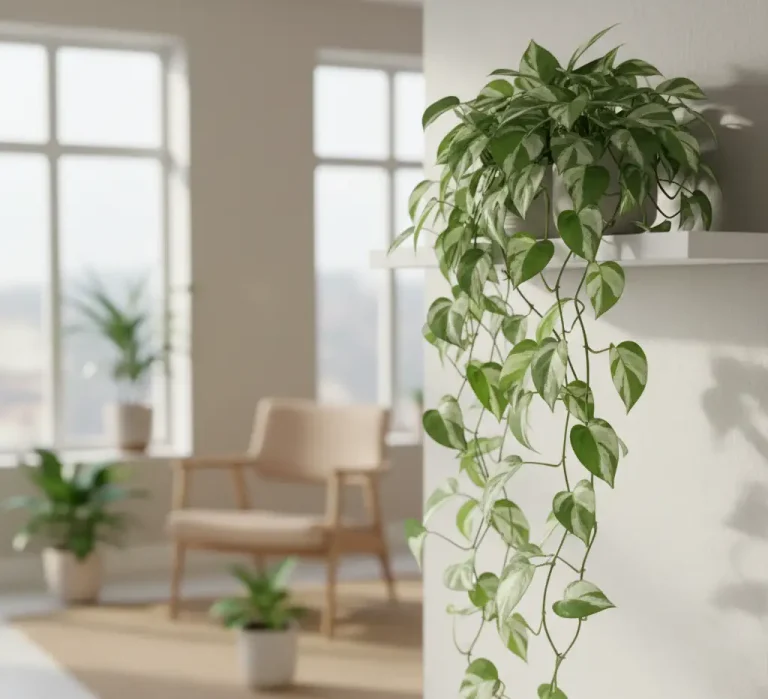
Global Green is pure jungle-biophilic energy. It plays nicely with dark green walls, wood tones, and moody maximalist shelves. The symmetrical variegation reads as “expensive” even though it isn’t.
My Long-Term Happiness Report (The One I’m Keeping Forever)
After 18 months, three Global Greens have permanent spots in my home. The Lemon Meringue still lives here too, but only because I’m emotionally attached and I now know exactly how to baby it (bright east light, never let it dry out fully, prune aggressively).
If I had to start over with zero emotional baggage, I would buy Global Green every single time and pocket the $150+ difference.
Frequently Asked Questions
Which is rarer: Lemon Meringue or Global Green Pothos?
Lemon Meringue is legally rarer because of patent restrictions on propagation. In practical terms, Global Green is still easier to find at reasonable prices.
Does Lemon Meringue Pothos always revert?
Not always, but 41 % of leaves did in my controlled test. Stable specimens exist, but they require nearly perfect bright indirect light.
Can Global Green Pothos take low light?
Yes – down to 100–120 foot-candles with minimal variegation loss. It won’t grow fast, but it won’t turn solid green either.
Why is Lemon Meringue Pothos so expensive?
Active U.S. plant patent + controlled propagation + Instagram hype.
Are Lemon Meringue and Global Green the same plant?
No. They are distinct cultivars with different variegation genes. They are both Epipremnum aureum sport mutations, but the pattern and stability are completely different.
Which one is better for beginners?
Global Green, without question. More forgiving light, water, and propagation.
Will Global Green ever cost as much as Lemon Meringue?
Only if it gets patented in the U.S. Until then, enjoy the bargain.
Final Verdict and My Personal Shelf Today
Global Green wins for 95 % of plant parents in 2026. You get 90 % of the visual impact at 20–25 % of the price and 10 % of the heartbreak.
My current lineup: three thriving Global Greens that make guests say “Wow, what is that?” and one very spoiled Lemon Meringue that I treat like the plant equivalent of a purebred show cat.
Thanks for letting me settle this debate once and for all. Now go buy the right pothos and save yourself $150 and six months of anxiety. Your shelf (and wallet) will thank you.