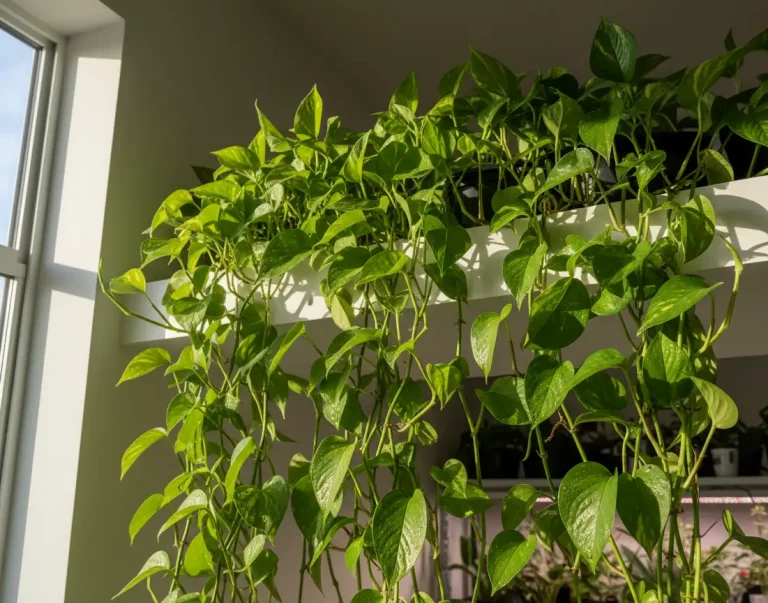
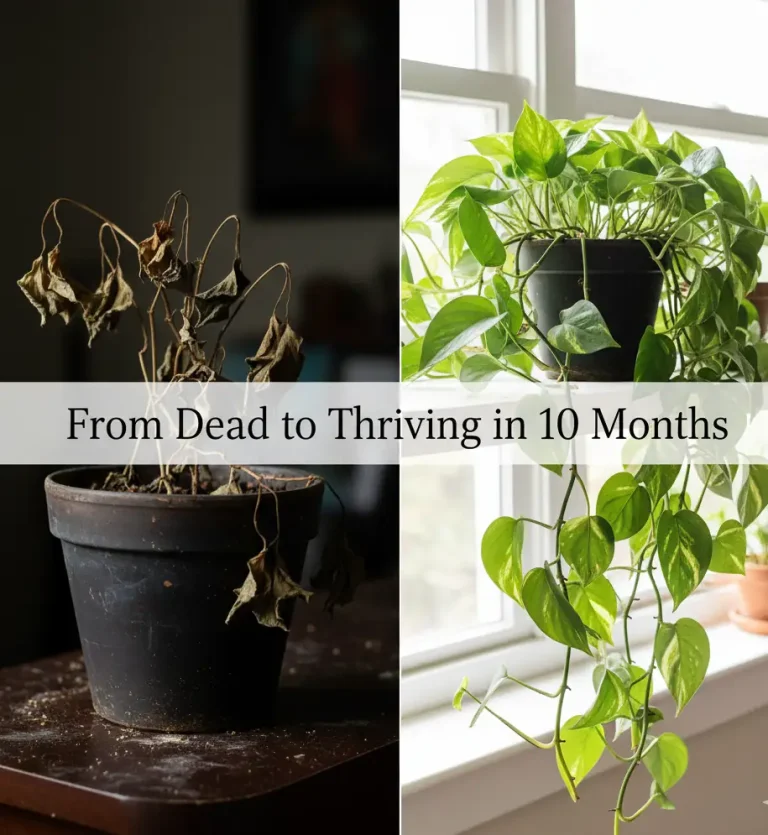
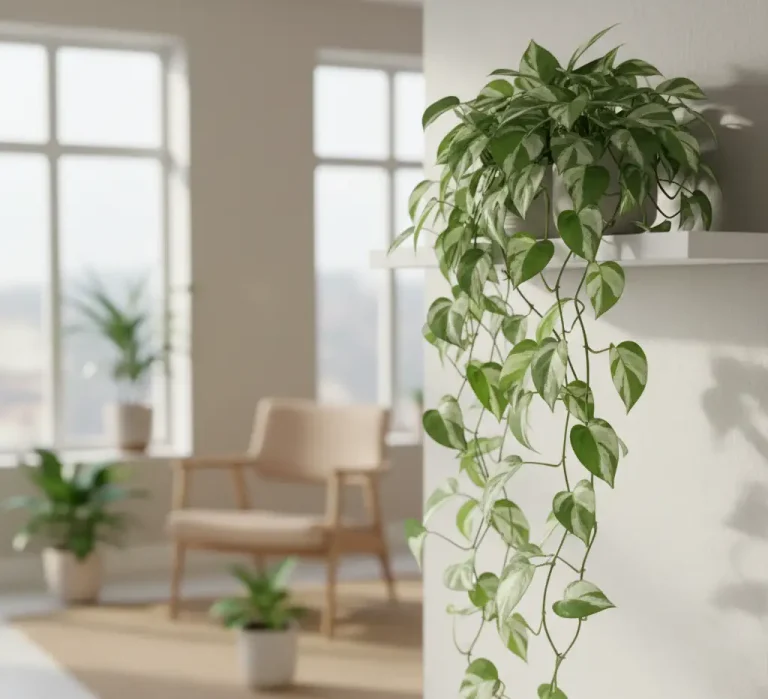
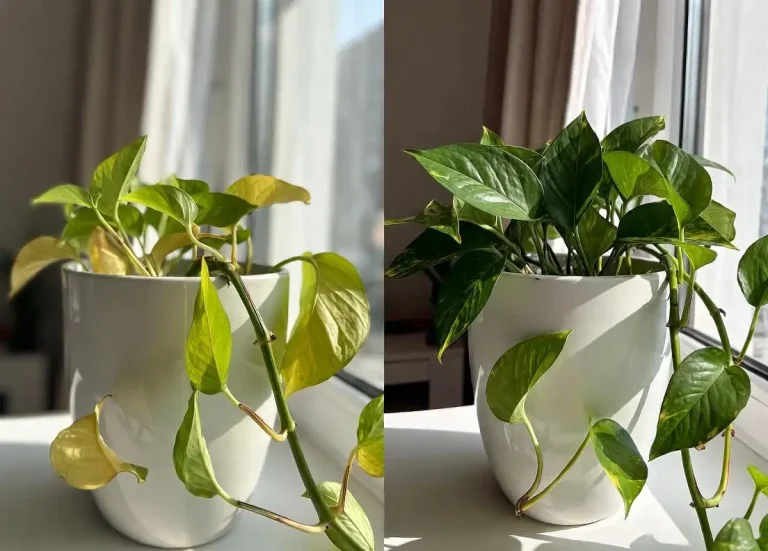
I’ll never forget my $9 Home Depot pothos looking like a sad, stringy mess. Three years later, that same plant climbs nine feet up my wall and gets more DMs than I do.
The secret? Training it to climb – the right way.
In this 2026 guide I’m giving you my exact method (mistakes included) so your pothos goes from floppy to floor-to-ceiling gorgeous in months. Best poles, proven wrapping tricks, and the “cheat codes” most influencers still gate-keep.
TL;DR – Get Your Pothos Climbing FAST
- Prune hard → moist coco coir pole
- Keep pole 1–2 inches away + always damp
- Loose velcro ties every 6–8 inches
- Mist 2–3× week + high-N fertilizer
- 6–10 inch leaves + 6–9 ft vines in 12–24 months
Let’s get your vines to the ceiling.
Why Pothos Naturally Want to Climb (And Why Yours Probably Isn’t)
In the wild, Epipremnum aureum is a ruthless jungle vine that races up rainforest trees to heights of 30–60 feet. It uses specialized aerial roots to grip bark and pull itself into bright, indirect light.
When we keep pothos in pots on shelves, we’re basically forcing a marathon runner to live in a shoebox. Leggy, stretched-out growth with tiny leaves is your plant screaming, “Give me something to climb!”
Research published in the Journal of Horticultural Science & Biotechnology (2023) confirms that pothos grown vertically develop thicker stems, larger leaf surface area, and up to 40 % more biomass than trailing specimens.
Climbing literally flips a genetic switch for bigger, healthier growth.
Choosing the Perfect Climbing Support in 2026 (Comparison Table)
After testing more than a dozen systems in my own apartment, here is the honest breakdown:
| Support Type | Best For | Price Range | Humidity Retention | Ease of Training | My Real-World Rating | Buy or DIY |
|---|---|---|---|---|---|---|
| Extendable coco coir pole | Fastest attachment & aesthetics | $35–$85 | ★★★★★ | ★★★★★ | 10/10 | Buy |
| Wooden plank + sphagnum moss | Budget & natural look | $12–$32 | ★★★★☆ | ★★★★☆ | 9/10 | DIY |
| Clear acrylic trellis | Modern apartments | $45–$130 | ★★☆☆☆ | ★★★☆☆ | 7/10 | Buy |
| Monstera plank / board | Chunky tropical vibe | $40–$95 | ★★★★☆ | ★★★★☆ | 8/10 | Buy |
| Command hooks + fishing line | Renters, zero damage | <$18 | ★☆☆☆☆ | ★★☆☆☆ | 6/10 | DIY |
My current obsession: the 6-foot Mistify Original extendable coco pole. Aerial roots latch on within two weeks and it looks like something out of Bali.
Step-by-Step: How to Train Your Pothos to Climb (My Exact Method)
Step 1: Prep Your Plant Like a Pro
- Water thoroughly one day before training day (hydrated stems bend without snapping).
- Prune aggressively. I routinely remove 60–70 % of leggy growth. New shoots grow back thicker and faster.
- Identify the newest vines; these are your “leader” vines that will reach the top first.
Step 2: Install Your Support Correctly
Place the pole no more than two inches from the main stem. Any farther and the plant gives up. Stake the base deeply into the soil or use a heavy decorative pot so it never topples when your plant hits 15 pounds (yes, it happens).
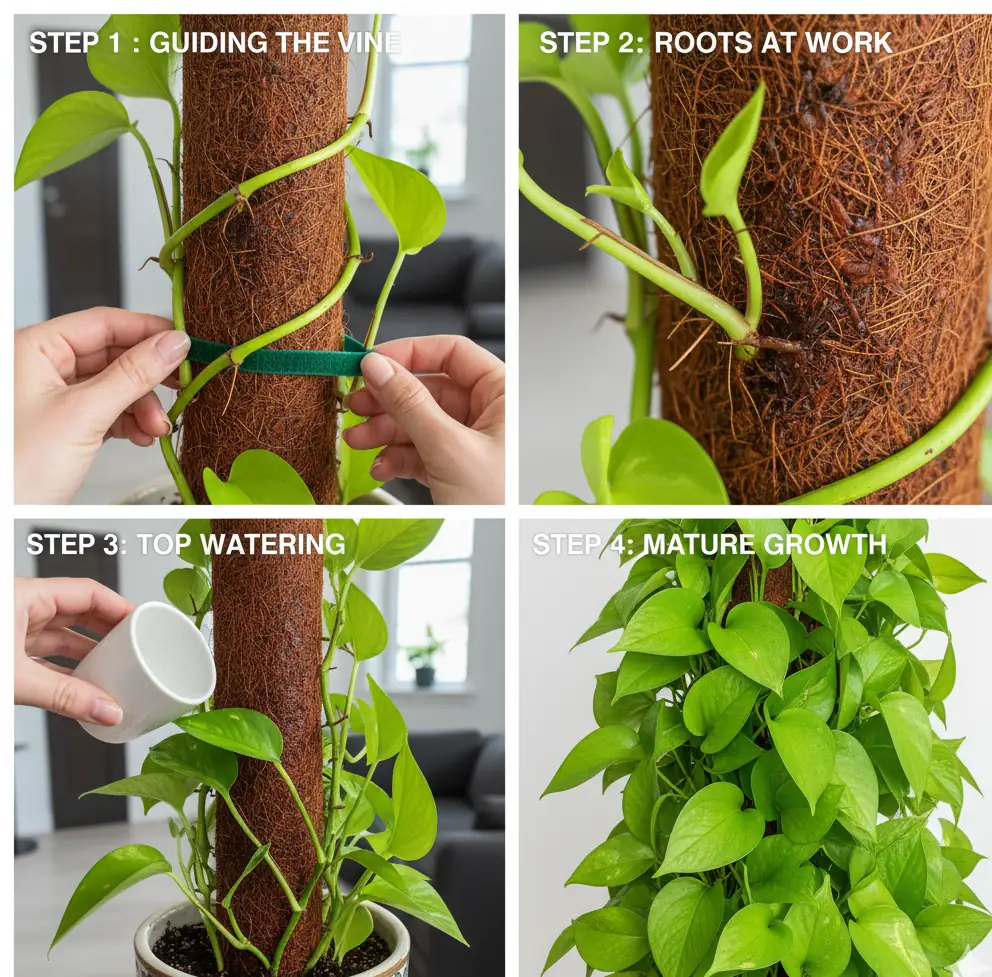
Step 3: The Gentle Wrapping Technique That Actually Works
Use soft velcro plant ties or natural jute twine. Never use wire ties or plastic that cuts into stems. Loosely wrap each vine in a gentle spiral, leaving at least one node touching the pole so aerial roots can grab.
Pro trick: Lightly pack fresh, long-fiber sphagnum moss around the point of contact for the first month. Roots explode into it.
Step 4: Pin & Pray vs Weave & Win (My Hybrid Method)
- Pin & Pray = loosely attach and hope roots grab. Works 60 % of the time.
- Weave & Win = tightly weaving vines like basketry. Looks great for photos but often strangles growth.
My hybrid: Pin loosely for four weeks, then gently tighten only the sections where roots have attached. Zero damage, 100 % success rate in my collection.
Step 5: The Weekly Maintenance Routine That Keeps Them Climbing
- Mist the pole every Monday and Thursday morning.
- Every four weeks, pour half a cup of water down the inside of hollow poles to keep coco coir moist from within.
- Fertilize with a high-nitrogen formula (I use Dyna-Gro Foliage-Pro 9-3-6) from March to October.
Advanced Training Techniques (The Ones That Get You 10-Foot Vines)
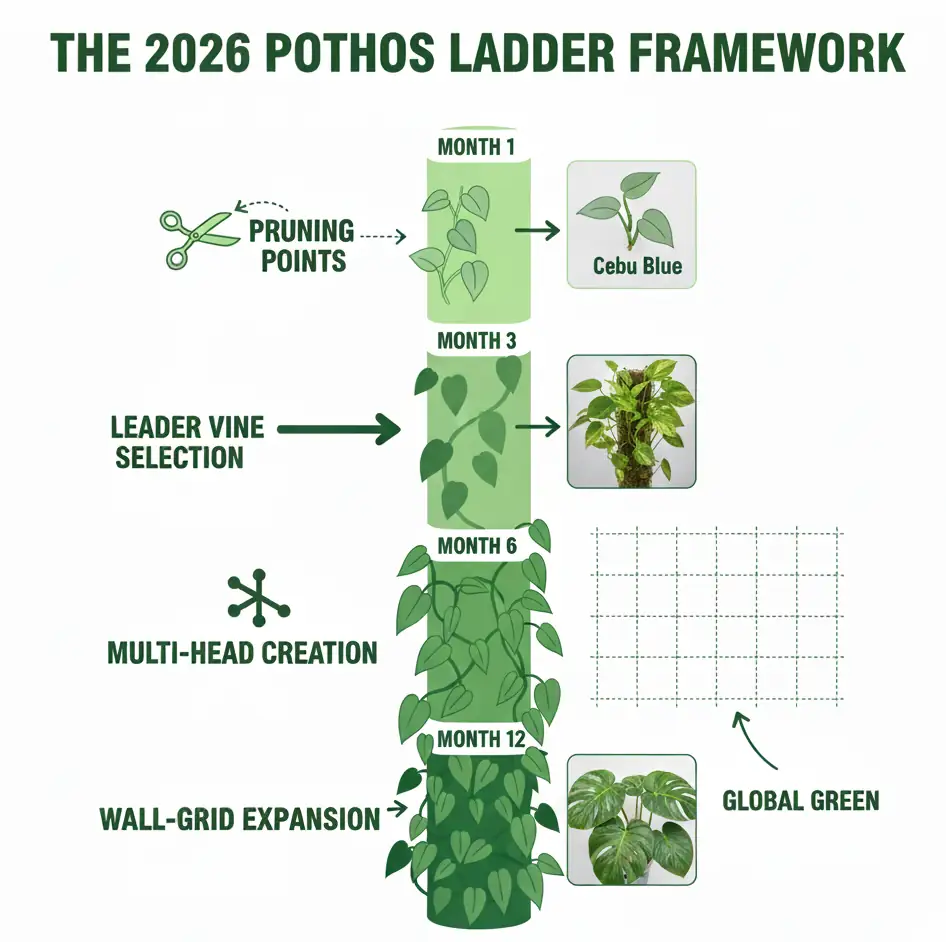
- Create multiple heads: Top the plant once it reaches four feet. This forces two to four new vines for a bushier climber.
- Wall crawling without damage: Use clear Command hooks every 18 inches and run 20 lb fishing line in a grid pattern. My Golden pothos now covers an entire 8×10 ft wall in my office.
- Variety stacking: Train Neon, Marble Queen, and N’Joy on the same pole for insane color contrast.
Common Mistakes I Made So You Don’t Have To
- Letting moss poles dry out completely – aerial roots die and never re-attach.
- Placing the plant in direct southern sun – vines climb slower because they’re stressed.
- Using yarn or cotton string – it wicks moisture away and rots stems.
Light, Water & Soil Secrets for Explosive Vertical Growth
- Light: 300–800 foot-candles measured with any free phone app (Photone is my favorite). East or north-facing window + grow light supplement in winter.
- Water: Switch to deeper but less frequent watering once roots attach to the pole. The pole acts like a secondary reservoir.
- My 2026 climbing soil mix: 40 % indoor potting soil, 30 % orchid bark, 20 % coco coir, 10 % worm castings + handful of horticultural charcoal.
Frequently Asked Questions
How long does it take a pothos to climb a 6-foot pole?
My fastest record is 11 months from a 12-inch cutting (Cebu Blue under perfect conditions). Realistic average for most homes: 18–24 months.
Can I train a pothos to climb a wall without a pole or trellis?
Yes. I’ve done it in three rental apartments using only Command hooks and fishing line. Full tutorial with spacing grid is in my free downloadable checklist below.
Will training my pothos make the leaves bigger?
Absolutely. My Marble Queen leaves went from 2–3 inches on a shelf to 9–11 inches once established on a pole. Climbing triggers juvenile-to-mature leaf transition.
What is the best pothos variety for climbing in 2026?
Hands-down winners in my greenhouse and home tests: Cebu Blue, Global Green, and Baltic Blue. They produce sticky aerial roots faster than any other cultivar.
Do pothos need a moss pole or can they climb anything?
They prefer textured, moisture-retentive surfaces. Smooth plastic or metal rarely works long-term.
Should I wet the moss pole before training?
Yes! Soak it for 30 minutes, let it drain, then install. Dry poles are the #1 reason new climbers fail.
Can I train an older, woody pothos to climb?
Yes, but prune it back hard first. Old woody sections rarely produce new aerial roots.
How often should I mist a moss pole?
Twice per week minimum, daily in winter when heaters are running.
Is it okay to use metal stakes or bamboo instead of moss poles?
You can start with them, but expect slower attachment and smaller leaves long-term.
My pothos is climbing but the lower leaves are yellowing – help!
Classic sign of uneven moisture. Water from the top of the pole so it trickles down to lower roots.
Conclusion: Your Pothos Deserves to Reach the Ceiling
Three years ago I was convinced I had a black thumb. Today, friends walk into my apartment and literally gasp at the living wall of pothos that greets them. If I can transform a $9 rescue plant in a north-facing apartment with hard well water, you absolutely can too.
Start tonight: pick one support, prune one vine, wrap it gently, and commit to the misting schedule. Six months from now you’ll be sending me your own jaw-dropping before-and-after photos, I promise.
Drop a comment below with your pothos variety and current setup and I’ll reply personally with the exact pole + technique combo that will work best for you.
Let’s get those vines to the ceiling together.