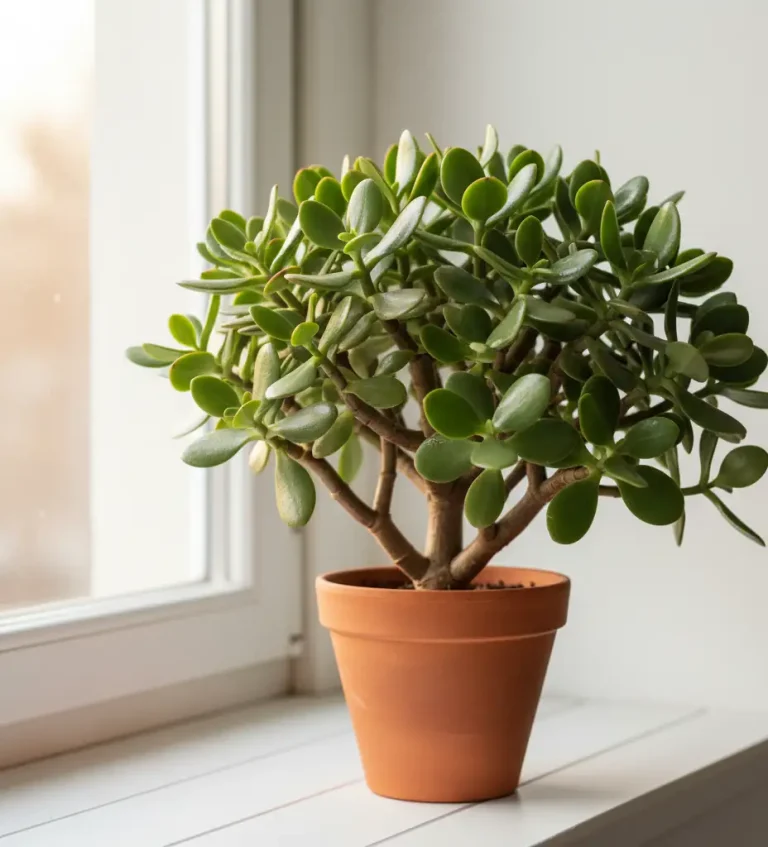
You spot a gorgeous plump-leaved succulent labeled “Jade Plant” at the nursery, bring it home, and later read online that it’s actually a Crassula ovata.
Confusion sets in. Is your plant living under a fake name? Have you been calling it the wrong thing for years?
The short answer is no — you haven’t been wrong, but you’ve only been telling half the story. Jade plant is not a separate species from Crassula; it’s simply the most famous member of a huge family. Let’s clear up the mix-up once and for all so you can confidently identify, care for, and talk about these iconic houseplants without second-guessing yourself.
What Exactly Is a Crassula? The Big Picture
Crassula is a genus — think of it as a huge botanical family name — containing over 300 accepted species of succulents native mostly to southern Africa. The name comes from the Latin “crassus,” meaning thick, which perfectly describes their fleshy water-storing leaves. This genus belongs to the Crassulaceae family alongside popular cousins like Echeveria, Sedum, and Kalanchoe.
Not every Crassula is called a jade plant, but every jade plant is definitely a Crassula. The classic jade you see everywhere is scientifically known as Crassula ovata (formerly Crassula argentea or Crassula portulaca in older texts). Because Crassula ovata became so popular worldwide, people started using “jade plant” as its common name, much like how we call Echinopsis pachanoi “San Pedro cactus” even though dozens of Echinopsis exist.
Crassula ovata vs. the Rest of the Crassula Family: Key Differences
To make comparison crystal clear, here’s a breakdown of the most commonly confused plants:
| Common Name | Scientific Name | Leaf Shape | Mature Size | Growth Habit | Notable Cultivars/Varieties |
|---|---|---|---|---|---|
| Jade Plant (Classic) | Crassula ovata | Rounded, coin-like | 3–6 ft tall indoors | Tree-like with woody stem | ‘Hummel’s Sunset’, ‘Gollum’, ‘Hobbit’, ‘Crosby’s Red’ |
| Mini Jade / Dwarf Jade | Crassula ovata ‘Minima’ | Smaller rounded leaves | 18–30 inches tall | Compact shrub | — |
| Variegated Jade | Crassula ovata ‘Variegata’ | Cream/white streaked leaves | Similar to classic | Same tree-like habit | ‘Lemon & Lime’, ‘Tricolor’ |
| Silver Jade / Silver Dollar | Crassula arborescens | Round, blue-gray with red edges | Up to 4–7 ft | Thicker trunk, more silver | ‘Blue Bird’, ‘Undulatifolia’ |
| Propeller Plant | Crassula perfoliata var. falcata | Sickle-shaped, stacked | 18–24 inches | Upright stacking | — |
| String of Buttons | Crassula perforata | Triangular, stacked spirals | Trailing 12–18 inches | Hanging/trailing | ‘Baby Necklace’ |
| Ripple Jade | Crassula arborescens undulatifolia | Wavy, rippled edges | 3–4 ft | Bushy | — |
As you can see, leaf shape, mature size, and growth habit are the fastest ways to tell them apart at a glance.
Why the Jade Plant Earned Its Nickname
Crassula ovata earned the common name “jade plant” for three charming reasons:
- Leaf color and shape — The glossy, deep-green leaves resemble polished jade stones, especially the prized imperial jade from Asia.
- Cultural symbolism — In feng shui, it’s known as the “money plant” or “friendship tree” because round leaves symbolize wealth and prosperity.
- Global popularity — Introduced to Europe in the early 1700s and later exploding as a houseplant in the 20th century, marketers needed a catchy, memorable name. “Crassula ovata” doesn’t roll off the tongue quite like “jade plant” does.
How to Positively Identify a True Jade Plant (Crassula ovata)
I’ve rescued countless mislabeled plants over the years. Here are the foolproof signs I look for:
- Leaves are oval to slightly spoon-shaped, 1–2 inches long, and completely smooth-edged.
- New stems are green and fleshy; older stems turn brown and woody, forming a miniature tree trunk.
- Tiny pinkish-white star-shaped flowers appear in winter when the plant is 4–5 years old and happy.
- Leaf surface is glossy with a subtle red blush on edges when grown in bright light.
If your plant has wavy leaves (Ripple Jade), sickle-shaped stacked leaves (Propeller Plant), or trailing spirals (String of Buttons), it’s a different Crassula species wearing a misleading common name tag.
Care Differences Between Crassula ovata and Other Popular Crassulas
While most Crassulas share similar drought-tolerant DNA, slight tweaks matter:
| Species | Light Preference | Water Frequency (Growing Season) | Ideal Temperature Range | Propagation Success Rate |
|---|---|---|---|---|
| Crassula ovata (Classic Jade) | Bright direct light preferred | Every 2–3 weeks, fully dry between | 65–75 °F day, above 50 °F night | Extremely high (leaf or stem) |
| Crassula arborescens | Bright light, tolerates some shade | Every 3 weeks | Slightly cooler nights | High |
| Crassula perforata | Bright indirect to morning sun | Every 10–14 days | Dislikes above 85 °F | Very high (stem cuttings) |
| Crassula capitella ‘Campfire’ | Full sun for red coloring | Every 2 weeks | Loves temperature swings | High |
Pro tip from my own collection: Crassula ovata forgives neglect better than most. I’ve left mine for five weeks in summer with zero issues, whereas Crassula perforata starts dropping leaves after three weeks of drought.
Common Mislabeling Mistakes I See Every Week
- Portulacaria afra (Dwarf Jade or Elephant Bush) sold as “Mini Jade Plant” — This is NOT a Crassula at all! It belongs to a completely different family (Didiereaceae). Leaves are smaller, thinner, and more translucent.
- Crassula arborescens labeled simply “Silver Jade Plant” without distinguishing it from ovata.
- Any small-leaf Crassula ovata cultivar tagged “Baby Jade” — technically correct, but confusing next to the unrelated Portulacaria.
Quick Identification Cheat Sheet (Save This!)
| You HAVE a true Jade Plant if… | You have a different Crassula if… |
|---|---|
| Thick, glossy, coin-shaped leaves | Wavy or rippled leaf margins |
| Woody trunk develops with age | Remains soft-stemmed forever |
| Leaves opposite and flat | Leaves stacked in spirals or propellers |
| Can reach 6 ft indoors over decades | Naturally stays under 2 ft |
Final Thoughts: Embrace the Whole Crassula Family
Here’s the truth I want every plant parent to internalize: calling Crassula ovata a “jade plant” is 100 % correct and widely accepted, just like calling a golden retriever a “dog.” The confusion only arises when nurseries slap “jade” onto every thick-leaved Crassula (or worse, onto Portulacaria). Once you understand that jade plant is Crassula ovata’s superstar stage name, you’ll never second-guess a label again.
Next time you’re shopping, flip the pot and check the scientific name — or better yet, look at leaf shape and growth habit using the tables above. Your collection will thank you, and you’ll finally speak fluent succulent without mixing up family members.
Ready to expand your Crassula collection now that you know the difference? Drop a comment below with which variety you’re hunting for next — I answer every single one personally.
Frequently Asked Questions
Is a jade plant a Crassula?
Yes! The classic jade plant is Crassula ovata. All jade plants are Crassulas, but not all Crassulas are jade plants.
What is the real name of a jade plant?
The scientific name is Crassula ovata. Older books may list it as Crassula argentea or Crassula portulaca.
Is Portulacaria afra a jade plant?
No. Despite being called “dwarf jade” or “mini jade,” Portulacaria afra belongs to a different genus and family entirely.
Why do some Crassulas look completely different but still get called jade?
Marketing and common-name overlap. Crassula arborescens (silver dollar plant) and several cultivars get mislabeled as “jade” because of thick leaves.
Which Crassula is the easiest for beginners?
Crassula ovata — the true jade plant — remains the most forgiving, slowest-growing, and hardest to kill.
Do all Crassula species flower?
Most will flower under ideal winter conditions (cool nights + short days), but Crassula ovata has the showiest clusters.