I’ve propagated more Wandering Jew plants than I can count, and honestly, it’s way easier than you think! With a healthy plant, a pair of scissors, and a little patience, you’ll have fresh new plants before you know it.
So, how do you propagate a Wandering Jew? You’ve got three options: water, soil, or division.
Water propagation is the simplest: just place a cutting in water and wait for roots. Soil propagation skips the water step and plants the cutting directly in soil. Division means splitting a mature plant into sections to grow separately.
All three methods work, so it really comes down to what feels best for you.
Stick with me, I’ll walk you through each method and share the tips I’ve picked up along the way!
Wandering Jew Propagation
Propagation is the process of growing new plants from cuttings or divisions. It’s an easy way to expand your collection without buying new plants.
Why Propagate a Wandering Jew Plant?
- Save money by making new plants from cuttings
- Help your plant stay full and bushy
- Share extra plants with friends and family
What You’ll Need
- Wandering Jew plant (mother plant)
- Sharp scissors or pruning shears
- Rooting hormone (optional)
- Clear jar or vase (for water propagation)
- Well-draining potting mix (for soil propagation)
- Plastic bag or humidity dome (for soil propagation)
- Filtered or distilled water (for water propagation)
How to Propagate Wandering Jew in Water
Why Choose Water Propagation?
Water propagation is an easy method for beginners. You can watch the roots grow in real time, which makes it fun and helps you know the plant is healthy.
Pros:
- Beginner-friendly – No need for special soil or potting mix.
- Allows easy monitoring – You can see roots growing in real-time.
- Faster initial root development – Water provides a controlled environment for quick rooting.
- Minimal maintenance required – Just change the water regularly and keep an eye on root growth.
Step-by-Step Guide for Water Propagation
Follow these steps to successfully propagate your Wandering Jew plant in water:
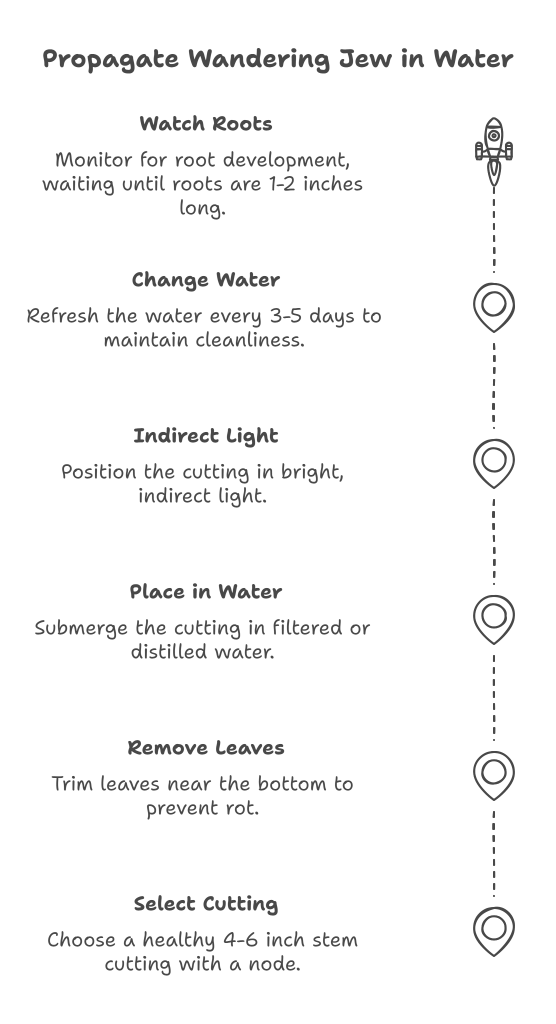
- Select a healthy stem cutting – Choose a 4-6 inch cutting from a healthy plant. Ensure that the cutting has at least one node (where roots will grow).
- Remove lower leaves – Trim off leaves near the bottom to prevent rot in water.
- Place the cutting in a jar of water – Use filtered or distilled water for the best results. Tap water may contain chemicals that slow root growth.
- Position in bright, indirect light – Avoid direct sunlight, as it can stress the cutting and cause leaf burn.
- Change the water every 3-5 days – Fresh water prevents bacterial growth and keeps roots healthy.
- Watch for root development – Within 1-2 weeks, small roots should appear. Wait until they are 1-2 inches long before transplanting.
When to Transfer to Soil
Move your cutting to soil when:
- Root length is 1-2 inches – Shorter roots may struggle to adapt to soil, while overly long roots may not transition well.
- Healthy and strong growth – The cutting should appear firm and vibrant, with no signs of wilting or yellowing.
- New leaf development – If new leaves start appearing, it’s a sign that the cutting is ready to thrive in soil.
Pro Tip: Before planting, dip the roots in a mild rooting hormone to encourage a smoother transition.
How to Propagate Wandering Jew in Soil
Why Choose Soil Propagation?
Soil propagation helps the plant grow strong roots right in the soil. It skips the water step, so you don’t have to move the plant later, which means less stress for it.
Benefits:
- Stronger, more stable roots.
- No need to transition from water to soil.
- Naturally adapts to soil nutrients.
Step-by-step Guide for Soil Propagation
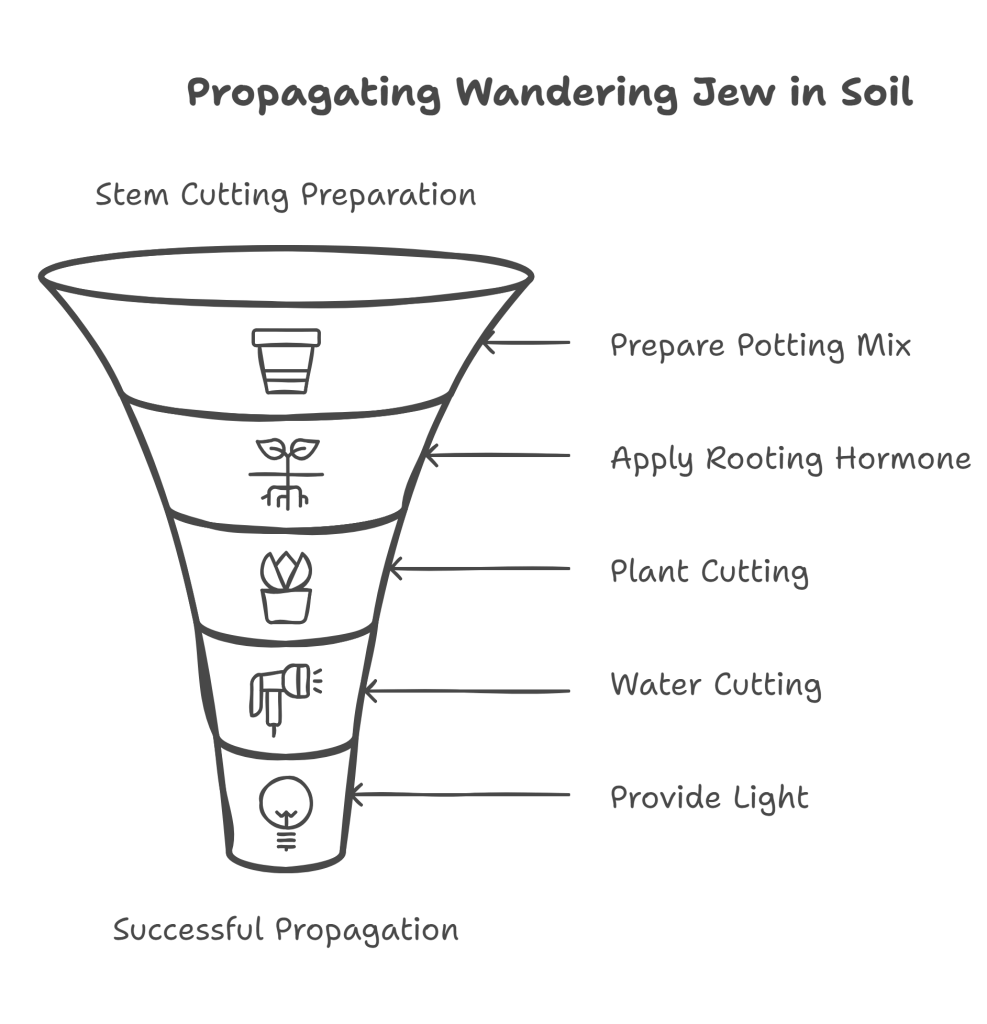
- Prepare a well-draining potting mix – Use a mix of peat, perlite, and potting soil.
- Take a healthy stem cutting – Like water propagation, choose a 4-6 inch cutting with at least one node.
- Apply rooting hormone (optional) – This boosts root growth but isn’t necessary.
- Plant the cutting in soil – Bury the node just below the surface.
- Water lightly – Keep the soil moist but not soggy.
- Place in bright, indirect light – Avoid direct sun to prevent stress on the cutting.
How Long Does It Take?
Roots typically develop within 2-3 weeks. New growth is a sign that your cutting is thriving.
How to Care for Newly Rooted Cuttings
- Keep humidity high – Cover the plant with a plastic bag or place near other plants to retain moisture.
- Water when soil is slightly dry – Overwatering can lead to root rot.
- Avoid harsh direct sunlight – Too much sun can scorch the tender new roots.
How to Propagate Wandering Jew by Division
Why Choose Division Propagation?
Division is the fastest way to create new plants since it separates existing root clusters. It’s best for mature plants that have outgrown their pots.
Advantages:
- Instant new plants—no waiting for roots.
- Helps manage overcrowded pots.
- Encourages new, healthy growth.
Step-by-Step Guide for Division Propagation
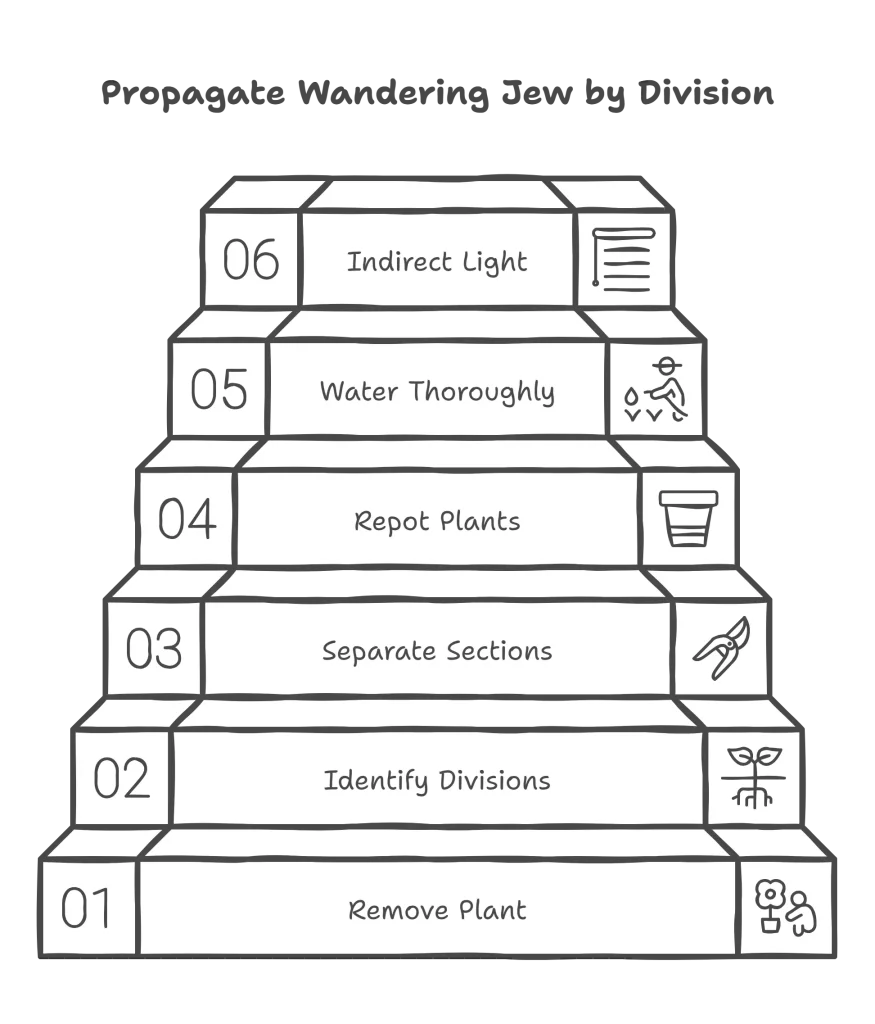
- Gently remove the plant from its pot – Be careful not to damage the roots.
- Identify natural divisions – Look for sections with their own root system.
- Separate the sections – Use clean hands or scissors to divide the plant.
- Repot each new plant – Place the divisions in fresh soil, using the same mix recommended for soil propagation.
- Water thoroughly – This helps the plant recover.
- Place in indirect light – Allow the new divisions to adjust before exposing them to strong light.
Best Time to Propagate Tradescantia zebrina
Spring and summer are best for propagating Tradescantia zebrina because it grows fast. Avoid winter since the plant grows slowly and cuttings take longer to start.
Signs Your Plant is Ready for Propagation
Overgrown stems mean it’s time to propagate and refresh a leggy plant. If the plant is root-bound, divide and repot it. Cut back weak or damaged stems to help new, healthy growth.
For the best results, use fresh, healthy cuttings and place them in water or soil with bright, indirect light.
Soil vs. Water vs. Division: Which Method is Best?
| Method | Pros | Cons |
| Water | Easy to see roots, quick start | Must transplant to soil |
| Soil | Stronger roots, no transplant needed | Harder to monitor progress |
| Division | Instant new plants, no waiting for roots | Requires a mature plant |
Which Should You Choose?
- Choose water propagation if you want to watch root growth.
- Choose soil propagation if you want stronger, more stable plants from the start.
- Choose division if you have a mature plant that needs repotting.
Common Mistakes & How to Avoid Them
- Using weak or diseased cuttings – Always select healthy stems.
- Overwatering soil cuttings – Can cause root rot.
- Placing cuttings in harsh sunlight – Too much sun can cause stress.
- Not changing water often – Can lead to bacterial growth in water propagation.
Troubleshooting Common Problems
- Yellowing leaves? Reduce watering and check for overexposure to light.
- No root growth? Increase humidity and warmth.
- Mushy stems? Use fresh cuttings and avoid deep water submersion.
Expert Tips for Thriving Tradescantia zebrina
- Use a humidity dome or plastic bag to lock in moisture.
- Give diluted liquid fertilizer once roots start growing.
- Keep cuttings in temperatures between 65-75°F.
- Keep soil evenly moist, but not too wet.
- Let gentle air move around to stop mold.
- Use a heating mat to keep soil warm if it’s cold.
- Put cuttings near a grow light if there isn’t enough sunlight.
- Turn cuttings sometimes so they grow evenly.
- Watch the roots and repot when needed.
Want healthier Tradescantia plants? Check out our Wandering Jew Plant Care Guide: Expert Tips for Healthy Tradescantia
FAQ About Wandering Jew Planting
Got questions? I’ve got the answers!
Can I Propagate Tradescantia zebrina in Just Perlite?
Yes! Perlite retains moisture while allowing airflow, promoting healthy root growth.
Can a Wandering Jew Grow in Just Water?
Yes, it can survive in water for a while, but it thrives best in soil long-term.
How Long Does It Take for Cuttings to Root?
- Water propagation: 1-2 weeks
- Soil propagation: 2-3 weeks
Does Wandering Jew Need Full Sun?
It prefers bright, indirect light but can tolerate some direct sunlight. Too much direct sun may scorch its leaves, while too little light can cause leggy growth.
Can I Propagate a Wandering Jew from a Single Leaf?
No, you need at least one node for successful propagation.
Does Wandering Jew Come Back Every Year?
Yes, it is a perennial in warm climates and regrows each year. In colder regions, it may die back in winter unless kept indoors.
How Long Does a Wandering Jew Plant Last?
With proper care, it can live for several years. Regular pruning and propagation help maintain its health and extend its lifespan.
Key Takeaways
- Water, soil, and division propagation methods all work effectively.
- Spring and summer are the best times for propagation.
- Proper care ensures strong and healthy new plants.
Which method will you try first? Share your progress and tag us on Facebook to show off your thriving new plants!
Happy Planting!