If you’ve seen a calla lily’s sleek, trumpet-shaped flowers, you know why they’re a favorite. They’re beautiful, tough, and easy to care for with the right techniques.
Having grown calla lilies (Zantedeschia) for years, I’m excited to share everything I’ve learned—watering, light, soil, blooming tips, and even pet safety. Whether you’re a beginner or a seasoned plant pro, this guide has you covered with everything you need to help your calla lilies thrive indoors.
In this guide, I’ll walk you through the best practices for keeping your calla lilies happy and healthy, from choosing the right potting mix to encouraging blooms.
Let’s get started!

Quick Indoor Calla Lily Care Guide
- Water: Keep soil moist but not soggy—water when the top inch feels dry (weekly in spring/summer, every 2 weeks in fall/winter).
- Light: Bright, indirect light (east-facing window is perfect); avoid direct sun.
- Soil: Well-draining mix (50% potting soil, 25% peat moss, 25% perlite).
- Temperature: 65°F-75°F (18°C-24°C); no drafts or heaters.
- Fertilizer: Monthly with 10-10-10 NPK in spring/summer; skip in fall/winter.
- Blooming: Encourage with consistent care and a rest period after flowering.
- Pet Safety: Toxic to pets—keep out of reach.
Let’s take a closer look at each care tip.
My Top Picks for Growing Thriving Indoor Calla Lilies
Miracle-Gro Indoor Potting Mix
Create the perfect growing environment for your indoor calla lilies with a premium potting mix designed to balance moisture retention and drainage.
- Ideal for indoor flowering plants
- Helps prevent compacted soil
- Supports healthy root development
- Works perfectly with added perlite
Balanced 10-10-10 NPK Fertilizer
Give your calla lilies the nutrients they need for lush foliage and long-lasting blooms with a balanced fertilizer formula.
- Promotes vigorous plant growth
- Encourages larger, healthier blooms
- Perfect monthly feeding solution
- Suitable for indoor container plants
Fiskars Bypass Pruning Shears
Make deadheading, trimming yellow leaves, and dividing rhizomes easier with professional-quality pruning shears.
- Sharp precision-ground steel blades
- Excellent for flower maintenance
- Comfortable ergonomic handle
- Perfect for pruning and propagation
Watering & Moisture Management
How Often to Water Calla Lilies Indoors
Watering indoor calla lilies requires balance to avoid common mistakes. During spring and summer, when they’re growing like crazy, I water mine about once a week. In fall and winter, when they slow down or go dormant, I cut back to every two weeks.
But here’s the trick: it depends on your home! If it’s super humid (think steamy bathroom vibes), you won’t need to water as much. Dry air from heaters? Check the soil more often.
Water your indoor calla lily when the top inch of soil feels dry to the touch.
Stick your finger in—if it’s still wet, wait a day or two. According to the Royal Horticultural Society (RHS), calla lilies thrive with consistent moisture but hate sitting in water.
Signs of Overwatered vs. Underwatered Calla Lilies
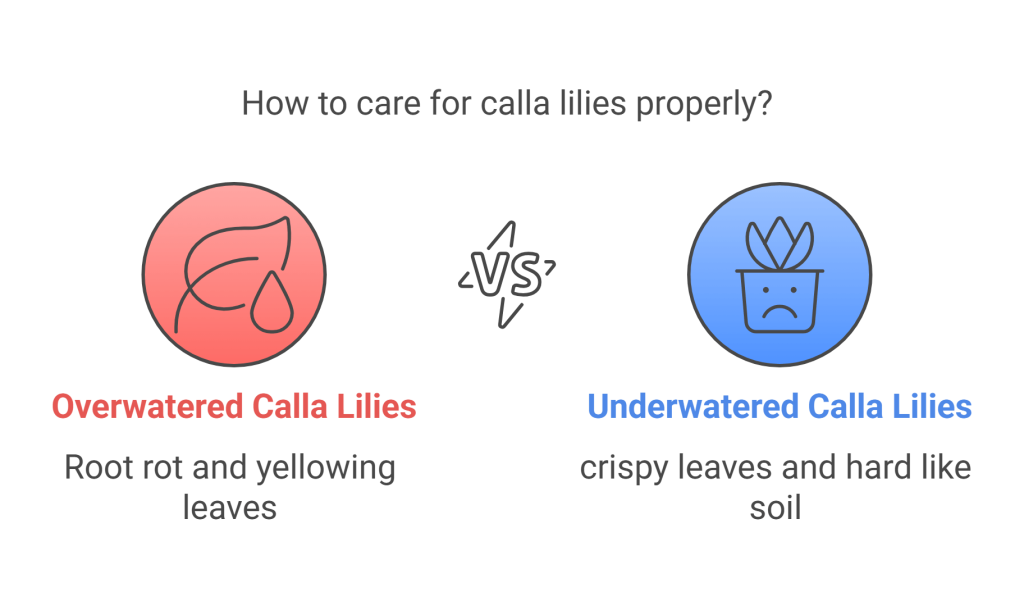
I’ve seen both extremes with my plants. Overwatered calla lilies develop yellow leaves, mushy stems, or a foul smell from root rot.
Underwatered calla lilies droop sadly, with dry, crispy leaves and soil that’s hard as a rock. If you catch overwatering early, let the soil dry out and trim any soggy roots. For underwatering, give it a good drink and watch it perk up in a day or two.
Best Way to Keep Soil Moist but Not Soggy
The best way to keep calla lily soil moist is a pot with holes and a light mix. Self-watering pots are cool if you’re forgetful, but traditional pots work fine as long as the water can escape.
Mix your soil with something chunky like perlite to keep it light and airy. Use a mix of potting soil and sand to keep indoor calla lily soil moist but well-drained.
How to Prevent Calla Lily Root Rot
Root rot is the silent killer of houseplants, and I learned that the hard way. To prevent root rot, never let your calla lily sit in a saucer of water—dump it out after 15 minutes. Check the roots every few months when you repot; healthy ones are white and firm, not brown and squishy.
If you spot rot, cut it off with clean scissors and repot in fresh soil. The University of Minnesota Extension says good drainage is key to preventing root rot.
Light & Temperature Needs
Best Indoor Light Conditions for Calla Lilies
Indoor calla lilies thrive in bright, indirect light, such as near a window with a sheer curtain. Place them near an east-facing window for optimal blooming.
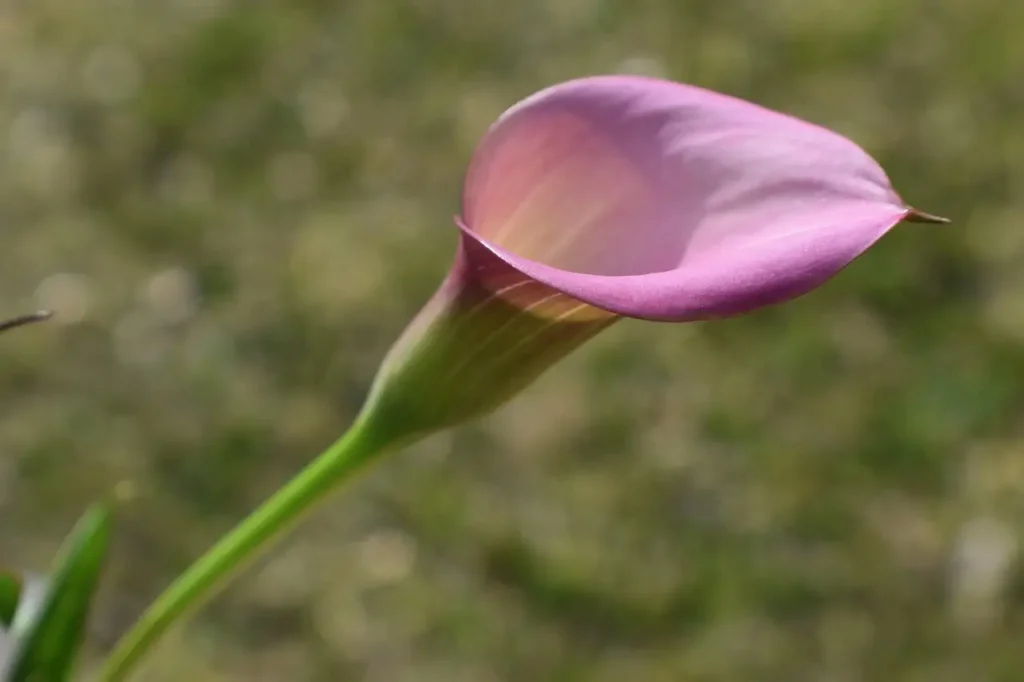
Direct sunlight can scorch their leaves, leaving ugly brown spots. Calla lilies can survive low light but grow slower and may not bloom.
Low light causes indoor calla lilies to weaken and stop blooming.
Can Calla Lilies Grow in Low Light?
In low light, your calla lily might stretch toward any light it can find, getting leggy and weak. Move your place closer to a window or grab a grow light if it is dark. I’ve used a cheap LED one from a hardware store, and it worked wonders during gloomy winters.
Ideal Room Temperature for Calla Lilies
Indoor calla lilies grow best at 65°F to 75°F (18°C-24°C). Mine drooped when I left it near a cold drafty window in January. Keep them away from heaters too; dry heat makes them cranky. If your home swings between hot and cold, put them in a spot that stays steady, like a living room corner.
Soil & Potting Mix
Best Soil Mix for Indoor Calla Lilies

The best soil mix for indoor calla lilies is 50% potting soil, 25% peat moss, and 25% perlite for drainage. Store-bought mixes like Miracle-Gro’s indoor blend work too if you’re short on time. The goal? Soil that holds water but lets extra drain away fast. Compacted soil is a no-no; it suffocates roots.
Do Calla Lilies Need Well-Draining Soil?
Yes, calla lilies need well-draining soil to prevent water from pooling and causing root rot.
I add a scoop of sand or perlite to every pot I use—it’s like giving the roots room to breathe. The Missouri Botanical Garden backs this up: well-draining soil keeps calla lilies happy.
Choosing the Right Pot for Calla Lilies
Pick a pot that’s 6-8 inches wide for a small plant—bigger if it’s growing fast. Clay pots dry faster for indoor calla lilies, while plastic works with careful watering. Ceramic looks fancy but can hold moisture longer, so watch it. Whatever you choose, make sure it has holes in the bottom!
Fertilization & Growth Boosters
Best Fertilizer for Calla Lilies in Pots
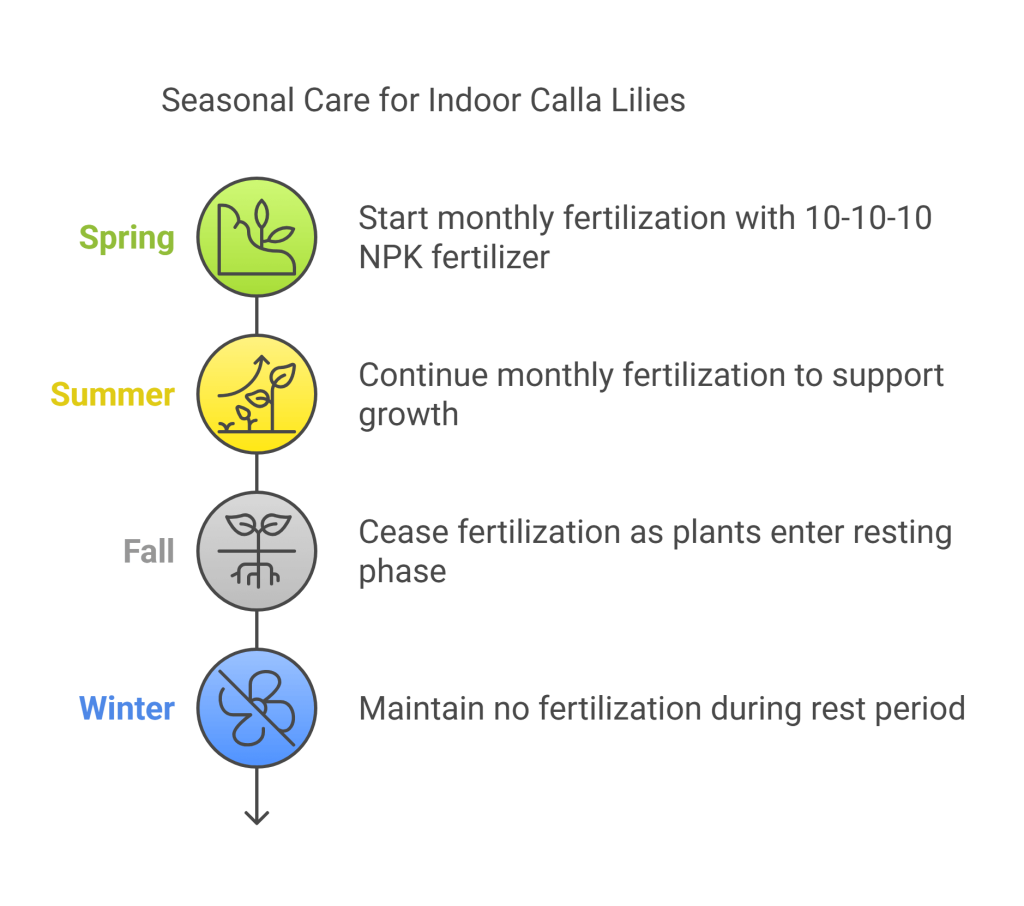
Use a 10-10-10 NPK balanced fertilizer to keep indoor calla lilies healthy. It’s got equal parts nitrogen, phosphorus, and potassium to keep leaves green and flowers popping. Every month in spring and summer, I mix it into the water.
How Often to Fertilize Calla Lilies Indoors
Fertilize indoor calla lilies monthly in spring and summer. In fall and winter, I skip it since the plant’s resting. Over-fertilizing shows up as brown leaf tips, so if you see that, flush the soil with water and ease up.
Organic vs. Synthetic Fertilizers for Calla Lilies
Synthetic fertilizers act quickly for indoor calla lilies, while organic options like compost tea are gentler. Organic takes longer to work, but it’s less likely to burn the plant. Pick what fits your vibe—I lean organic these days.
Blooming & Flower Maintenance
How to Encourage Calla Lilies to Bloom Indoors

Calla Lily blooms are the best part, right? Encourage indoor calla lily blooms with bright light, consistent water, and a post-bloom rest. I let mine chill with less water for a couple months—it mimics their natural cycle and sets up new blooms.
Why Is My Calla Lily Not Flowering?
A calla lily not blooming may lack light, water, or fresh soil. Mine stopped once when I forgot to repot it—fresh soil fixed it fast. Boost light and nutrients, and you’ll see flowers soon.
Deadheading Calla Lilies for Prolonged Blooms
Deadhead calla lilies by removing faded blooms to promote growth. I use scissors to cut faded blooms at the base—takes two seconds. It tells the plant to focus on new flowers instead of seeds.
Dormancy & Seasonal Care
Do Indoor Calla Lilies Go Dormant?
Indoor calla lilies go dormant after blooming.
It’s totally normal—think of it as their way of recharging. You’ll know it’s happening when the leaves turn yellow and the plant stops growing, usually in late fall or winter. Yellow leaves during dormancy signal indoor calla lilies are resting, not dying.
How to Care for Calla Lilies After Blooming

Once the flowers fade, I ease up on the care. I cut watering back to once every two or three weeks—just enough to keep the soil barely moist. Fertilizer? Nope, they don’t need it now. I trim off any yellow leaves to keep things tidy. The key is to let them chill out.
According to Clemson University’s Cooperative Extension, this downtime helps the rhizomes (those underground stems) store energy for the next round of growth.
Reviving Calla Lilies After Dormancy
Revive dormant indoor calla lilies in February or March by increasing water and light. New green shoots pop up, and I feel like a plant wizard. Give them a light dose of fertilizer once you see growth, and they’ll be ready to shine again.
Propagation & Repotting
How to Propagate Calla Lilies Indoors
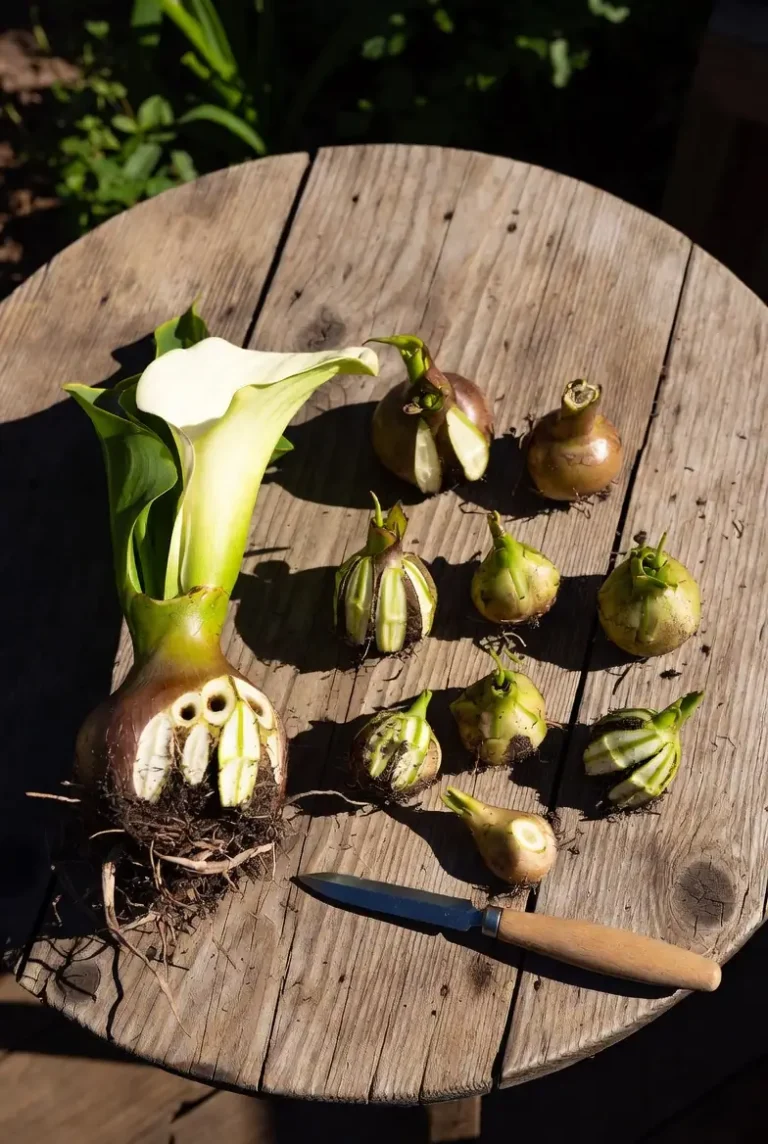
Propagate indoor calla lilies by splitting their rhizomes. During repotting, split indoor calla lily rhizomes by hand, ensuring each section has a growth point.
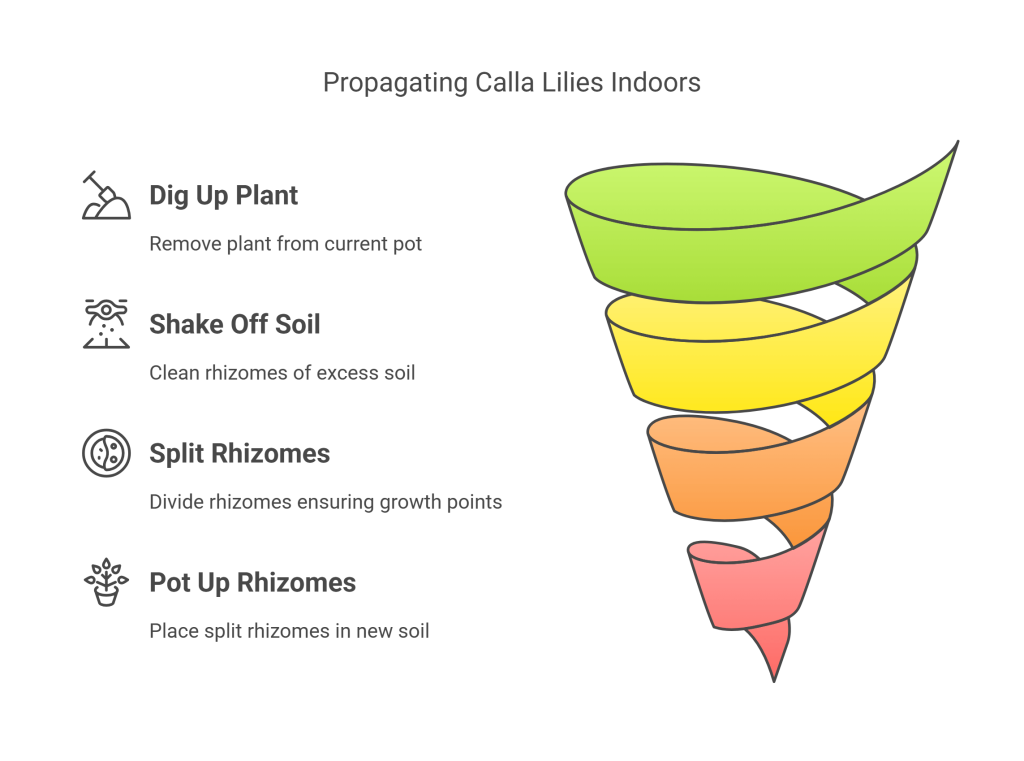
Plant those in fresh soil, water lightly, and in a few weeks, you’ve got baby calla lilies. Step-by-step? Dig up the plant, shake off the soil, split the rhizomes, and pot them up. Easy peasy.
When and How to Repot Calla Lilies
Repot indoor calla lilies every 1-2 years when the pot is crowded or soil hardens. Spring’s the best time—right before they wake up from dormancy. I grab a pot one size bigger, fill it with my trusty soil mix (potting soil, peat, and perlite), and settle the plant in.
Don’t bury the rhizomes too deep—just an inch or so below the surface. The University of Florida IFAS Extension says repotting keeps them healthy and blooming.
Dividing Calla Lily Rhizomes for More Blooms
Dividing rhizomes isn’t just for propagation—it can boost flowers too. I’ve noticed that when I split an overcrowded plant, each new section blooms better the next season.
Do it when you repot: cut the rhizomes with a clean knife, let the cuts dry for a day (keeps rot away), then plant them. More plants, more blooms—what’s not to love?
Common Problems & Solutions
Why Are My Calla Lily Leaves Turning Yellow?
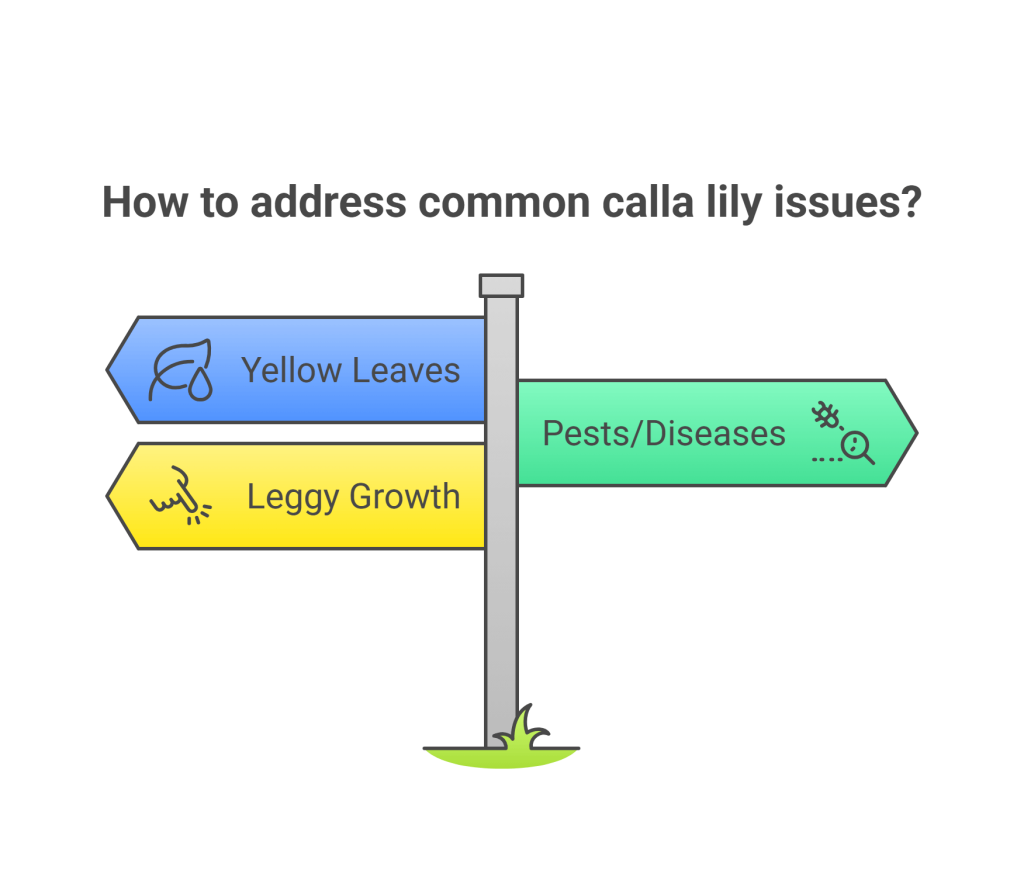
Yellow leaves on indoor calla lilies stem from overwatering, nutrient issues, or natural aging. Overwatering’s the big one—check the soil; if it’s soggy, let it dry out.
Nutrient shortages can do it too; a quick fertilizer fix perks them up. Sometimes, it’s just old leaves saying goodbye—snip those off and don’t worry. I’ve learned to troubleshoot by feel and sight, and it’s saved my plants more than once.
Pests and Diseases Affecting Indoor Calla Lilies
Aphids and spider mites commonly infest indoor calla lilies.I spot aphids as tiny green bugs on the stems—gross! Spider mites leave little webs and speckled leaves. Control calla lily pests with soapy water (1 teaspoon dish soap per quart).
Fungal diseases, like gray mold, pop up if it’s too damp. Keep air moving with a small fan and avoid wetting the leaves. The University of Florida IFAS Extension has great tips on pest control for calla lilies if you need more ideas.
Fixing Leggy Calla Lilies Indoors
Leggy plants look like they’re reaching for the sky—and they are! Mine got stretchy in low light. I moved them closer to a window and trimmed back the long bits with scissors. More light, a little pruning, and they grow compact again. It’s all about giving them what they crave.
Toxicity & Pet Safety
Are Calla Lilies Toxic to Pets?
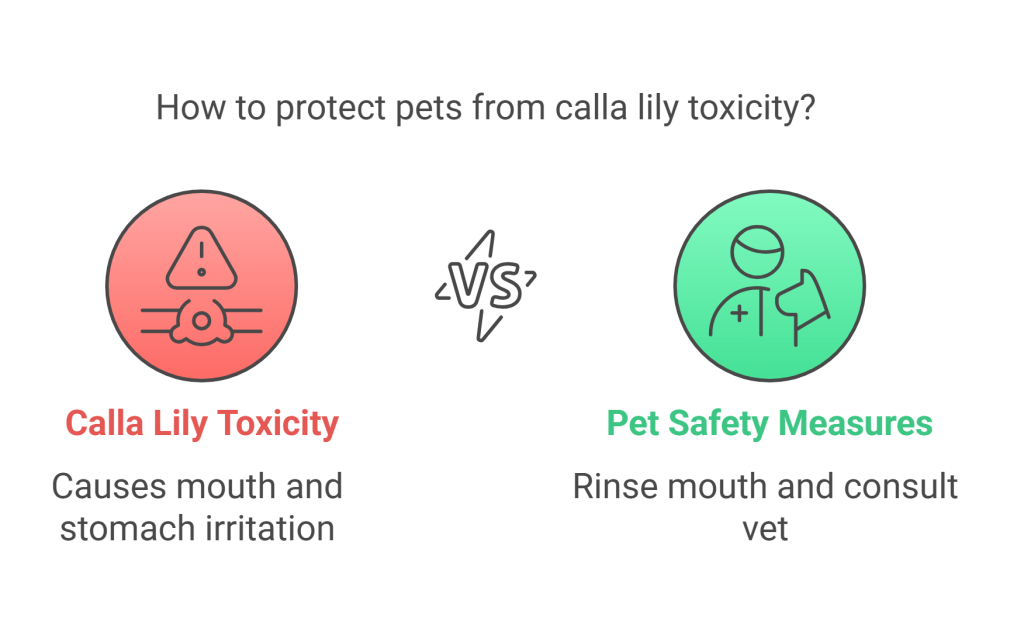
Calla lilies are toxic to cats and dogs, posing risks to pets. “Pet ingestion of calla lilies can cause irritation, requiring immediate care. The ASPCA says they’ve got calcium oxalate crystals that irritate mouths and stomachs. Symptoms? Drooling, vomiting, or pawing at the face. Not fun.
What to Do If a Pet Eats a Calla Lily
If your pet chows down, rinse their mouth with water and call your vet pronto. I keep my plants on high shelves now, just in case. Better safe than sorry—trust me, I’ve been there.
Safe Indoor Plant Alternatives to Calla Lilies
Want something pet-friendly? I’ve switched some spots to peace lilies (not true lilies, totally safe) or African violets. They’ve got that elegant vibe without the risk. Mix them into your indoor garden, and everyone’s happy.
Indoor vs. Outdoor Care Differences
Can You Move Calla Lilies Outdoors in Summer?
You can move calla lilies outside in summer if it’s warm—above 50 degrees. The RHS says start slow—put them in shade a few hours, then more each day. They like morning sun and afternoon shade outside. Bring them back in if it gets cold at night. Slow moves keep them happy.
Differences Between Indoor and Outdoor Calla Lily Care
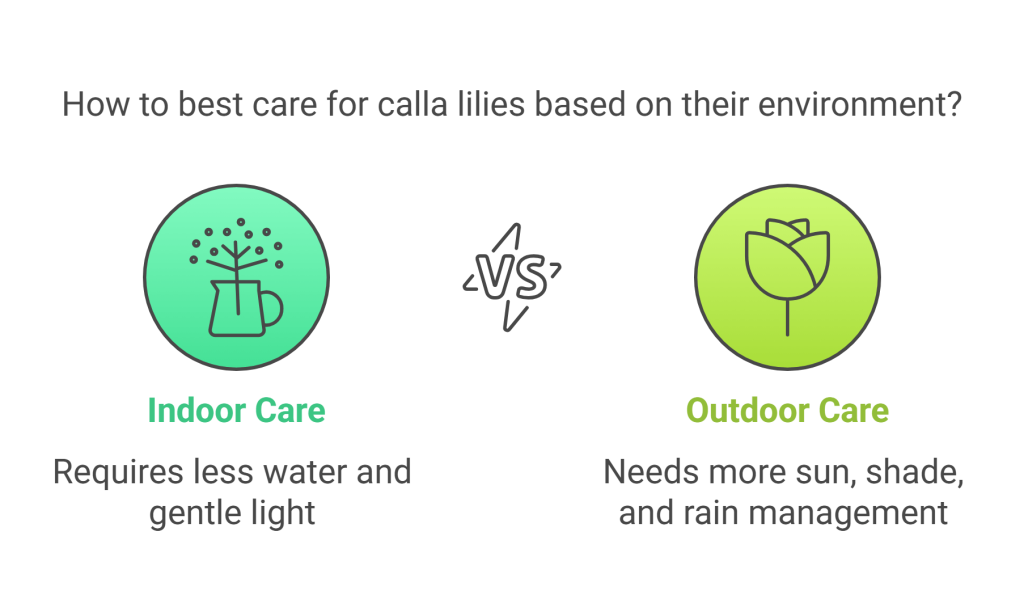
Indoor calla lilies need less water than outdoor ones—rain helps outside. Inside, I water every week; outside, it’s less if it rains a lot. Indoors, they need gentle light—outdoors, they take more sun with some shade. Soil stays the same—light and fast-draining. Weather changes outdoor care, so watch it close.
Adapting Care for Calla Lilies Based on Climate
If you’re in a humid place, cut back on watering. Dry climate? Mist the leaves a bit. I tweak my routine based on my home’s vibe—winter heaters dry things out, so I water more. It’s all about watching and adjusting.
Conclusion
So, there you have it—my complete guide to keeping calla lilies thriving indoors! From watering just right to coaxing out those gorgeous blooms, it’s all about balance and a little love. I’ve shared what’s worked for me, backed by pros like the RHS and ASPCA, so you can trust these tips.
Go ahead and experiment—move them around, try new soil mixes, see what they like. With a bit of care, your calla lilies will be the stars of your home.
If you’re debating between a peace lily and a calla lily, check out my post on Peace Lily vs. Calla Lily: Key Differences, Care, and Symbolism. It’ll help you make the right choice!
Happy Planting!