Is your Peace Lily struggling in soil? What if it could thrive in water, no mess, no pests?
You heard right!
Peace Lilies can grow in water with proper care. They thrive in a hydroponic setup, as long as you change the water regularly and add nutrients.
Growing Peace Lilies in water is not only an aesthetic choice, it’s a practical one. You can enjoy a clean, beautiful plant without worrying about repotting or soil-dwelling pests.
Keep reading, and I’ll show you the simple steps to help your Peace Lily flourish in its new hydroponic home.
Benefits of Growing a Peace Lily in Water
Visual Appeal of a Peace Lily in Water Vase
Growing a Peace Lily in water looks stunning. The clear vase shows off the roots, turning your plant into living decor. Picture this: an 8-10” tall glass vase on your coffee table, roots dangling like nature’s art—pretty cool, right?
Low Maintenance
No soil means fewer pests and no repotting. The University of Florida’s Extension Service notes soil harbors bugs like fungus gnats, but a Peace Lily in water skips that entirely. No more dirty hands!
Healthier Roots
Peace Lily roots thrive in water with constant oxygen. This cuts down on rot, a common issue in soggy soil. The Missouri Botanical Garden says healthy roots are key to a happy plant, and growing in water makes that simple.
Comparison: Soil vs. Water in Peace Lily
Here’s a quick look at soil vs. water:
| Soil | Water |
| Natural nutrients | Cleaner look |
| Needs repotting | No soil pests |
| Can overwater easily | Easy to monitor roots |
Water wins for simplicity and style, though you’ll need to add nutrients manually. Ready to see why this works so well? Let’s grab our supplies.
Essentials for Growing a Peace Lily in Water
Indoor plants like Peace Lilies need the right tools to grow in water. Here’s your checklist to set up a thriving hydroponic setup.
Essentials
- Small Peace Lily plant: Pick one with bright green leaves.
- Clear glass vase (8-10” tall): Shows off roots and holds water.
- Plastic plant saucer (6” diameter or adjustable): Supports the plant above water.
- X-Acto knife or sharp scissors: For cutting the saucer and trimming roots cleanly.
- Cardboard tray or container: Keeps soil mess contained during the switch.
- Distilled or purified water: Avoids chemicals (like U.S. tap water’s chlorine) that hurt plants.
Optional
- Decorative rocks/marbles (well-rinsed): Adds flair to your vase.
- Liquid hydroponic fertilizer: Brands like General Hydroponics FloraSeries or Advanced Nutrients Bloom, Micro, Grow work great.
Why It Matters
Each item has a job. Distilled water prevents buildup from tap water chemicals like chlorine, which the University of Minnesota Extension warns can harm plants. The saucer keeps the plant’s crown—the spot where leaves meet roots—out of water to avoid rot. Trust me, having the right stuff makes this a breeze.
Got your supplies ready?
Watch this quick video on Growing Peace Lily (Spathiphyllum) in Water Hydroponics to see the process in action, then follow the steps below to get started.
Growing Peace Lily in Water: Step-by-Step
Follow these steps to move your Peace Lily to water successfully.
Step 1: Select a Healthy Plant
A healthy Peace Lily has vibrant green leaves with no yellowing or wilting. Check the roots too—black, mushy ones mean rot, so skip those plants. Start strong, and you’re halfway there.
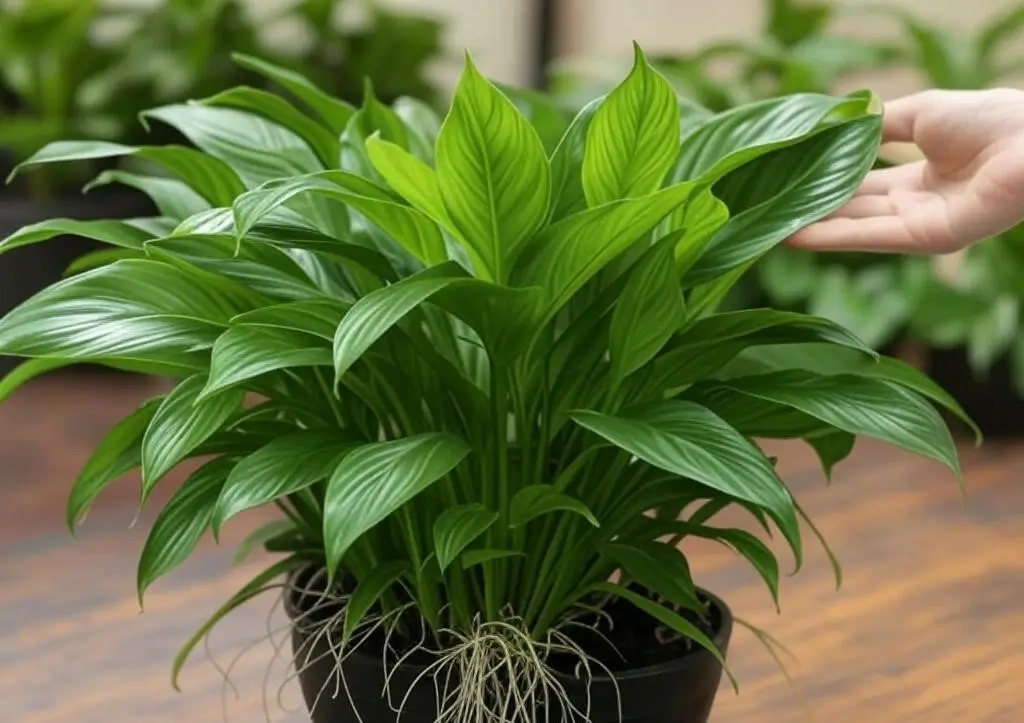
Step 2: Remove the Peace Lily from Soil
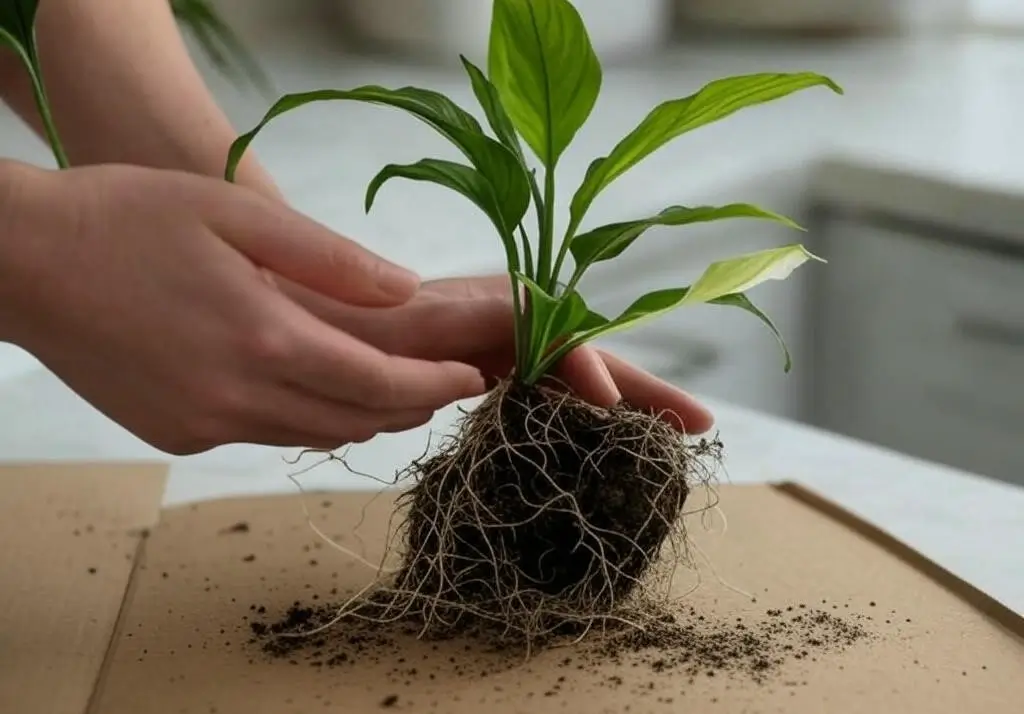
Gently ease the plant out over a container or cardboard tray. Shake the roots and massage them to loosen the soil. I once tried this over my sink and ended up with dirt everywhere—use a tray!
Step 3: Rinse the Roots
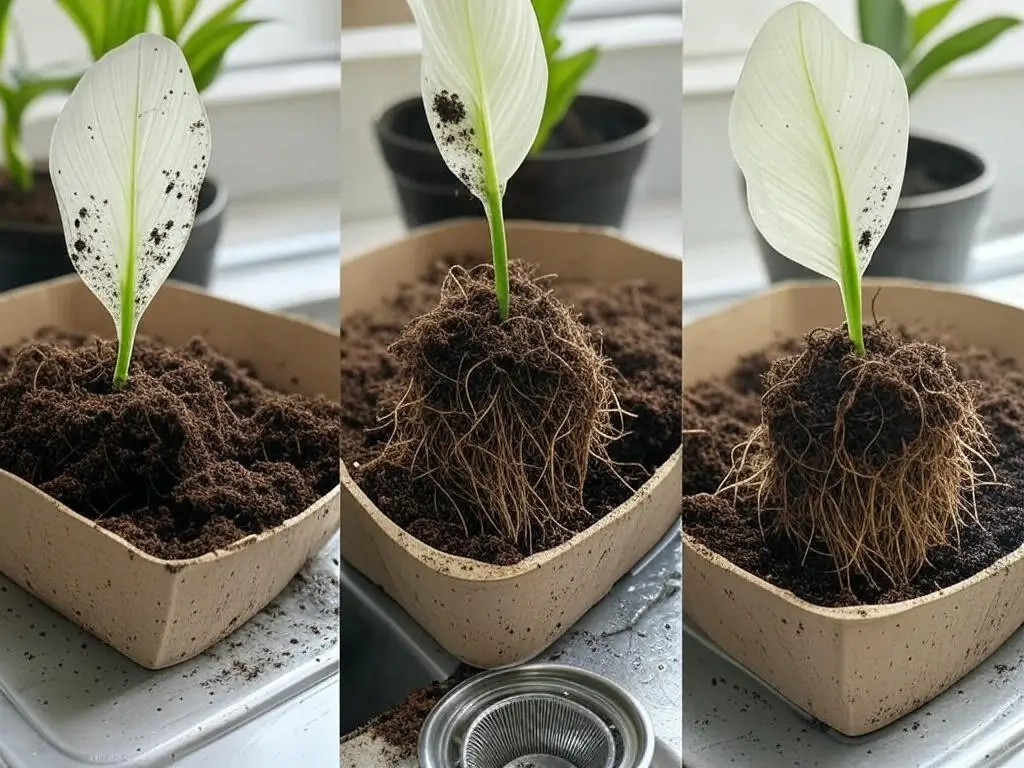
Use lukewarm running water to clean off leftover soil. Add a sink strainer to avoid clogging your drain. Clean roots adapt faster to water.
Step 4: Trim and Inspect the Roots
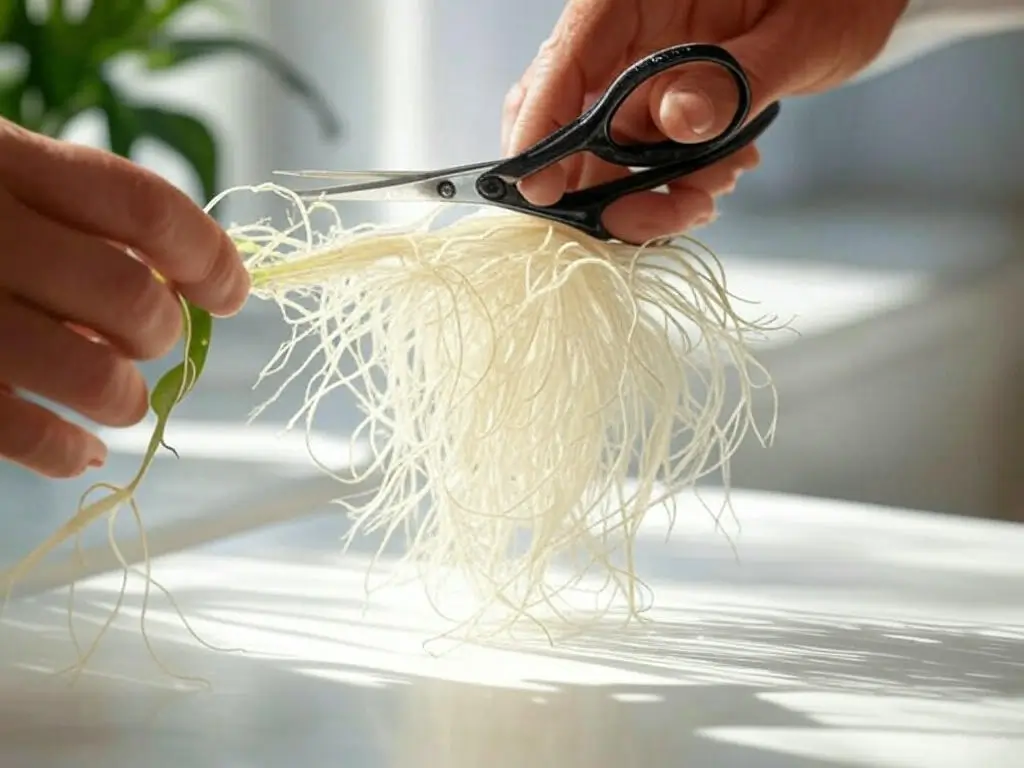
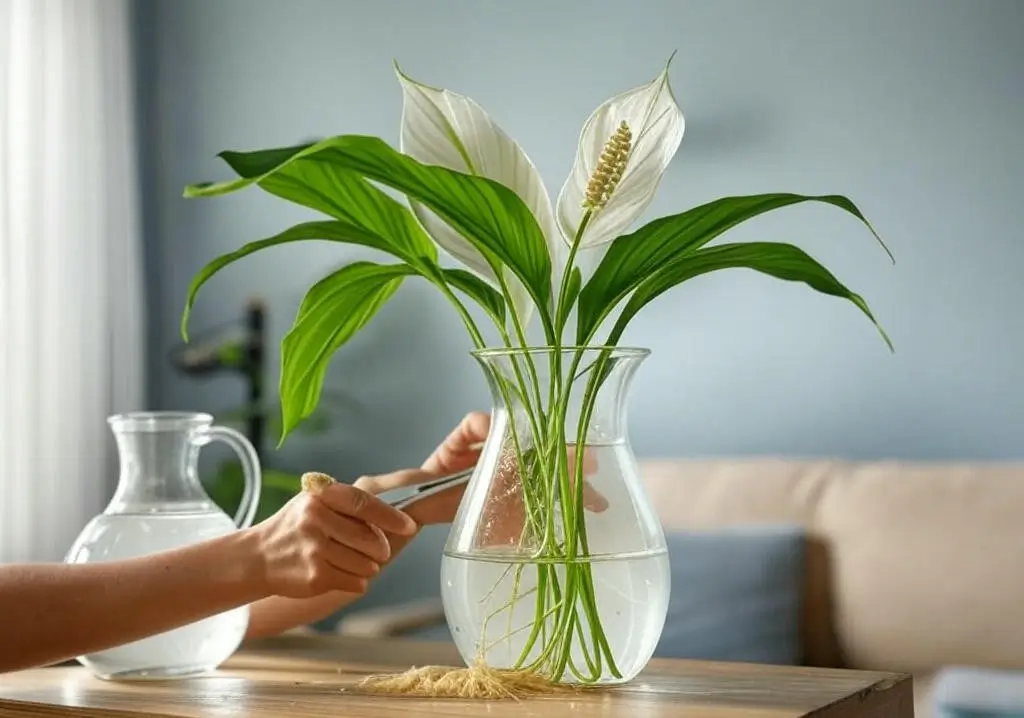
Healthy roots grow better in water, so trim any damaged or super-long ones with your scissors. This extra step helps the plant settle in quicker. Look for white, firm roots—those are the keepers.
Step 5: Prepare the Plastic Saucer for Support
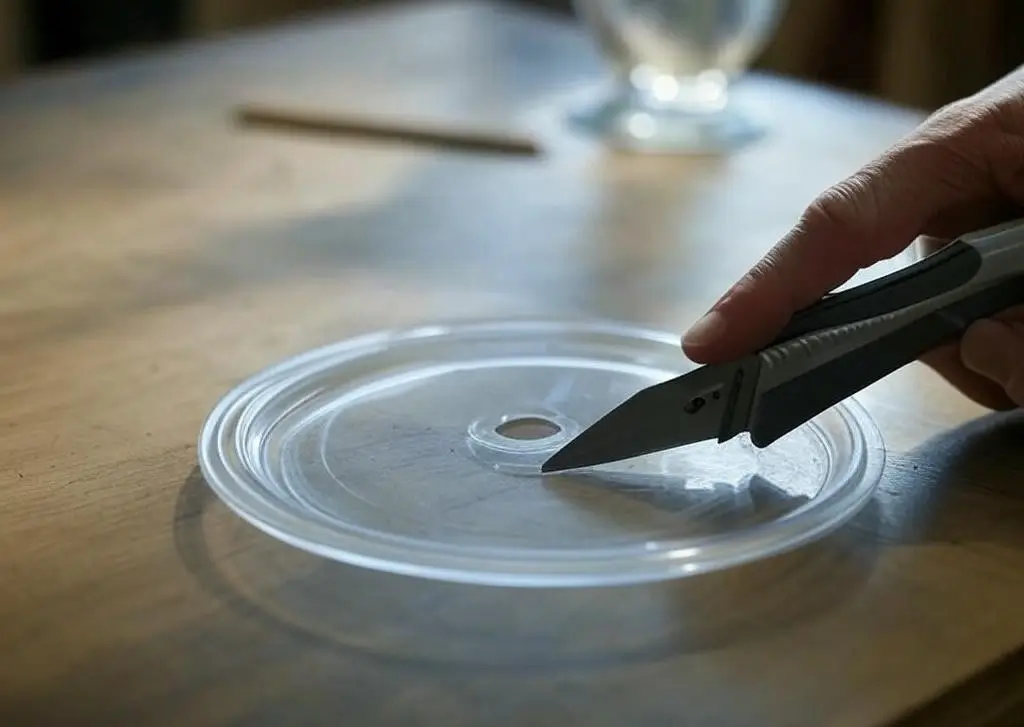
Cut a 2-3” hole in the 6” saucer—big enough for roots, small enough to hold the crown. Test it on the vase to make sure it sits snugly. This keeps the crown above water, which is a must.
Step 6: Assemble the Setup
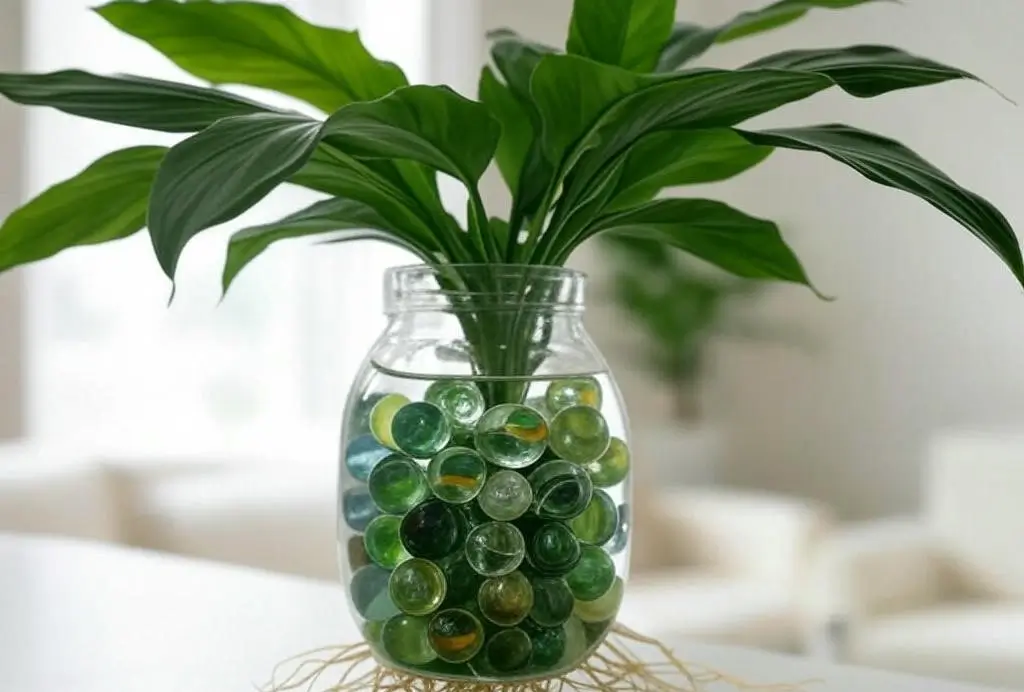
Feed the roots through the saucer hole and rest the saucer on the vase lip. Add rinsed rocks or marbles if you want a fancier look—rinse them first to keep water clean. It’s starting to look good already.
Step 7: Add Water
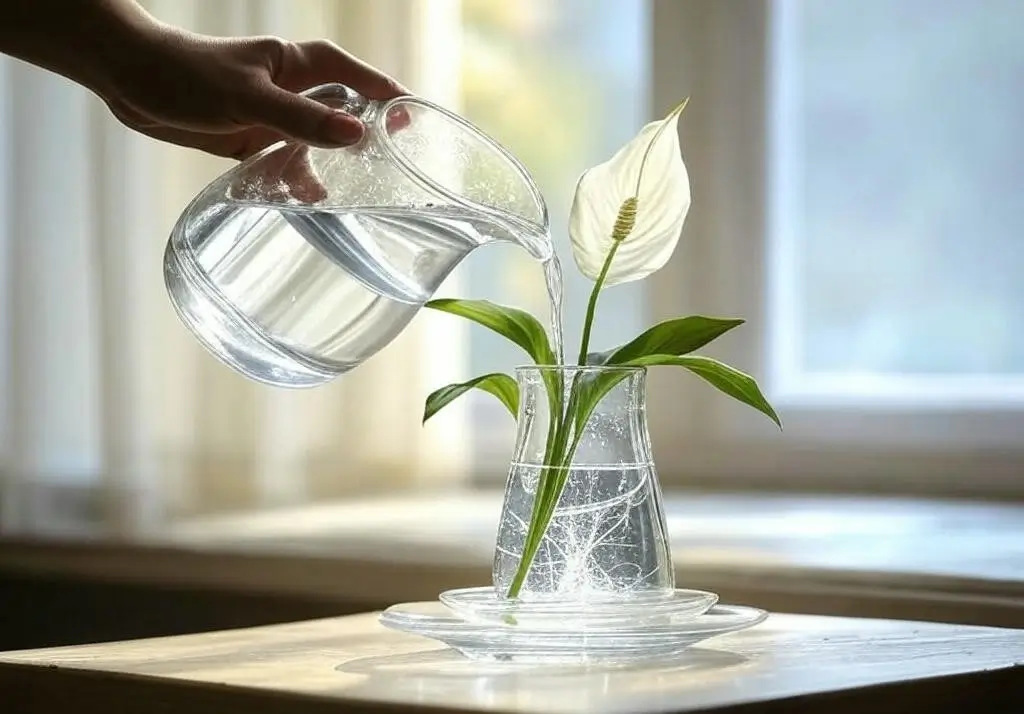
Fill the vase with distilled or rainwater until it touches the saucer base. Tap water has chlorine and fluoride, which can hurt your plant, so skip it. The University of Florida Extension backs this up—pure water is best.
Step 8: Monitor & Adjust
Place your Peace Lily in bright, indirect light—no direct sun! Change water every 2 weeks for clarity. Trim roots if they get slimy or too long. You’re now a hydroponic pro.
Caring for Your Peace Lily in Water
Your Peace Lily is in water—now let’s keep it happy with simple care tips.
Water Maintenance
Top off water weekly; replace it every 4-6 weeks. Cloudy water? Rinse roots and vase fast.
Quick Care Cheat Sheet: Water every week, change every month
Fertilizing
Add a few drops of liquid fertilizer monthly, like a 1/4-strength hydroponic solution. Water doesn’t have soil’s natural nutrients, so this feeds your plant. General Hydroponics FloraSeries is a solid pick.
Light and Location
Peace Lilies need bright, indirect light near a north or east-facing window. Direct sun burns leaves, and drafts stress the plant. Find that sweet spot for steady growth.
Troubleshooting
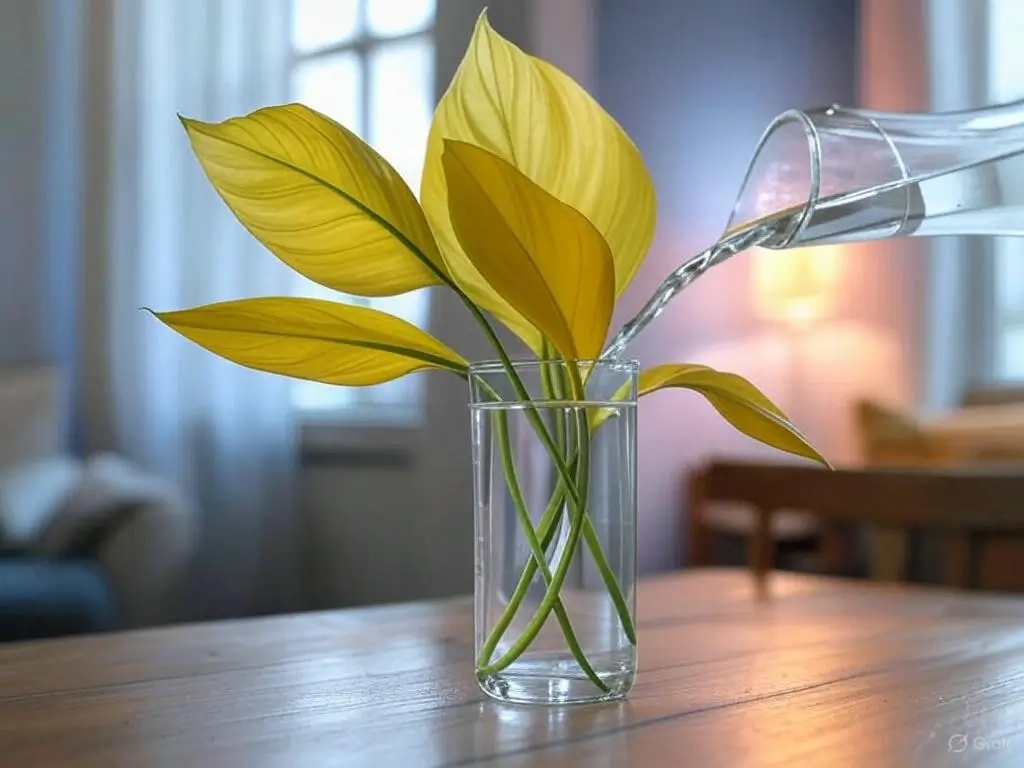
Yellow leaves? Check water quality or light levels—too much sun or bad water could be the culprit. Drooping means it’s thirsty or shocked, so adjust the water level.
Algae in the vase? Cut light exposure or switch to an opaque vase.
Advanced Tips and Customization
Want to take your Peace Lily game up a notch? These tips add flair and finesse to your hydroponic setup.
Gradual Transition Method
Some Peace Lilies are picky about switching to water. Start with a mix of soil and water in the vase, then reduce soil over a week. This eases sensitive plants into the change without stress.
Styling Ideas
A tall, narrow vase highlights those dangling roots, while a wide one shows off marbles or colored pebbles—rinse them first to avoid clouding the water.
You could even pair it with a betta fish, but keep the plant’s needs first—fish waste can mess with water quality if not balanced right.
Propagation
You can make more Peace Lilies from one! Divide the plant by gently pulling apart clumps with roots attached, then place each section in water. Roots grow fast this way, giving you new plants to share or style.
The University of Minnesota Extension says propagation works well in water for plants like this, so you’re backed by science here.
Common Mistakes to Avoid
Mistakes happen, but avoiding these keeps your Peace Lily alive and happy.
Submerging the Crown
The crown—where leaves meet roots—must stay above water. Dunking it causes rot, and trust me, the smell isn’t fun. Use that saucer right, and you’re golden.
Using Untreated Tap Water
Tap water has chlorine and fluoride, which build up and harm roots. The University of Florida Extension warns against this for sensitive plants—stick to distilled or rainwater instead.
Overcrowding the Vase
Too many roots in a small vase limits oxygen. Give them space to breathe, or growth slows down. A bigger vase fixes this fast.
Skipping Fertilizer
Water doesn’t feed your plant like soil does. Skip fertilizer, and leaves turn pale or stop growing. A monthly dose keeps it healthy—don’t slack on this one.
I learned the hard way once when my Peace Lily drooped from no nutrients. A quick fix with fertilizer brought it back—lesson learned!
Best Peace Lily Varieties for Growing in Water
Not all Peace Lilies grow well in water. Some varieties adapt better than others. Here are the best ones to try:
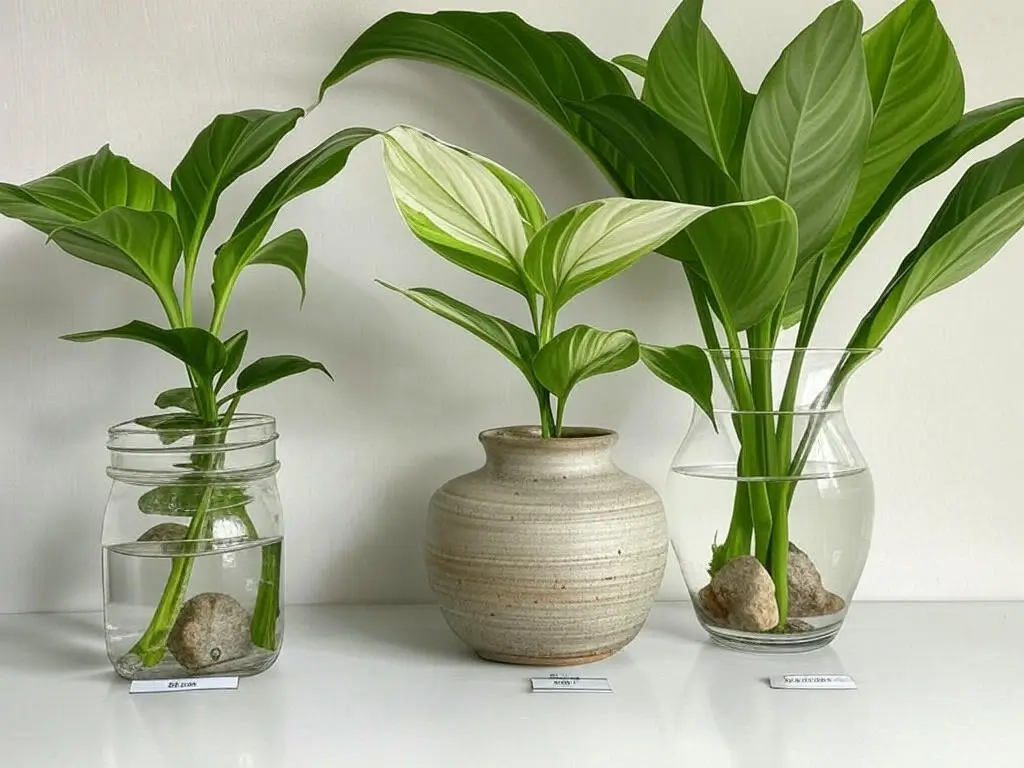
1. Spathiphyllum ‘Petite’ (Best for Small Spaces)
This compact variety has small leaves that fit easily into jars or vases. It requires less space and adapts well to water-only growth.
2. Spathiphyllum ‘Domino’ (Beautiful Variegated Leaves)
Unlike other Peace Lilies, this variety has white and green marbled leaves that add a stylish touch. It grows well in water but may need occasional fertilizing.
3. Spathiphyllum ‘Sensation’ (Largest Variety – Needs More Space)
This is the biggest Peace Lily variety, growing up to 4–6 feet tall. It works best in a large glass vase or a hydroponic setup with strong root support.
How to Choose the Best One?
- If you want a small, easy-care plant, go for ‘Petite’.
- If you love unique, decorative plants, choose ‘Domino’.
- If you want a big, dramatic Peace Lily, pick ‘Sensation’ but be ready for more maintenance.
Frequently Asked Questions (FAQ)
Got questions? I’ve got answers based on what people often ask about Peace Lilies in water.
Can Peace Lilies Live in Water Permanently?
Yes, Peace Lilies can live in water forever with proper care! Keep water fresh and add nutrients, and they’ll thrive.
How Often Should I Change the Water?
Change your Peace Lily’s water every 4-6 weeks, or if it becomes cloudy. Fresh water prevents root buildup and keeps the plant healthy. Check weekly to stay on top of it.
Will It Bloom in Water?
Yes, Peace Lily can bloom in water with good light and fertilizer! Those white flowers need energy, so don’t skip feeding it. I’ve had mine bloom twice this way—patience pays off.
Can I Add Fish to My Peace Lily’s Water?
You can add a fish, like a betta, but it’s tricky. Fish need clean water, and plant roots don’t love fish waste. Prioritize your peace lily, and research fish care separately if you try it.
How Do I Stop Algae in My Peace Lily in Water Vase?
Use an opaque vase or reduce light exposure—algae hates the dark!
Wrapping It Up
You’ve got everything to grow a Peace Lily in water—simple, stylish, and doable! We covered picking a healthy plant, setting it up, and keeping it thriving. Ready to ditch the soil?
Start today and share your Peace Lily in water vase pics below—I’d love to see your setup!