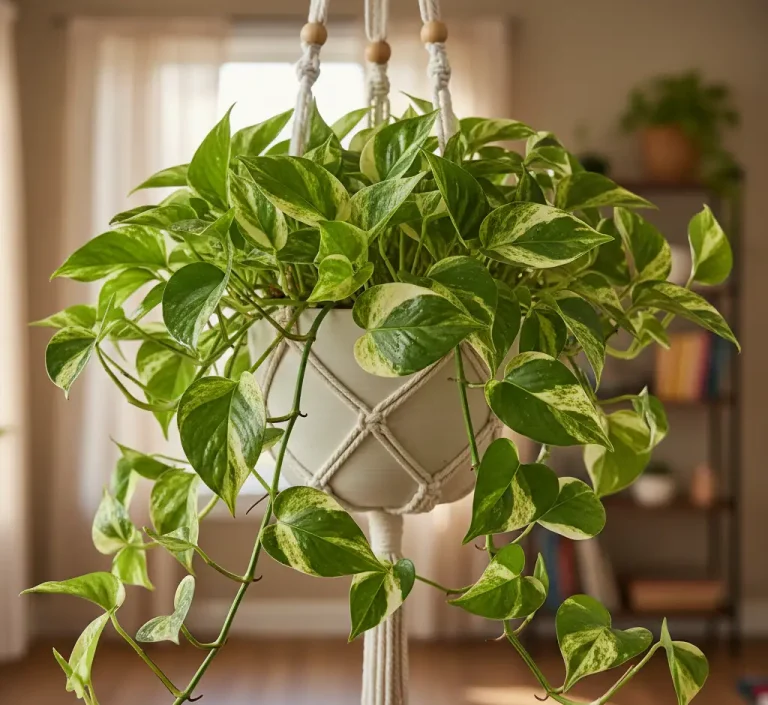
Of all the Pothos varieties I have cultivated over the years, none commands attention quite like the Marble Queen. With her chaotic splashes of cream, stark white, and moss green, she serves as more than just a plant; she is a living piece of art that brightens even the dimmest corners of an apartment.
However, that beauty comes with a catch. Unlike the nearly indestructible Golden Pothos (Epipremnum aureum), the Marble Queen is a bit more of a diva.
If you give her too little light, she punishes you by turning plain green. If you water her incorrectly, those stunning white sections are the first to turn brown and crispy.
In this guide, I am breaking down the exact science and schedule I use to keep my Marble Queens thriving. From the specific soil chemistry required to prevent root rot to the secret of maintaining high variegation, this is everything you need to know to grow a showroom-quality specimen.
At a Glance: Marble Queen Pothos Care Summary
For those looking for the quick facts, here is the essential data required to keep your plant alive. We will dive deep into the “why” and “how” of these metrics in the sections below.
| Care Requirement | Specification |
|---|---|
| Scientific Name | Epipremnum aureum ‘Marble Queen’ |
| Family | Araceae (Arum Family) |
| Light Needs | Bright, indirect light (Crucial for maintaining white color) |
| Watering | Allow the top 2–3 inches of soil to dry completely |
| Soil Type | Chunky, well-draining Aroid mix (Orchid bark, perlite, potting soil) |
| Temperature | 65°F to 85°F (18°C to 29°C) |
| Humidity | 40% to 60% (Standard household to high humidity) |
| Toxicity | Toxic to cats, dogs, and humans (Contains Calcium Oxalates) |
| Growth Rate | Moderate (Slower than green varieties due to less chlorophyll) |
The “Queen”: Origin and Botany
To truly master the care of this plant, you must understand what is happening on a cellular level. The Marble Queen is a cultivar of the Epipremnum aureum, a flowering plant in the arum family native to Mo’orea in the Society Islands of French Polynesia.
What Makes the Marble Queen Special?
The defining feature of this plant is its variegation. This is known as chimeric variegation. The white and cream sectors of the leaves lack chlorophyll, the green pigment responsible for photosynthesis.
This biological fact dictates the entire care routine. Because the white parts of the leaf cannot produce energy from the sun, the green parts have to work double shifts to support the plant.
This explains why the Marble Queen grows significantly slower than its all-green cousins like the Jade Pothos. It has a smaller solar engine to power its growth.
Marble Queen vs. Snow Queen
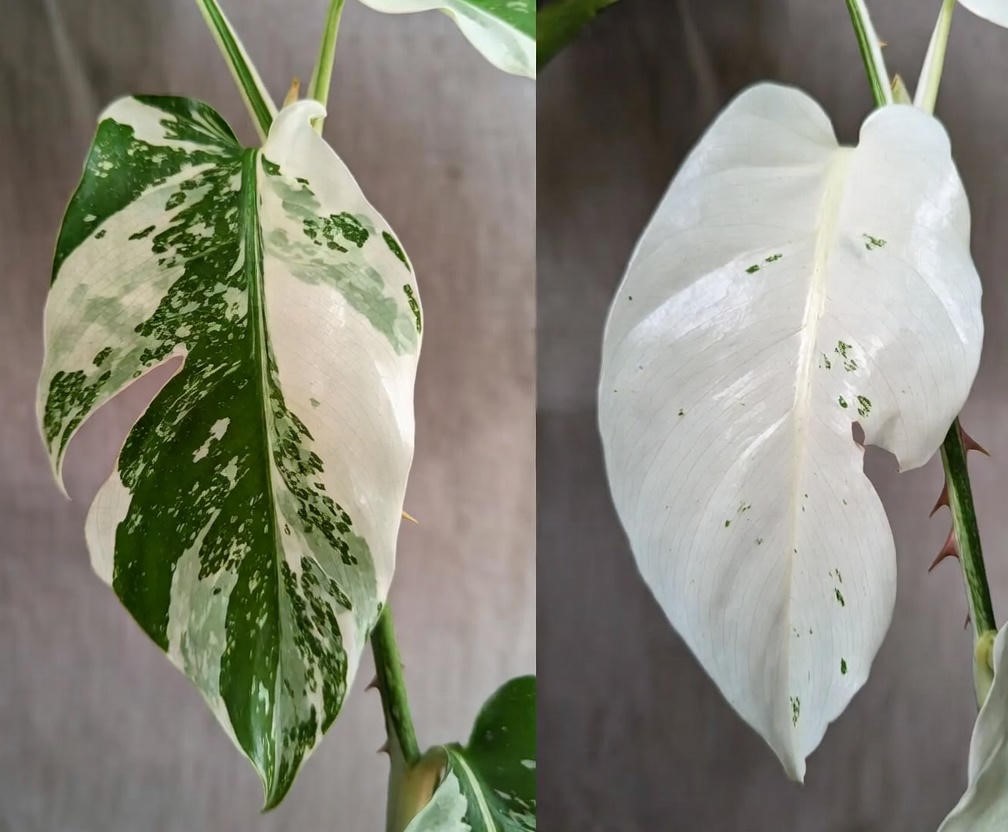
There is often confusion in the horticultural community regarding the “Snow Queen.” In my experience, and according to many botanists, the Snow Queen is not always a distinct cultivar.
Often, a Snow Queen is simply a Marble Queen that has been grown in extremely high-light conditions, causing the variegation to dominate the leaf.
If you buy a highly variegated “Snow Queen” and place it in a dark corner, do not be surprised if the new growth starts to look exactly like a standard Marble Queen. Light intensity drives the expression of these genes.
The Critical Factor: Lighting Requirements
If you take only one thing away from this guide, let it be this: Light equals color.
The most common complaint I receive from clients is that their Marble Queen has “reverted,” meaning it has turned solid green. This is a survival mechanism. When the plant detects low light levels, it realizes it is starving.
To survive, it stops producing the “useless” white tissue and produces high-chlorophyll green tissue to maximize energy absorption.
Finding the Sweet Spot
You need to hit a balance. Too little light causes reversion; too much direct sun burns the delicate white patches.

- The Ideal Direction: In the Northern Hemisphere (USA), a North-facing or East-facing window is often perfect. These windows provide gentle morning sun or consistent ambient light without the harsh midday heat.
- Distance: If you have a South or West-facing window, place the plant 2 to 5 feet back from the glass. You want the plant to see the sky, but not the sun itself.
- The Shadow Test: A simple way to test your light is to hold your hand between the light source and the plant. You should see a soft, fuzzy shadow. If the shadow is stark and hard, the light is too direct. If there is no shadow, the light is too low.
Artificial Lighting
During the darker winter months, I highly recommend using a grow light to maintain the variegation. A simple full-spectrum LED bulb placed 12 inches above the plant for 8 to 10 hours a day can prevent winter reversion.
Watering Strategy: The “Soak and Dry” Method
Overwatering is the number one killer of indoor plants, and the Marble Queen is no exception. As an epiphyte (a plant that grows on trees in nature), its roots are designed to be exposed to air, not constantly submerged in sludge.
When to Water
Do not water on a strict calendar schedule (e.g., “every Monday”). Instead, water based on the soil conditions.
- The Finger Test: Stick your finger into the soil up to the second knuckle. If the soil feels dry and falls off your finger easily, it is time to water. If it feels cool or damp, wait another few days.
- Visual Cues: The Marble Queen is an excellent communicator. When it is thirsty, the leaves will droop slightly and look matte rather than glossy. This is your cue. However, do not let it wilt completely, as this stresses the root system.
- Yellowing Leaves: If you see yellow leaves starting at the base of the plant near the soil, this is usually a sign of overwatering, not underwatering.
Water Quality Matters
While Marble Queens are relatively hardy, the white sections of their leaves are sensitive to chemicals found in tap water, specifically fluoride and chlorine.
If you notice the tips of your white leaves turning brown or crispy, try switching to distilled water, rain water, or filtered water that has been left out overnight to allow chlorine to dissipate.
Soil and Potting: Building the Foundation
Because this plant is prone to root rot, standard “potting soil” from the garden center is often too dense. It holds water like a sponge, suffocating the roots. You need to create an Aroid Mix.
The Perfect “Aroid Mix” Recipe
Here is the exact ratio I use for all my Epipremnum varieties:
- 40% Quality Potting Soil: Provides the base and nutrients.
- 30% Orchid Bark (Fine grade): Creates large air pockets for roots to breathe.
- 20% Perlite or Pumice: Improves drainage and prevents compaction.
- 10% Worm Castings: Acts as a slow-release natural fertilizer.
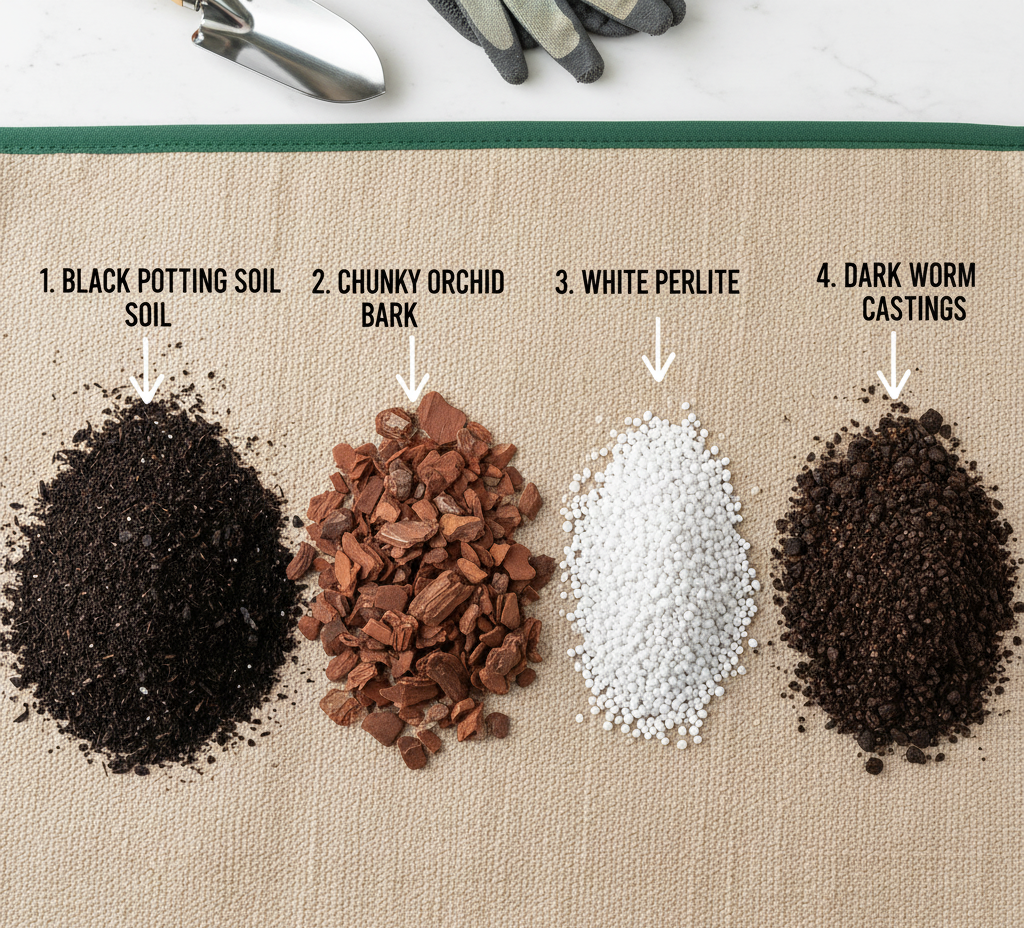
This mix allows water to rush through the pot, wetting the roots without leaving them soggy. When you water, it should flow out of the bottom drainage holes almost immediately.
Choosing the Right Pot
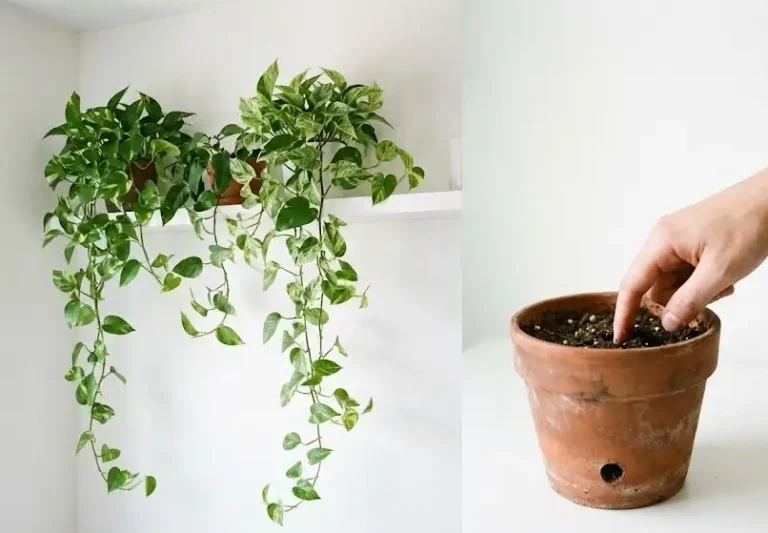
You must use a pot with drainage holes. This is non-negotiable.
- Terracotta: Good for “chronic over-waterers” because the porous clay wicks moisture away from the soil.
- Plastic/Ceramic: Retains moisture longer. Better if you tend to forget to water your plants.
Pro-Tip: Marble Queens like to be slightly root-bound. Do not repot them into a massive container. Only upgrade the pot size by 1 or 2 inches when you see roots coming out of the drainage holes.
Temperature and Humidity Preferences
Native to tropical jungles, the Marble Queen prefers a warm, humid environment, but it is surprisingly adaptable to the average American home.
Ideal Climate Conditions
- Temperature: The sweet spot is between 65°F and 85°F (18°C–29°C). Be very careful with drafts. Placing this plant near a drafty window in winter or directly in the path of an air conditioning vent in summer causes thermal shock, leading to leaf drop.
- Humidity: While they can survive in standard household humidity (around 40%), they thrive in 60% humidity or higher.
Do You Need a Humidifier?
If you live in a dry climate or use forced-air heating in winter, the white parts of the leaves may start to brown at the edges.
To combat this without buying a humidifier, you can group your plants together. As plants transpire (release moisture), they create a microclimate of higher humidity around each other.
Fertilizer: Feeding for Foliage
Since the Marble Queen has less chlorophyll, it does not consume nutrients as rapidly as a Golden Pothos, but it still needs fuel to push out new growth.
Best NPK Ratios
I recommend a balanced liquid fertilizer with an NPK ratio of roughly 10-10-10 or 20-20-20.
- Nitrogen (N): Promotes leafy, green growth.
- Phosphorus (P): Supports root development.
- Potassium (K): Aids in overall plant health and water regulation.
Seasonal Schedule
- Spring and Summer: This is the active growing season. Dilute your liquid fertilizer to half-strength and apply it once a month when watering.
- Fall and Winter: The plant enters a semi-dormant state due to lower light levels. Stop fertilizing completely during this time. Feeding a dormant plant can cause “fertilizer burn” because the roots cannot absorb the excess minerals.
Growth Habits: Trailing vs. Climbing
You have two distinct aesthetic choices when growing a Marble Queen.
The Hanging Basket Look (Trailing)
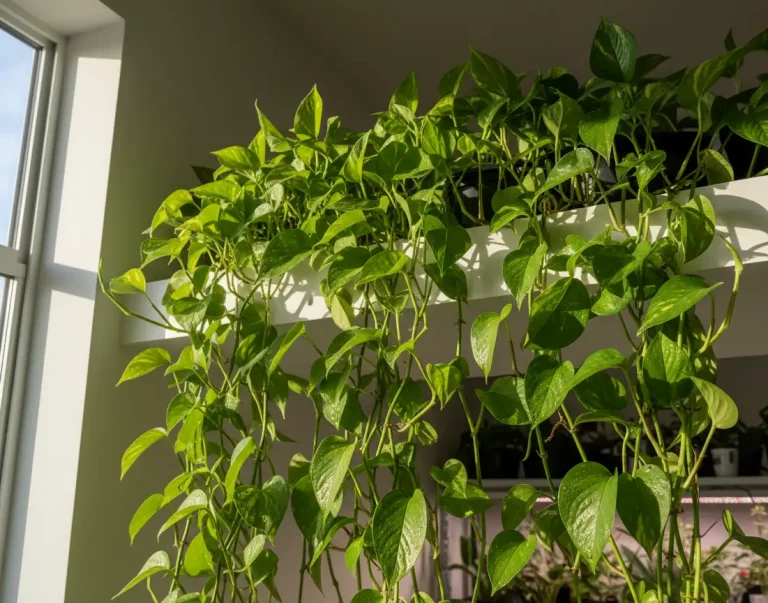
This is the most common method. Allowing the vines to trail down from a bookshelf or hanging planter creates a beautiful “waterfall” effect. However, over time, gravity makes it difficult for the plant to pump water and nutrients to the ends of long vines. This often results in smaller and smaller leaves as the vine gets longer.
Using a Moss Pole (Climbing)
If you want large, prehistoric-looking leaves, you must let the plant climb. In the wild, Pothos climb up tree trunks. By providing a moss pole or coco coir pole, the plant’s aerial roots will dig into the support.
This signals the plant that it is stable and moving toward the jungle canopy (the light source). The result? The leaves will triple in size, and mature plants may even develop fenestrations (splits in the leaves) similar to a Monstera.
Pruning and Propagation
Don’t be afraid to cut your plant. In fact, regular pruning is the secret to a full, bushy specimen.
How to Make Your Marble Queen Bushier
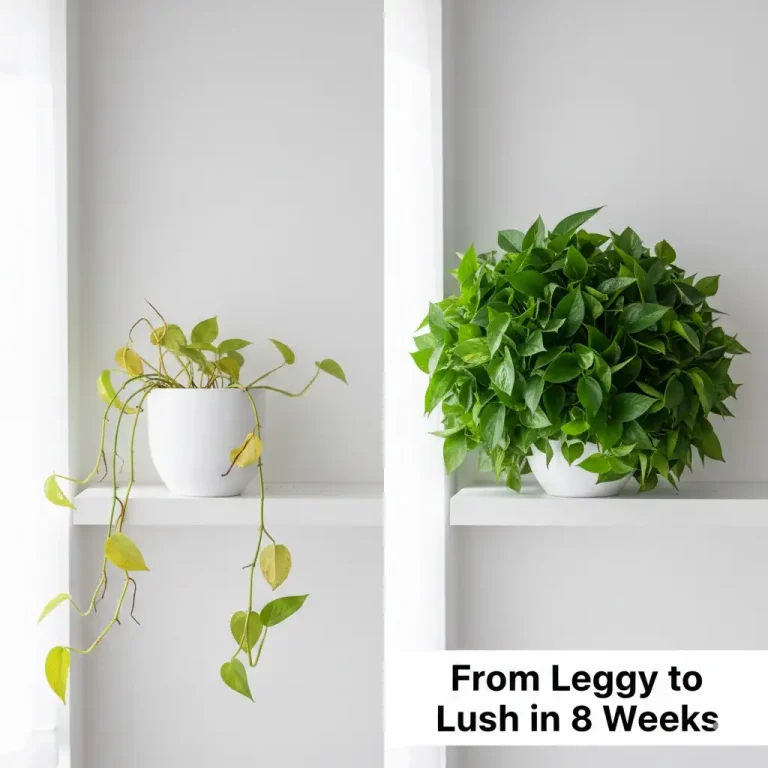
If your plant looks “leggy” (long vines with large gaps between leaves), it is time to prune. When you cut a vine, the plant releases growth hormones that usually activate the two nodes closest to the soil, forcing new vines to branch out.
Step-by-Step Water Propagation

Propagating your clippings is the best way to create new plants or fill out your existing pot.
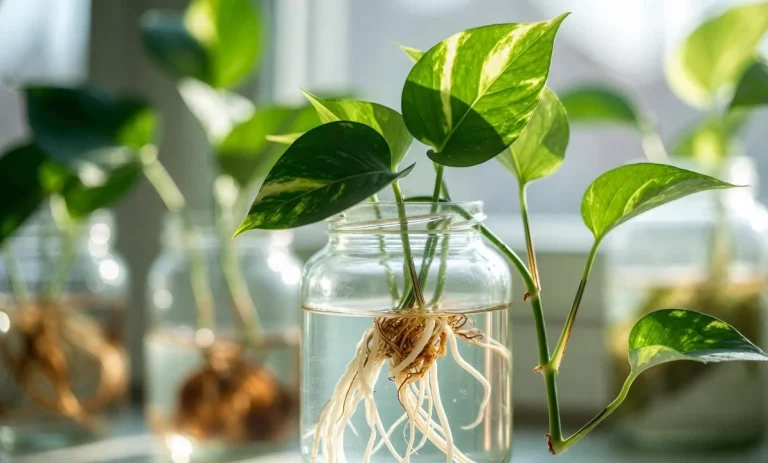
- Identify the Node: Look for the small brown bumps on the stem opposite the leaf. This is where roots will grow. You cannot propagate a leaf stem (petiole) alone; you must have a piece of the main vine with a node.
- The Cut: Using clean, sharp scissors, cut the vine about half an inch below the node.
- Water: Place the cutting in a glass of water. Ensure the node is submerged, but try to keep the leaf out of the water to prevent rotting.
- Wait: Place the glass in bright, indirect light. Change the water every 5 to 7 days to keep it oxygenated.
- Transplant: After 3 to 4 weeks, you should see roots that are 2 to 3 inches long. At this point, you can plant the cutting back into the soil of the mother plant to make it look fuller.
Troubleshooting Common Issues (Diagnostic Guide)
Here is a quick diagnostic checklist to identify what is wrong with your plant based on visual symptoms.
Why are the white parts turning brown?
- Diagnosis: Usually low humidity or “sunburn.”
- The Fix: If the plant is in direct sun, move it back. If the light is fine, increase humidity or check for water quality issues (fluoride).
Why are the leaves turning yellow?
- Diagnosis: Overwatering or Root Rot.
- The Fix: Check the soil immediately. If it is wet and swampy, you may need to unpot the plant, trim away the mushy black/brown roots, and repot it in fresh, dry soil.
Why is my plant losing variegation (Turning Green)?
- Diagnosis: Insufficient light.
- The Fix: The plant is reverting to survive. Move it closer to a window or add a grow light. Note that once a leaf turns green, it will not turn white again, but improving the light will ensure new leaves come out variegated.
Pests to Watch For
- Mealybugs: These look like tiny bits of white cotton fluff tucked into the nooks where the leaf meets the stem.
- Spider Mites: Look for fine webbing on the undersides of leaves.
- Treatment: For both, I recommend wiping the leaves down with a mixture of water, a drop of dish soap, and Neem oil. Repeat this every 5 days until the pests are gone.
Safety First: Toxicity and Pets
This is a Your Money or Your Life (YMYL) topic, so it is important to be precise.
The Marble Queen Pothos contains insoluble calcium oxalate crystals. According to the ASPCA Animal Poison Control Center, this plant is toxic to cats and dogs.
If chewed or ingested, the crystals cause:
- Intense oral irritation and burning of the lips, tongue, and mouth.
- Excessive drooling.
- Vomiting.
- Difficulty swallowing.
My Advice: If you have curious pets, keep this plant in a hanging basket well out of reach, or on a high shelf. While it is rarely fatal, it is extremely painful and can result in a hefty vet bill.
Frequently Asked Questions
Does Marble Queen Pothos clean the air?
Yes. The famous NASA Clean Air Study (1989) included Epipremnum aureum as one of the top plants for removing volatile organic compounds (VOCs) like benzene, formaldehyde, and xylene from the air.
However, keep in mind that you would need a veritable jungle of plants to significantly alter the air quality of a standard home. Think of it as a nice bonus rather than a medical air filter.
Can Marble Queen Pothos live in low light?
“Live” and “thrive” are two different things. It will survive in low light, but it will lose its beautiful white markings and turn solid green. It will also grow extremely slowly and become more susceptible to root rot because it isn’t drinking water as fast.
How fast does Marble Queen grow?
In optimal conditions, you can expect 12 to 18 inches of growth per year. This is slower than the Golden Pothos, which can grow up to 2 or 3 feet per year, but faster than other variegated aroids like the Monstera Albo.
Conclusion
Growing a Marble Queen Pothos is one of the most rewarding experiences for an indoor gardener. It strikes the perfect balance between being challenging enough to keep you engaged, yet forgiving enough to bounce back from a missed watering.
By following the “Golden Rules” outlined here—prioritizing bright indirect light, using a chunky soil mix, and allowing the soil to dry out between waterings—you will be rewarded with a lush, cascading display of white and green that transforms your living space.
Ready to grow?
If you are just starting your journey, or if you have a massive Marble Queen taking over your living room, I would love to see it. Tag us in your photos on Instagram so we can celebrate your success.