I’ve killed peace lilies in every possible way: overwatering, underwatering, sunburn, and root rot so bad the pot smelled like a swamp. Then something clicked.
Today I keep more than a dozen of them alive and blooming year-round in a regular apartment with no special equipment.
If I can go from serial plant killer to peace-lily whisperer, you absolutely can too.
This is the complete, no-fluff guide I wish existed when I brought home my first drooping $12 Spathiphyllum from the grocery store.
By the time you finish reading, you’ll know exactly what your plant needs to stay glossy, flower repeatedly, and purify your air for years. Let’s get your peace lily thriving.
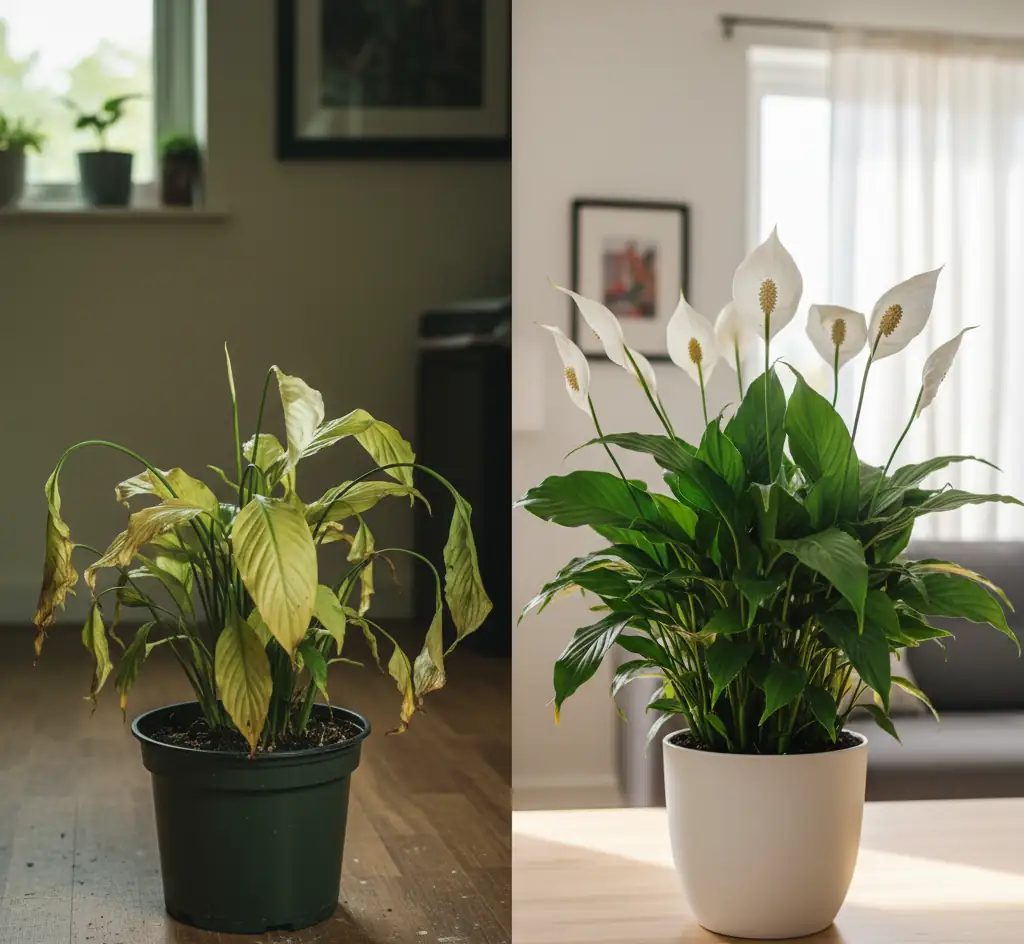
Peace Lily Care at a Glance
Peace lilies (Spathiphyllum) thrive in bright, indirect light with consistently moist (not soggy), well-draining soil. Water when the top 1–2 inches of soil dry out or when the plant just begins to droop.
This “Droop Method” is the foolproof signal that separates successful owners from chronic over-waterers. Keep temperatures between 65–80°F and humidity above 40%. With these conditions, your peace lily will grow glossy leaves, flower regularly, and purify indoor air for years.
- Light: Medium to low indirect light (avoid direct sun)
- Water: When top 1–2 inches of soil are dry or slight droop appears
- Soil: Well-draining, aroid-style mix
- Temperature: 65–80°F (avoid below 55°F)
- Humidity: 40–60% preferred
- Growth Rate: Moderate, faster in brighter indirect light
- Toxicity: Mildly toxic to pets (calcium oxalate crystals)
Why Peace Lilies Are Still One of the Best Houseplants
The NASA Clean Air Study from 1989 still gets quoted every year for good reason: peace lilies (Spathiphyllum spp.) remove benzene, formaldehyde, trichloroethylene, xylene, and ammonia from indoor air better than most common houseplants.
In 2026, with more of us working from home and caring about indoor air quality, that matters.
They also tolerate the low light most apartments actually have (not the “bright indirect light” every tag claims you need), and they dramatically droop when thirsty, basically yelling “water me” before they die.
That built-in alarm makes them one of the most forgiving houseplants for beginners once you learn to read the signals.
One important note: all parts of the plant contain calcium oxalate crystals. They are moderately toxic to cats, dogs, and small children (more on that later).
Peace Lily Light Requirements: Finding the Sweet Spot
How Much Light Does a Peace Lily Really Need?
Medium to low indirect light. Direct afternoon sun scorches the leaves in hours, but complete darkness eventually stops growth and flowering.
Best Locations in Your Home
| Room | Distance from Window | Expected Performance |
|---|---|---|
| North-facing | 2–8 feet | Excellent, slow steady growth |
| East-facing | 1–5 feet | Perfect morning sun |
| West-facing | 6–12 feet or sheer curtain | Good with protection |
| South-facing | 8–15 feet or filtered | Safe zone |
Signs of Too Much vs Too Little Light
- Too much: bleached patches, brown crispy edges, curled leaves
- Too little: deep green but leggy, no flowers, new leaves tiny
Can Peace Lilies Survive LED Grow Lights?
Yes. A 20–40W full-spectrum LED grow bulb 12–18 inches above the plant for 12–14 hours daily works perfectly in windowless offices or basements.
More in: Peace Lily Light Requirements
Peace Lily Watering Guide: The #1 Reason They Die
This is the section that would have saved 90% of my early casualties.
The “Droop Method” – My Foolproof Trick
Peace lilies are dramatic. When they need water, the entire plant collapses like it’s been days without a drink (even if it’s only been six). Water thoroughly the moment you see the first hint of droop and they perk up in 30–60 minutes. Waiting longer risks damage.
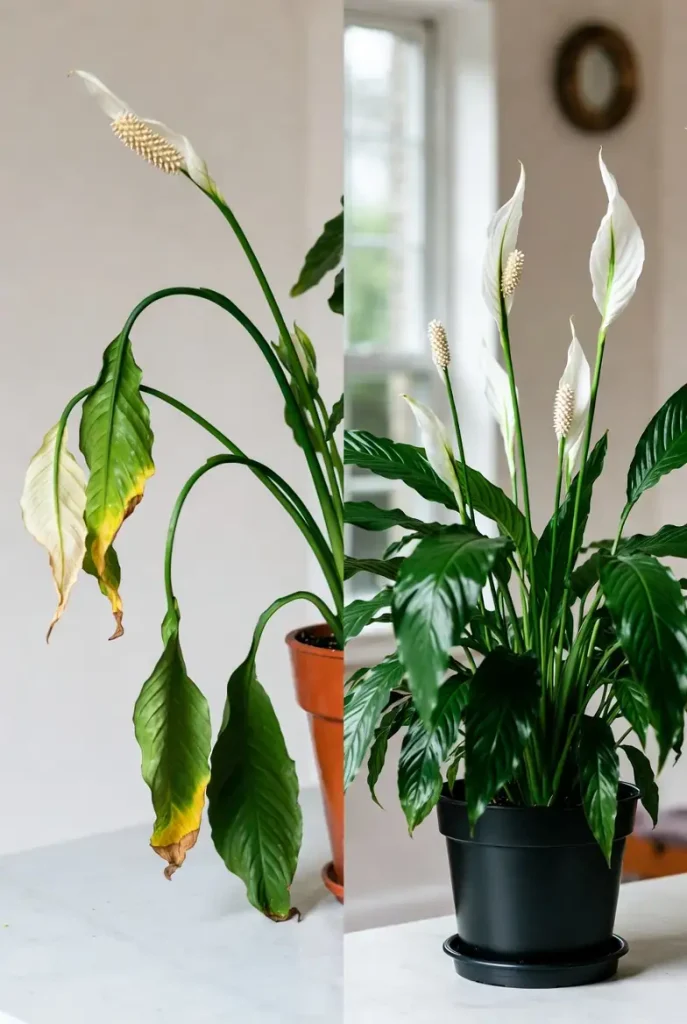
Seasonal Watering Schedule (USA Average)
| Season | Frequency (average home) | Soil Dryness Before Watering |
|---|---|---|
| Spring/Summer | Every 6–9 days | Top 2 inches dry |
| Fall/Winter | Every 10–14 days | Top 3 inches dry |
Best Water Type
Tap water is fine for most people. If your tips turn brown consistently, switch to distilled or rainwater (high fluoride or chlorine sensitivity is real but less common than people think).
Bottom Watering vs Top Watering
I bottom-water 90% of the time now. Fill the saucer, let it soak 20–30 minutes, dump the excess. Zero chance of wet feet and the plant drinks exactly what it wants.
Soil, Pots & Repotting Masterclass
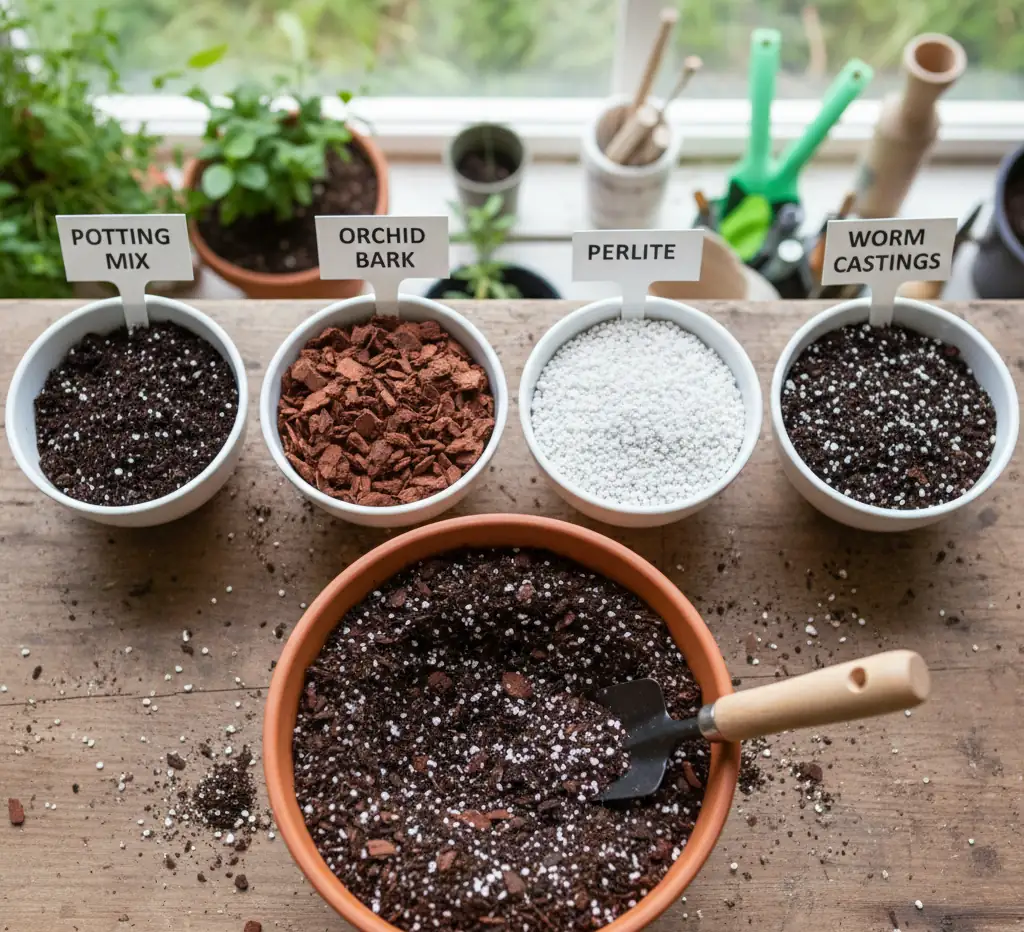
My Exact Soil Recipe (Never Buy “Houseplant Soil” Again)
- 40% high-quality potting mix
- 30% orchid bark
- 20% perlite
- 10% worm castings
This mix drains fast yet holds moisture, exactly what peace lilies crave.
When and How to Repot
Repot when roots circle the pot or poke aggressively out the drainage holes (usually every 18–24 months). Go only one pot size up. Spring is best.
Self-Watering Pots: Worth It in 2026?
Yes for frequent travelers. The Wick-based systems from Lechuza and similar brands keep soil moisture perfect for 2–3 weeks.
Temperature, Humidity & Airflow
Ideal range: 65–80°F daytime, never below 55°F at night.
Humidity: 40–60% is perfect. Below 30% = brown tips.
Fix low humidity with a $30 cool-mist humidifier or pebble tray.
Air conditioning is fine as long as cold drafts don’t blow directly on leaves.
How to Keep Peace Lilies Blooming (Year-Round)
Healthy, mature plants flower naturally twice a year in medium light. To force extra blooms:
- Keep night temperatures 65–70°F
- Feed every 6–8 weeks spring through fall with balanced 20-20-20 diluted to half strength
- Give 4–6 weeks of slightly brighter light (east window works)
The gibberellic acid trick sold online is unnecessary and sometimes damages leaves.
Peace Lily Care and Maintenance (Indoor Troubleshooting)
Emergency Revival Protocol (Drooping Plant)
- Check soil: bone dry → water immediately
- Soggy → remove from pot, trim black roots, repot in fresh mix
- Still drooping after 2 hours → move to slightly brighter light
Yellow Leaves Causes & Fixes
| Cause | Fix |
|---|---|
| Chronic overwatering | Let dry out, repot if root rot present |
| Oldest leaves aging | Normal, snip them off |
| Sudden temperature drop | Move to warmer spot |
| Too much direct sun | Relocate immediately |
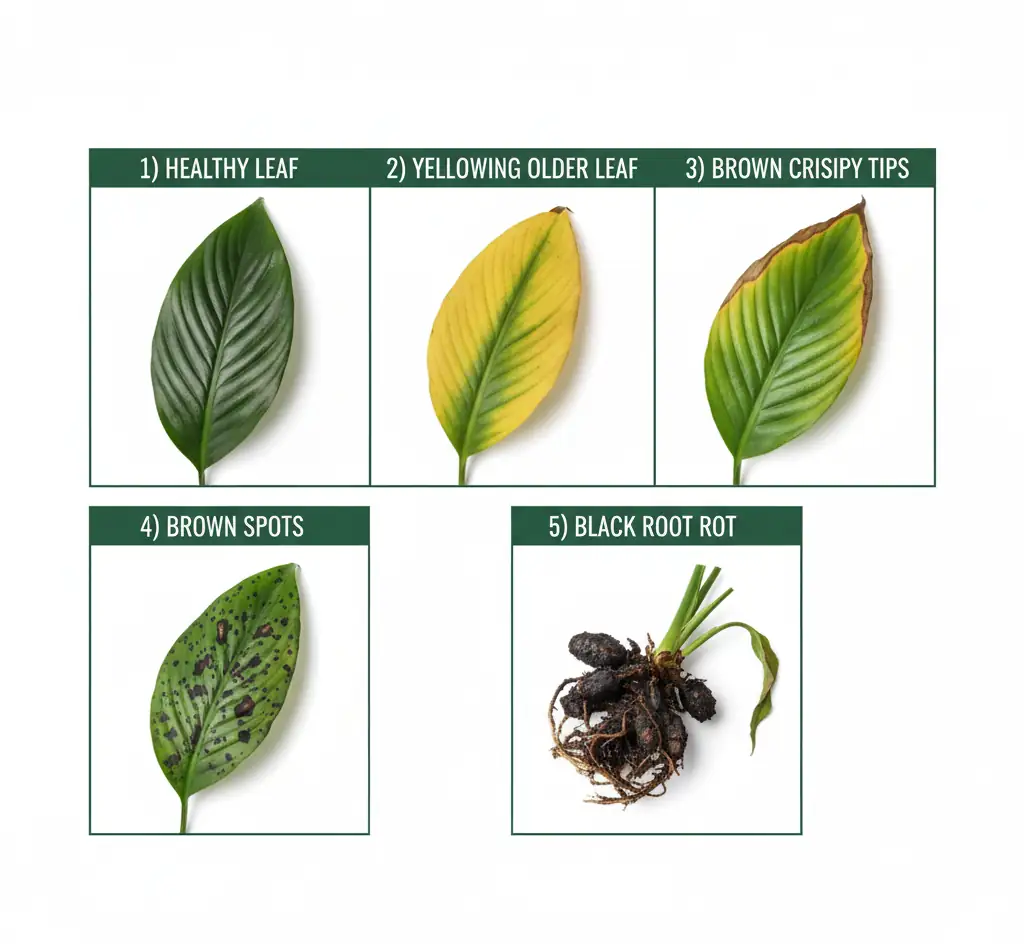
Peace Lily Brown Tips: Top 5 Culprits
- Low humidity
- Fluoride/chlorine in tap water (rare)
- Salt buildup from fertilizer
- Dry soil stress
- Physical damage from rubbing
Check it out: How to Fertilize Peace Lily: Step by Step Guide for Beginner
Root Rot Rescue
Smell the soil. If it smells like a swamp, unpot, rinse roots, cut away anything black or mushy with sterilized scissors, repot in fresh mix, water sparingly for 4 weeks.
For step by step, check out: How to Save a Peace Lily from Root Rot
Common Pests & Organic Treatments
- Mealybugs → 70% isopropyl alcohol on cotton swab
- Spider mites → neem oil + castile soap spray 3x every 5 days
- Fungus gnats → 1/4-inch layer of sand on soil surface + Bti dunk
Peace Lily Propagation: Free Plants in 8–12 Weeks
Division (Easiest & Fastest)
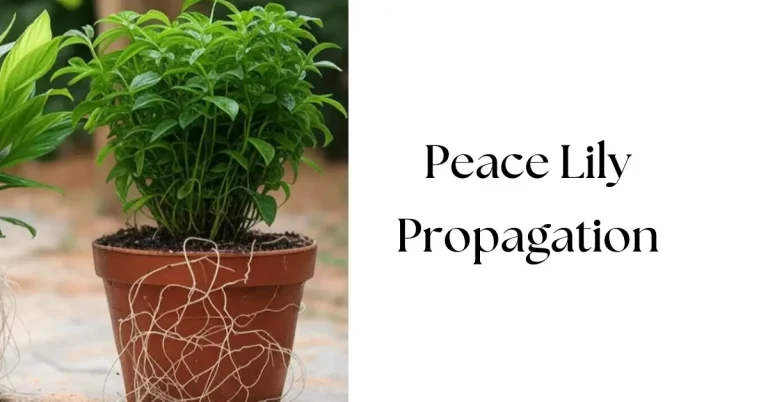
Spring repotting time: gently tease the root ball apart into 2–4 sections, each with at least 3–4 leaves and healthy roots. Pot separately. Done.
Water Propagation
Cut a healthy crown with roots, place in filtered water, change weekly. Roots explode in 3–4 weeks, then pot up.
Peace Lily Toxicity & Safety
ASPCA 2026 classification: Toxic to cats and dogs.
Active compound: insoluble calcium oxalate crystals.
Symptoms if ingested: oral irritation, excessive drooling, vomiting.
Fatalities: extremely rare, but call Poison Control or vet immediately.
Keep on high shelves or hanging baskets if you have curious pets.
Varieties You’ll Wish You Knew About Sooner
| Variety | Max Height | Flower Size | Unique Feature | Approx Price |
|---|---|---|---|---|
| Domino | 2–3 ft | Medium | Variegated leaves | $25–40 |
| Sensation | 4–6 ft | Very large | Biggest flowers | $40–80 |
| Picasso | 2 ft | Small | White streaked leaves | $50–90 |
| Petite | 10–14 in | Small | Perfect for desks | $15–25 |
| Power Petite | 12–18 in | Medium | Flowers more often | $20–35 |
Frequently Asked Questions
How often should I water my peace lily?
Water thoroughly the moment the leaves begin to droop, usually every 6–10 days depending on season and light.
Why is my peace lily drooping even after watering?
Root rot or pot-bound roots are the usual culprits. Unpot and inspect.
Can peace lilies live in low light?
Yes, they survive and grow slowly in north-facing windows or 8–10 feet from brighter windows.
How do I get my peace lily to flower?
Provide medium light, consistent moisture, and feed regularly spring through fall.
Are peace lilies toxic to cats and dogs?
Yes, moderately. Ingestion causes oral irritation and vomiting but is rarely fatal.
Why are the tips of my peace lily turning brown?
Most often low humidity or accumulated salts. Flush soil and raise humidity.
Should I mist my peace lily?
Misting helps slightly but a humidifier or pebble tray is far more effective.
What’s the best soil for peace lilies?
Fast-draining aroid mix with bark and perlite (recipe above).
How big do peace lilies get?
Standard varieties reach 2–4 feet tall and wide; ‘Sensation’ can hit 6 feet indoors.
Can peace lilies grow in water only?
Short term yes, long term no. They eventually decline without soil nutrients.
Why are my peace lily leaves turning yellow?
Usually overwatering or natural aging of oldest leaves.
Do peace lilies clean the air?
Yes, they remove several common VOCs according to the NASA Clean Air Study.
When should I repot my peace lily?
When roots fill the pot or growth slows dramatically, every 18–24 months.
How much sunlight does a peace lily need?
Bright to medium indirect light. Direct sun burns leaves quickly.
Can peace lilies survive outside?
Only in USDA zones 10–11 year-round. Elsewhere bring inside when below 55°F.
Conclusion
Five simple pillars will keep any peace lily alive and blooming: right light (medium to low indirect), smart watering (wait for the droop), perfect soil (fast-draining aroid mix), decent humidity (40%+), and occasional feeding.
I went from killing them monthly to having a 6-foot ‘Sensation’ that flowers three times a year in my living room. You now have every tool and trick I use.
Happy growing,
Brain Scott
References & Citations
- NASA Clean Air Study, 1989 – Wolverton, B.C.
- ASPCA Plant Toxicity Database, updated 2026
- Royal Horticultural Society – Spathiphyllum care profile
- University of Florida IFAS Extension – Peace Lily Culture
- Missouri Botanical Garden – Spathiphyllum wallisii
- PubMed – Indoor Air Purification Efficacy of Plants (2023 meta-analysis)